Best Places to Visit in India in August and September 2026
Two months, two completely different Indias. August is the monsoon at full power. September is the turning point when the rain eases, the landscape glows, and the crowds have not yet arrived. Here is where to be.
Written by
Ananticaa Jaiswal
Published on
July 10, 2026
August and September are not the same month dressed in different clothes. August is the Indian monsoon at its most insistent dramatic, green, and wet in most of the country, while Ladakh above the rain shadow sits under clear skies in full adventure season. September is the turning point month: the monsoon begins to ease by mid-September, the landscape holds its deep green, the crowds of peak season have thinned, and the light changes into something that photographers specifically plan trips around.
The destinations that reward August are the ones that lean into the rain the living root bridges of Meghalaya at full monsoon power, Ladakh in the clear above-monsoon window, Ziro Valley in Arunachal at its most dramatic, and the heritage towns that empty of tourists in the monsoon but remain fully functional and atmospheric. September opens up a wider map, Andaman Islands become accessible, the Rann of Kutch begins its extraordinary season, and destinations like Hampi and Varanasi are at their most pleasant before the October rush.
This guide covers the best destinations in India for both August and September, with honest notes on what each month actually delivers and how to plan for it.
August gives you India without the crowds and with the rain. September gives you India without the crowds and without the rain. Both are underrated.
August: A Journey from North to South
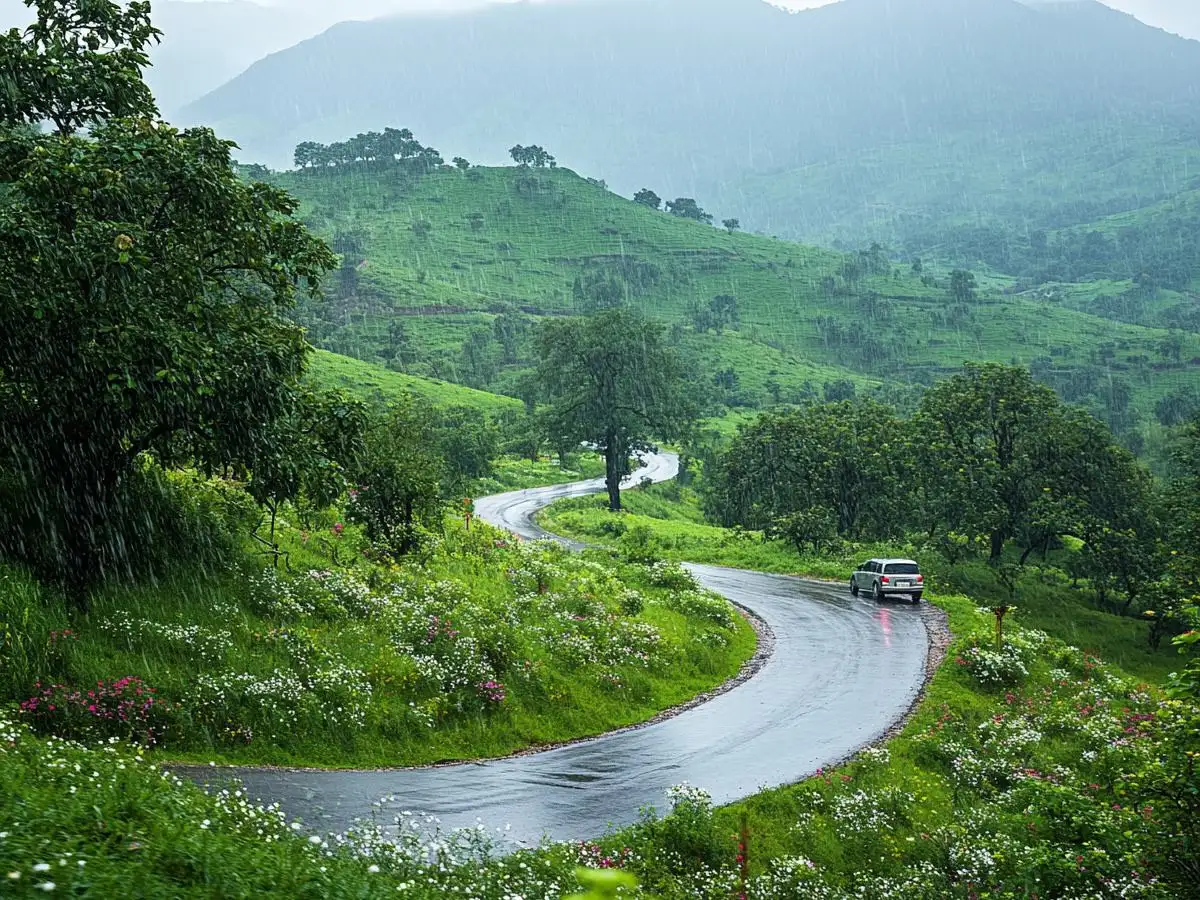
Think of August as a journey that begins at the top of the map and moves steadily south. You start in Ladakh, above the monsoon, where the sky is the clearest blue in the country and every road is open. From there you drop into Himachal. Then east into the deep green of Arunachal. Further south into Meghalaya where the rain is the loudest in the world. And you end in Karnataka, where the ruins of a great empire sit quiet and tourist-free in the monsoon. Six destinations. One direction. Follow it.
1. Ladakh: Peak Season, Peak Access
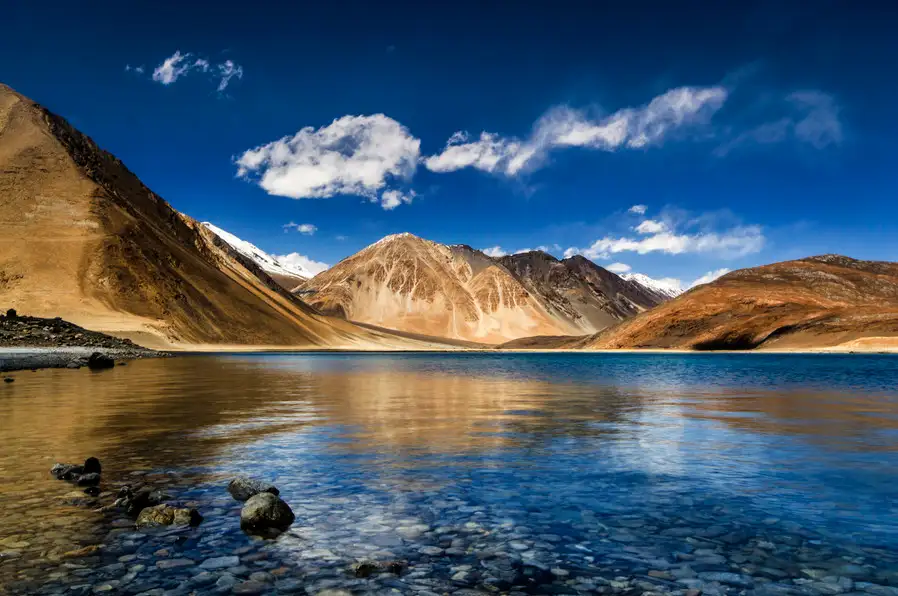
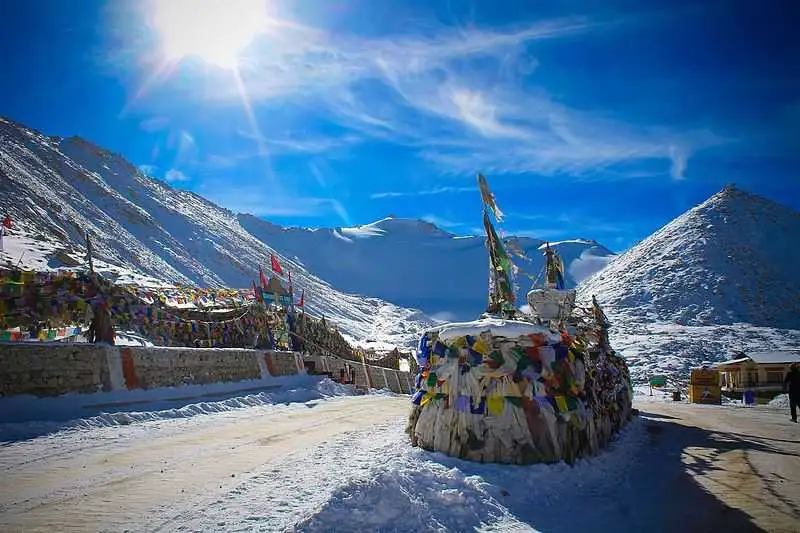
August is Ladakh's busiest month but also its most fully accessible. Every road is open, every destination from Pangong Tso to Nubra Valley to Tso Moriri is reachable, and the weather in Leh is warm and stable at 20 to 28 degrees. The Manali-Leh highway is the one caveat the approach through Himachal Pradesh crosses terrain that receives monsoon rain and July and August are the months when landslide risk on this route is highest. Many experienced Ladakh travelers fly in during August and drive out to Manali, rather than the reverse.
The Sindhu Darshan Festival, celebrating the Indus River, typically falls in June but Ladakh's other major cultural event of the season is the Ladakh Festival in early September, which features polo matches, archery competitions, and traditional dance at the Leh polo ground. If your August-September window allows flexibility, arriving in Ladakh in late August and staying through the festival in early September is an excellent combination.
Temperature: 20 to 28 degrees in Leh. Colder at passes and high-altitude lakes.
How to reach: Fly direct from Delhi, Mumbai, Srinagar, or Jammu. Book 6 to 8 weeks ahead. August flights fill early.
Permits: ILP required for Pangong Tso, Nubra Valley, Tso Moriri, and restricted areas. Arrange at the DC Office in Leh or through a travel agent.
Do not miss: Pangong Tso colour at dawn, Nubra Valley Bactrian camels at Hunder, Khardung La, Thiksey Monastery, stargazing from Hanle.
From Ladakh, come down from the sky. Drop into Himachal where the monsoon arrives but the hills handle it well.
2. Khajjiar and Chamba, Himachal Pradesh
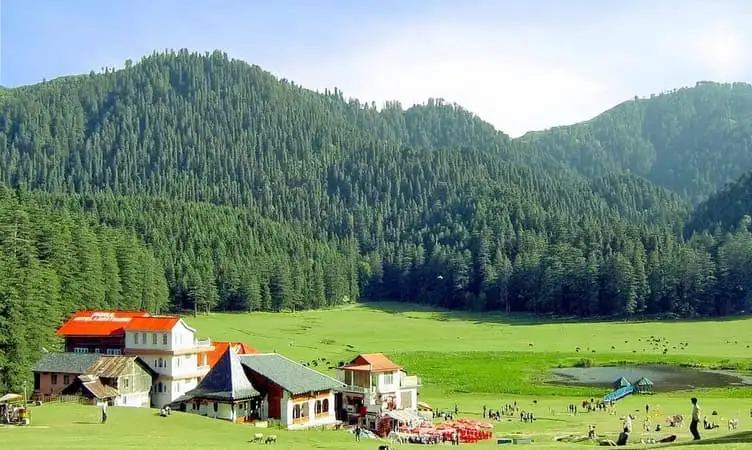
Called the Switzerland of India with the marketing enthusiasm that the comparison does not entirely deserve, Khajjiar is nonetheless one of the most beautiful small hill destinations in Himachal Pradesh and particularly lovely in August when the monsoon keeps the meadow at its greenest. A small circular plateau at 2,000 metres, ringed by deodar cedar forests and centred on a natural lake, Khajjiar is 22 kilometres from Chamba and is one of only 160 places in the world that holds the official Global Geopark status.
What makes Khajjiar work as a destination is its combination with Chamba, the old royal capital of the Chamba Kingdom, which sits 22 kilometres below it and has temples dating to the 10th century that most Indian travelers have never seen. The Lakshmi Narayan Temple complex in Chamba is one of the finest groups of Shikhara-style temples in the Western Himalayas. The combination of Chamba's cultural depth and Khajjiar's green plateau makes for a two or three-day trip that feels genuinely different from the Manali-Dharamshala circuit that most Himachal visitors follow.
Temperature: 18 to 26 degrees. Green, lush, and occasionally rainy.
How to reach: Fly or take a train to Pathankot, then road to Chamba (3 hours) and Khajjiar (1 hour further). Or road from Dalhousie (30 kilometres).
Best for: Families, couples, those wanting an offbeat Himachal alternative.
Do not miss: Khajjiar meadow and lake, Lakshmi Narayan Temples in Chamba, Chamba Chaugan, Minjar Fair (if visiting in late July or August).
Leave Himachal and move east. Cross into Arunachal Pradesh, where the northeast begins in earnest and the crowds stop entirely.
3. Ziro Valley, Arunachal Pradesh
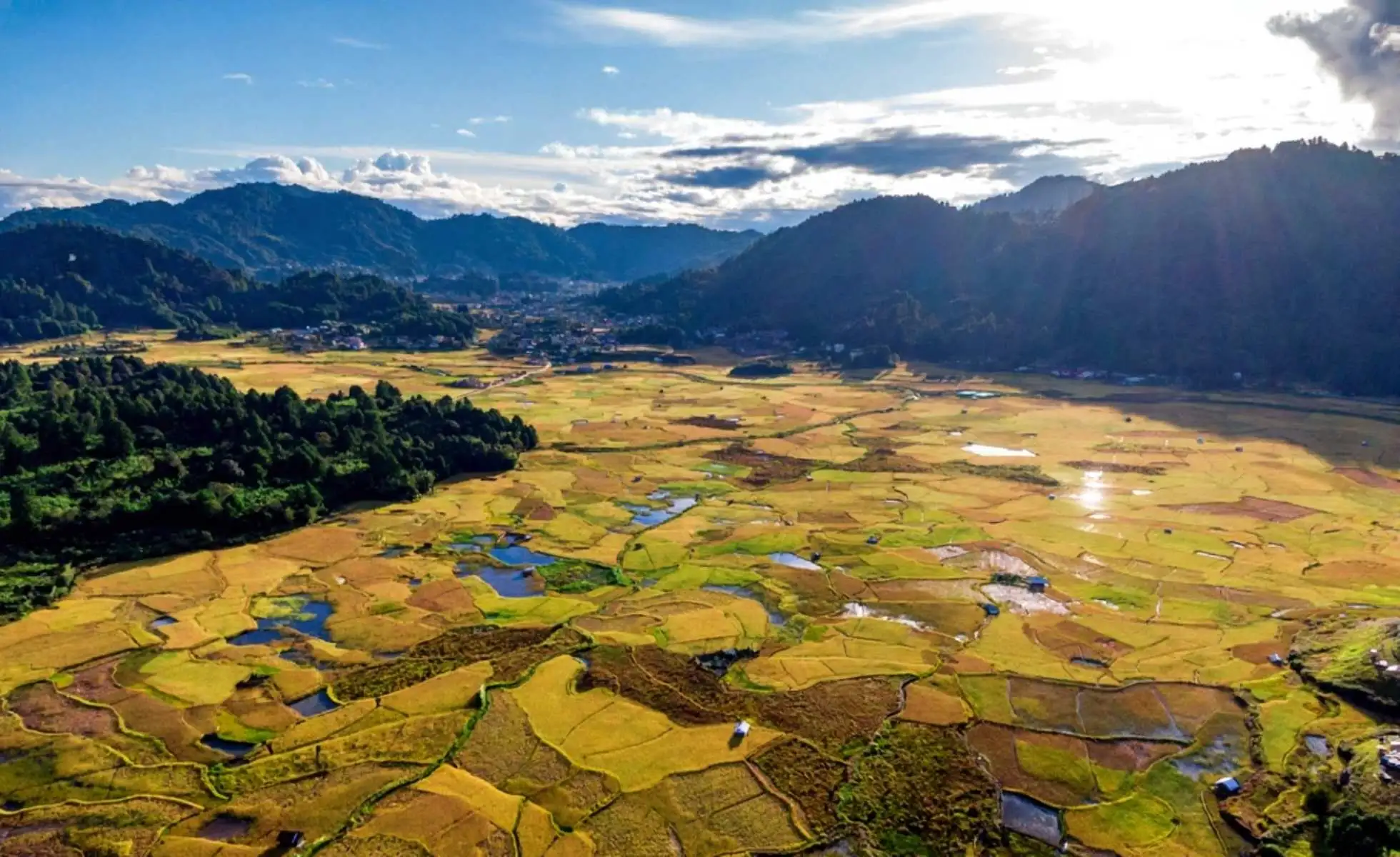
Ziro Valley is one of those places that appears on every list of undiscovered India and remains genuinely undiscovered because the journey to get there is a commitment. That is its greatest asset. A wide, flat valley at 1,500 metres in the lower Subansiri district of Arunachal Pradesh, Ziro is the homeland of the Apatani tribe, a community famous for its sustainable agricultural practices and unique cultural traditions. The terraced paddy fields, still farmed by hand, are a UNESCO World Heritage nomination site. The pine forests fringing the valley create a backdrop that looks nothing like any other landscape in India.
August is a particularly beautiful time in Ziro because the paddy fields are at full green, the monsoon keeps the air clear, and the valley's atmosphere is at its most intimate. The Ziro Music Festival, one of India's finest independent music events, typically falls in late September and draws a small, dedicated crowd of music lovers and travelers. But August in Ziro before the festival is quieter and in many ways better the valley belongs almost entirely to the Apatani community and the very few travelers who make it there.
Temperature: 18 to 26 degrees. Pleasant and cool with moderate rain.
How to reach: Fly to Naharlagun (near Itanagar) or Lilabari (North Lakhimpur) from Guwahati or Kolkata. Then road to Ziro, around 5 to 6 hours. Inner Line Permit required for all non-Arunachal residents, obtainable online or at Naharlagun DC office.
Best for: Off-beat travelers, photographers, cultural travelers, nature lovers.
Do not miss: Apatani paddy fields and pine forests, Hong village, Talley Valley Wildlife Sanctuary, Kile Pakho viewpoint.
Stay in Arunachal. Go further. Ziro was the valley. Tawang is the mountain.
4. Tawang, Arunachal Pradesh
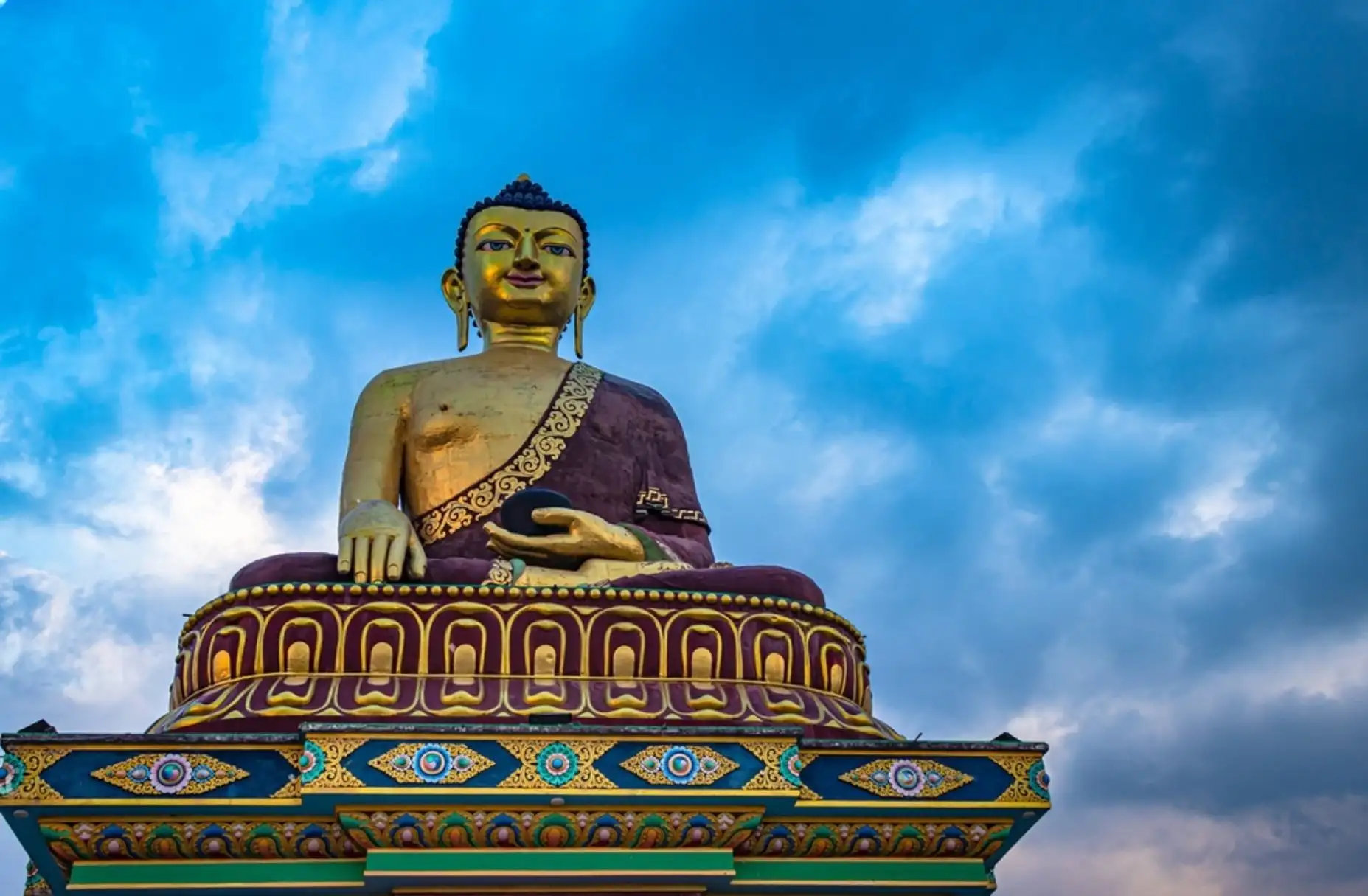
Tawang in August sits above the main monsoon line and receives less rain than the lower reaches of Arunachal. At 3,048 metres, the landscape in August is an extraordinary green alpine meadows, rivers running full with snowmelt, and the dramatic Tawang Monastery sitting above the town like something from a different world. The monastery, the largest in India, was founded in 1680 and houses over 400 monks. The main prayer hall, decorated with thangkas and gilded statues, is one of the finest Buddhist spaces in the country.
The drive to Tawang from Tezpur via the Sela Pass at 4,170 metres is one of the great mountain drives in India. In August the pass itself is often ringed with low cloud and the descent into the Tawang Valley appears suddenly through the mist. The Nuranang Falls, also called Jang Falls, on the approach road thunders at its most dramatic in August. The Madhuri Lake nearby, filled with snowmelt and ringed by the Himalaya, is as beautiful in August as at any other time of year.
Temperature: 10 to 20 degrees in August. Cold nights.
How to reach: Fly to Tezpur or Guwahati, then road via Bomdila and Sela Pass. The full drive from Tezpur is two days. Inner Line Permit required.
Best for: Buddhist culture, mountain scenery, off-beat Himalayan travel, photographers.
Do not miss: Tawang Monastery morning prayers, Sela Pass, Nuranang Falls at August flow, Madhuri Lake, Bum La Pass (additional permit required).
Solo female safety: Safe and welcoming. The Monpa Buddhist community is hospitable. Stay in hotels in Tawang town. Carry cash and offline maps as connectivity is limited.
Come west and south from Arunachal. Cross into Meghalaya, where the monsoon stops being something that happens to you and becomes the entire point.
5. Meghalaya: The Monsoon at Full Roar
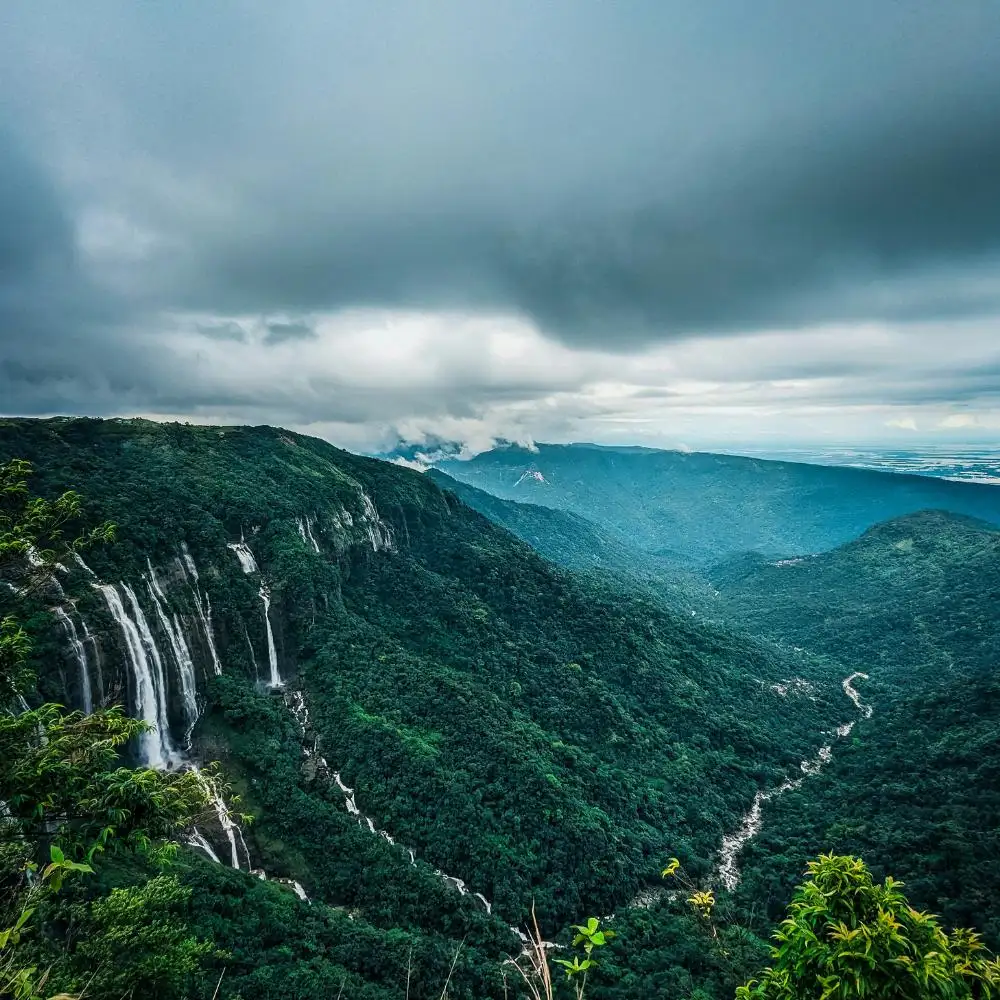
If there is one destination in India where August is not despite the monsoon but entirely because of it, it is Meghalaya. The state receives some of the highest rainfall in the world Mawsynram and Cherrapunji compete annually for the title of the wettest place on earth and in August that rainfall produces waterfalls, forest, and landscape of a scale and intensity that cannot be found anywhere else in India.
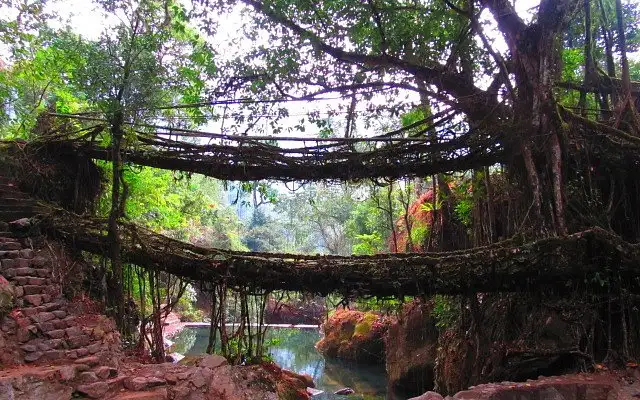
Nohkalikai Falls at 340 metres is at its absolute maximum volume in August. The Seven Sisters Falls cascade from the Khasi Hills in a wall of white water visible from the road. The living root bridges near Nongriat, grown over generations from the roots of rubber fig trees, are surrounded by forest so green it seems artificially lit. The trek down to the double-decker living root bridge at Nongriat approximately 3,500 steps down and back up is demanding but genuinely extraordinary. Mawlynnong, called the cleanest village in Asia, is beautiful in the monsoon light.
Temperature: Shillong 14 to 20 degrees. Expect very heavy rainfall throughout August.
How to reach: Fly to Shillong Airport (Umroi) or Guwahati. Shillong is 35 kilometres from the airport. Cherrapunji is 55 kilometres from Shillong by road.
Best for: Monsoon lovers, waterfall enthusiasts, nature photographers, off-beat travelers.
Do not miss: Nohkalikai Falls at peak August flow, double-decker living root bridge at Nongriat, Seven Sisters Falls, Mawlynnong village, Dawki river (clarity is reduced by August rain but the surrounding scenery remains stunning).
Solo female safety: Shillong is one of the safest cities in Northeast India. The Khasi culture is matrilineal and women are treated with considerable respect. Stay in well-reviewed guesthouses in Shillong and arrange local guides for Nongriat and remote areas.
The journey ends in the south. From the wettest place on earth, go to Karnataka, where the monsoon softens the ruins and empties the crowds.
6. Hampi, Karnataka: The Monsoon Ruins
Most people visit Hampi in the dry months from November to February, when the sun is pleasant and the boulder-strewn landscape is easily explored on foot or bicycle. August in Hampi is a completely different experience and, for those who seek it, a better one. The ruins of the Vijayanagara Empire, spread across 4,100 hectares of surreal granite boulders and the Tungabhadra River, are almost entirely tourist-free in August. The Tungabhadra at full monsoon flow is powerful and dramatic. The grass between the boulders is green and the landscape takes on a lushness that the dry season entirely lacks.
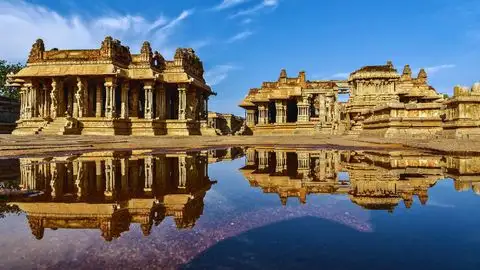
The Virupaksha Temple, which has operated continuously since the 7th century, is cooler and more intimate in August without the crowds. The Vittala Temple complex with its famous stone chariot and musical pillars, the Lotus Mahal, and the Queen's Bath are all more atmospheric when wet and quiet than when they are surrounded by tour groups in December. Hampi is a UNESCO World Heritage Site of extraordinary scale and August is when you can experience it without sharing it.
Temperature: 24 to 30 degrees. Hot but humid rather than dry. Some rain.
How to reach: Fly to Hubli (Hubli Airport) and drive 2.5 hours. Or overnight train from Bengaluru or Hyderabad to Hosapete (the nearest railhead, 13 kilometres from Hampi).
Best for: History lovers, photographers, off-beat travelers, those who want monument sites without crowds.
Do not miss: Virupaksha Temple, Vittala Temple and stone chariot, Matanga Hill sunrise, Tungabhadra at full flow, Hemakuta Hill temples.
September: A Journey from South to North
September reverses everything. The monsoon is retreating northward and you chase it in the opposite direction, moving from south to north as the country opens up beneath you. You begin in Kerala, where the hills are still deep green. You island-hop to the Andamans as the sea calms. You cross to the desert edge of Gujarat. You move through the spiritual weight of Varanasi. And you end high in the mountains of Himachal, where the autumn light has arrived and the valley belongs almost entirely to you.
7. Munnar, Kerala: September Sweet Spot
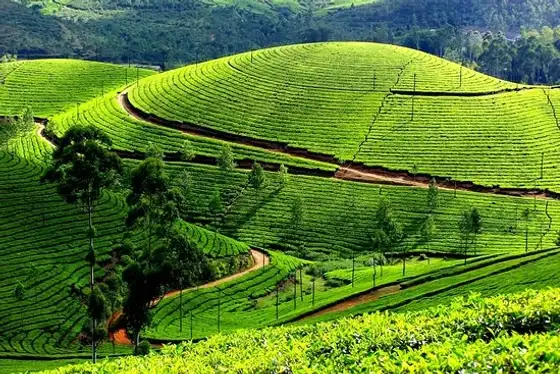
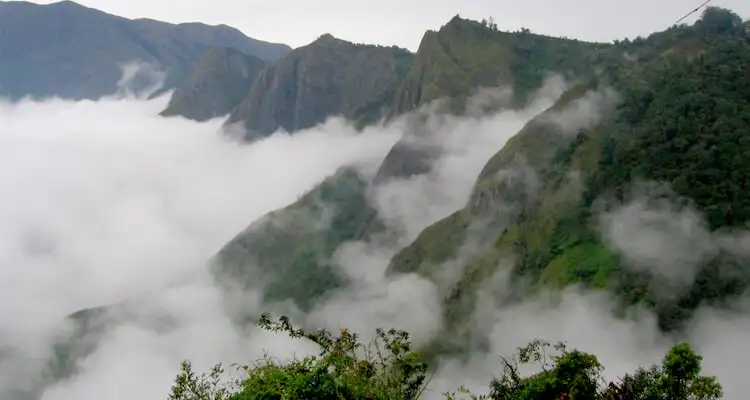
Munnar in June and July is spectacular but genuinely wet, with tea estate walks and viewpoints frequently obscured by heavy cloud and rain. September is Munnar's sweet spot. The monsoon is easing, the tea estates are the most vivid green they will be all year, the waterfalls including Attukal are still running at good volume, and the Nilgiri tahr and other wildlife are easier to spot in the Eravikulam National Park as the undergrowth begins to thin.
The drive through the Western Ghats from Kochi or Thrissur to Munnar is one of the finest in South India and in September the tea and cardamom estates along the route are particularly beautiful. Mattupetty Dam and the Indo-Swiss Project cattle research facility nearby are worth a morning. The small market town of Munnar itself has excellent spice shops and a colonial-era tea museum that gives a clear history of the hill station's British-era origins.
Temperature: 15 to 24 degrees. Cool, atmospheric, some rain.
How to reach: Drive from Kochi (130 kilometres, around 4 hours through the ghats). Or bus from Kochi or Thrissur.
Best for: Couples, honeymooners, nature lovers, those wanting cool hill air after the coast.
Do not miss: Eravikulam National Park (Nilgiri tahr), Mattupetty Dam, Attukal Waterfalls, tea estate walks, Top Station viewpoint, Rajamala.
From the Western Ghats, go to the water. The Andamans have been waiting since April for conditions like this.
8. Andaman Islands: The Window Opens
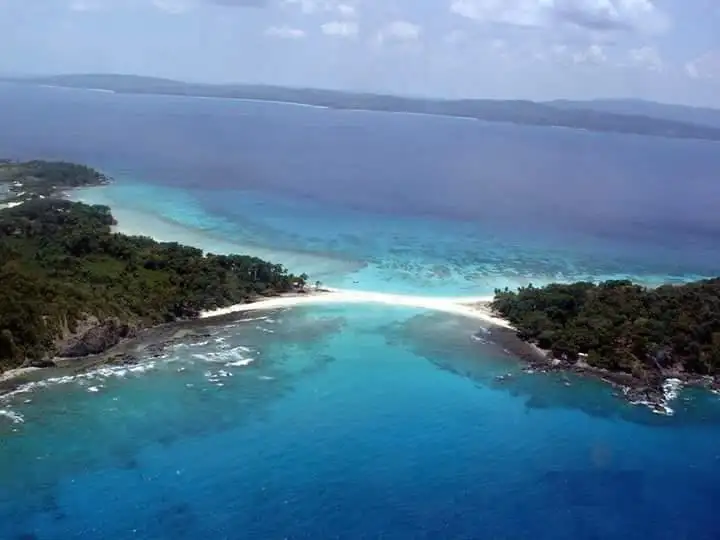
The Andaman Islands in July and August are largely off-limits for the beach experience most visitors want rough seas, difficult boat connections, and persistent rain make the island-hopping that defines an Andaman trip unreliable. September is when the window opens. By late September the monsoon eases, the sea begins to calm, and the underwater visibility that makes the Andamans' coral reefs extraordinary begins to return. Radhanagar Beach on Havelock Island, consistently rated among the finest beaches in Asia, is deeply green-fringed and almost completely empty in September.
Havelock Island (officially Swaraj Dweep) and Neil Island (Shaheed Dweep) are the main visitor destinations beyond Port Blair, connected by ferry. September is the beginning of the shoulder season here accommodation and ferries are available, prices are pre-peak, and the crowds that descend from December to February are weeks away. Elephant Beach on Havelock has some of the finest snorkelling in India, with coral gardens and sea turtles accessible from the shore. The diving at sites like Lighthouse and Dixon's Pinnacle is at its best when the visibility returns in September.
Temperature: 26 to 30 degrees. Warm, some rain easing through the month.
How to reach: Fly to Port Blair (Veer Savarkar International Airport) from Chennai, Kolkata, Delhi, Bengaluru, and Hyderabad. Ferry from Port Blair to Havelock (2.5 hours on the Makruzz fast ferry) and Neil Island (1 hour from Havelock).
Best for: Beach lovers, divers, snorkellers, couples, families.
Do not miss: Radhanagar Beach at Havelock, Elephant Beach snorkelling, Neil Island's Bharatpur and Laxmanpur beaches, scuba diving, Cellular Jail in Port Blair.
Practical note: Book fast ferries in advance as seats fill quickly on the Havelock route. September sea conditions improve through the month but confirm with operators before booking boat activities in early September.
Come back to the mainland. Cross to the west. Gujarat in September is where the desert is waking up from its monsoon sleep.
9. Rann of Kutch, Gujarat: The Season Begins
The Rann of Kutch is one of the most extraordinary landscapes in India and almost no one visits it at the right time. The annual Rann Utsav festival runs from November to February and draws large crowds to the white salt desert. But September, when the monsoon rains have just begun to recede and the first dry salt patches start to emerge across the Great Rann, is when the landscape is transitioning between its two most dramatic states flooded lake and white desert and is genuinely unlike anything else in India.
The edges of the Rann in September are vivid green from the monsoon grass, flamingos and migratory birds begin arriving in large numbers at the Flamingo City near Khavda, and the Wild Ass Sanctuary in the Little Rann has its highest density of the Indian wild ass as animals concentrate on the emerging dry patches. The Banni grasslands north of Bhuj, the most extensive tropical grassland in Asia, are at peak green in September. Bhuj itself, substantially rebuilt since the 2001 earthquake, has extraordinary craft traditions, museums, and the 18th-century Aina Mahal palace.
Temperature: 28 to 36 degrees. Hot but easing through September. Rain at the start of the month.
How to reach: Fly to Bhuj from Mumbai or Ahmedabad. Or train from Ahmedabad to Bhuj (7 hours).
Best for: Wildlife watchers, bird lovers, photographers, craft and culture travelers.
Do not miss: Little Rann Wild Ass Sanctuary, flamingo watching near Khavda, Banni grasslands, Bhuj old city and craft villages, Aina Mahal.

Move north and east. Into the heartland. Into the oldest continuously inhabited city on earth.
10. Varanasi, Uttar Pradesh
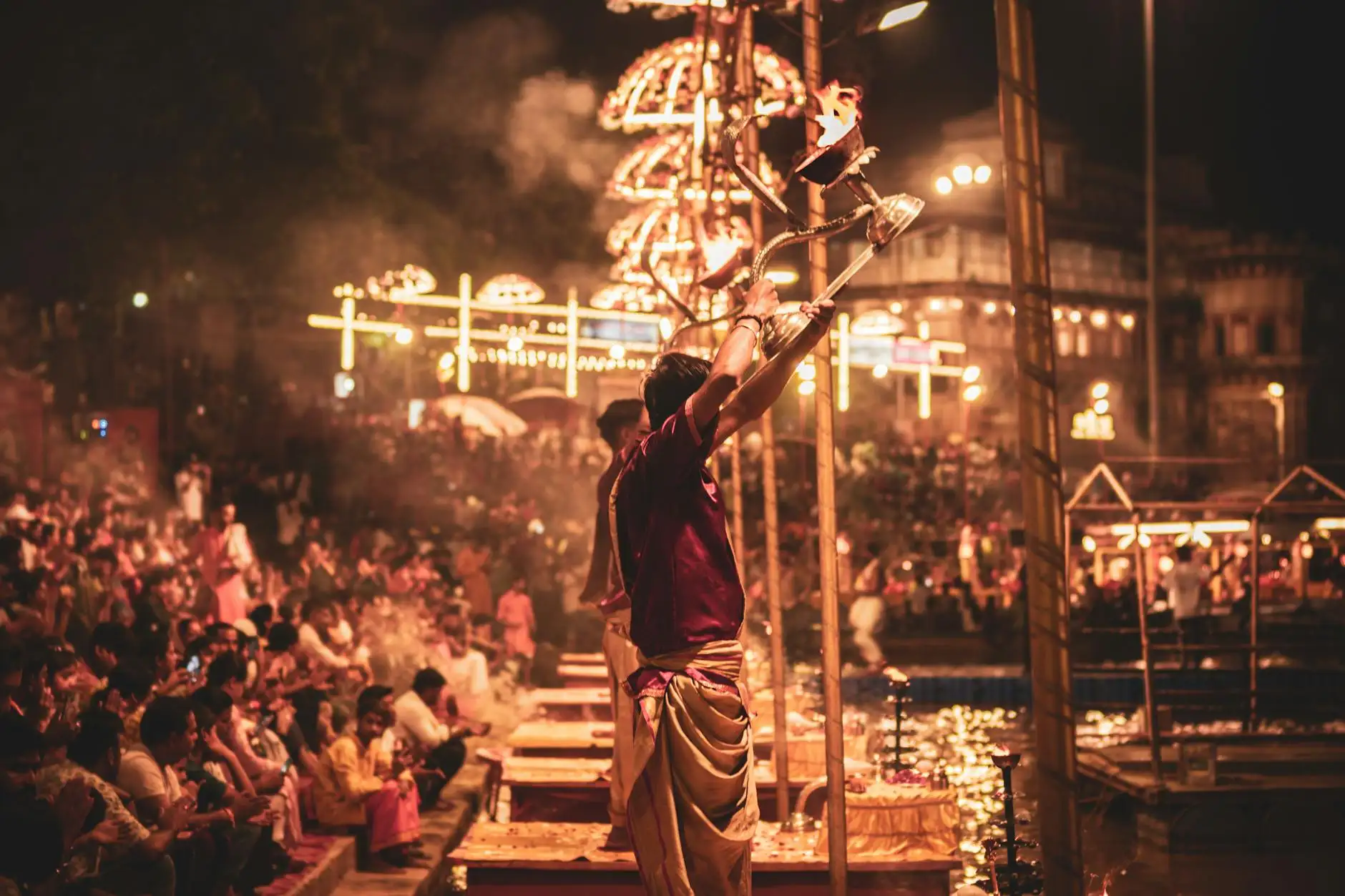
Varanasi is a year-round destination but September is a particularly good time to be there for a specific reason: the monsoon has cleaned the air, the Ganga is running full and deep, and the city has not yet filled with the pilgrims and tourists who arrive from October onwards. The Ganga Aarti at Dashashwamedh Ghat is one of the most powerful ritual spectacles in India at any time of year seven priests performing synchronised fire rituals as the river absorbs the light but in September the setting has a weight and atmosphere that the peak winter season, with its watching crowds, slightly dilutes.
The old city of Varanasi, a tangle of ghats, narrow lanes, temples, and silk weaving workshops, is best navigated slowly and on foot. In September it moves at a pace that allows that. Sarnath, five kilometres from the city, where the Buddha gave his first sermon after enlightenment, is a UNESCO World Heritage Site with well-preserved stupas and the finest Ashoka pillar capital in India (now in the Sarnath Museum). The combination of Varanasi and Sarnath in September, with comfortable temperatures and manageable crowds, is one of the finest cultural itineraries in India.
Temperature: 28 to 34 degrees. Warm, post-monsoon fresh air.
How to reach: Fly to Lal Bahadur Shastri International Airport (Varanasi) from Delhi, Mumbai, Bengaluru, and other major cities. Train from Delhi (Vande Bharat, approximately 8 hours).
Best for: Cultural travelers, spiritual seekers, photographers, history enthusiasts.
Do not miss: Ganga Aarti at Dashashwamedh Ghat (sunrise and evening), sunrise boat ride on the Ganga, Sarnath, old city lane walk, Kashi Vishwanath Temple corridor, Benares Hindu University campus.
Solo female safety: Varanasi requires the same awareness as any large Indian city. The ghat areas are busy and well-frequented. Take auto-rickshaws or pre-booked cabs rather than walking alone through narrow lanes after dark. Stay in well-reviewed guesthouses near the main ghats.
The journey ends where August began in the mountains. But this time the light is different. The summer dust has settled, the crowds have thinned, and Spiti in September is something else entirely.
11. Spiti Valley, Himachal Pradesh: September's Finest
Spiti in September is what every traveler who has gone to Manali multiple times and is ready for something more demanding should do. The valley is above the main monsoon line and in September the skies are at their clearest of the season, the summer tourist numbers from August have thinned, and the landscape of grey and brown mountains, turquoise rivers, and whitewashed monasteries is lit by September's extraordinary golden light. Chandratal Lake, a glacial lake at 4,300 metres, mirrors the sky in September in a way that photographs from any other month cannot match.
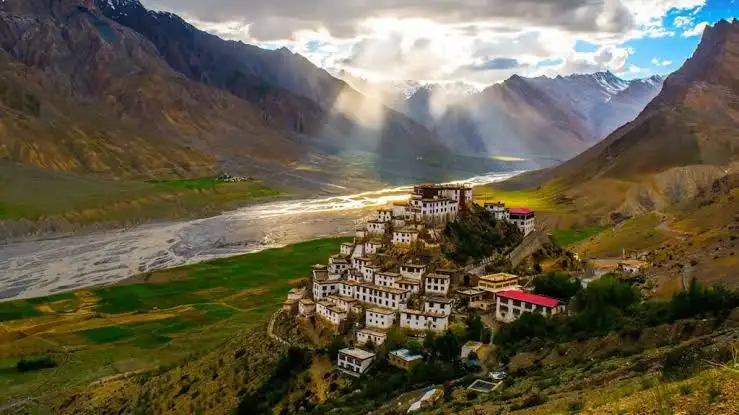
Key Monastery at 4,166 metres is the largest in Spiti and one of the most dramatically situated buildings in India, perched on a hill above the confluence of the Spiti and Pin rivers. The fossil beds near Langza village, where marine fossils from the ancient Tethys Sea are embedded in the cliffs at 4,400 metres, are one of the more quietly extraordinary geological experiences in India. The harvest season begins in September and the villages of Spiti take on a warmth and activity that the summer months of steady trekker traffic slightly dilute.
Temperature: 8 to 20 degrees. Clear skies, cold nights dropping to near zero.
How to reach: Drive from Manali via the Rohtang Pass (requires an e-permit for Rohtang). Or from Shimla via Kinnaur on the longer but gentler route. The Manali-Kaza road typically stays open until mid-October.
Best for: Adventure travelers, photographers, off-beat mountain seekers.
Do not miss: Key Monastery, Chandratal Lake, Langza fossil village, Dhankar Monastery, Pin Valley, Kibber village.
What to Avoid in August and September
August: Still Monsoon Rules
-
Rajasthan (desert destinations): Jaisalmer, Jodhpur, and Bikaner are hot and humid in August. Save for November to February.
-
Goa: August is Goa's heaviest monsoon month. Most beach shacks are closed and the sea is rough. Book Goa for November to February.
-
Andaman Islands in August: Sea conditions are still rough and boat services to Havelock and Neil Island are unreliable. Wait for late September.
-
The Manali-Leh highway: Landslide risk is highest in July and August on this route. If going to Ladakh in August, fly in and drive out later, or use the Srinagar route.
September: Watch the Opening Window
-
Early September in Andamans: The monsoon lingers into early September. Check sea conditions before booking boat trips for the first two weeks of September.
-
Rann of Kutch in early September: The full landscape is still partially flooded early in the month. Late September is better.
-
High passes in late September: Snow can return to Rohtang and other high passes from late September onwards. Check conditions if planning Spiti or Ladakh trips in the last week of September.
Practical Tips for August-September Travel in India
August gear: Waterproof jacket, quick-dry clothing, waterproof footwear, and a dry bag for electronics are essential for any August trip to Meghalaya, the Western Ghats, or Northeast India. The rain is not an inconvenience in these destinations. It is the reason to be there.
September transitions: September is a month where conditions change week by week. The first two weeks are closer to August in terms of rain and humidity. The last two weeks are closer to October in terms of clarity and dryness. Plan your September trip for the second half of the month if your priority is clear weather.
Northeast permits: Inner Line Permits are required for Arunachal Pradesh (covering Ziro and Tawang) and some parts of Nagaland and Manipur. Apply online well in advance.
Ladakh August booking: August is Ladakh's peak month. Book flights 6 to 8 weeks in advance and accommodation well ahead. Tent camps at Pangong Tso and guesthouses in popular Leh areas fill completely. Do not plan an August Ladakh trip without confirmed bookings.
Wildlife September tip: September is an excellent month for wildlife across India. Animals are concentrated near water sources as the monsoon ends, and the lush vegetation makes for excellent sightings at national parks including Corbett, Kaziranga, and the Little Rann. Many parks that close for the monsoon (June to September) reopen in mid to late September.
Frequently Asked Questions
Which is the best place to visit in India in August 2026?
Ladakh is the top overall choice for August all roads open, best clear-sky weather above the monsoon line, full adventure season. For monsoon enthusiasts, Meghalaya is extraordinary. For cultural depth without crowds, Hampi in August is exceptional. Ziro Valley and Tawang are the finest off-beat choices.
Which is the best place to visit in India in September 2026?
Spiti Valley in September is one of the finest travel experiences in India clear golden light, minimal crowds, all access open. Andaman Islands from late September are beautiful and uncrowded. Varanasi in September is atmospheric and manageable. Munnar's September sweet spot is the best window for the Western Ghats.
Is Ladakh good in August?
Yes. August is Ladakh's peak season with maximum access and best weather in Leh. The caveat is that the Manali-Leh highway has higher landslide risk in August. Fly in to Leh and plan road travel carefully. Book flights and accommodation 6 to 8 weeks ahead.
Is Meghalaya worth visiting in August?
Absolutely, if you embrace the rain. August is when Meghalaya's waterfalls including Nohkalikai are at maximum power, the living root bridges are most dramatic, and the forest is at peak green. Pack serious waterproof gear and go specifically because of the monsoon, not despite it.
Is Andaman good in September?
From late September onwards, yes. Early September still has monsoon sea conditions. By the last two weeks of September, the sea calms significantly and boat services to Havelock and Neil Island become reliable. September prices are pre-peak and the beaches are uncrowded.
What is good about September travel in India?
September is one of the most underrated months in Indian travel. The monsoon eases, the landscape holds its deep green from the rains, crowds are well below October peak levels, and prices at most destinations are lower than the October to March peak window. Spiti, Andamans, Munnar, Varanasi, and the Rann of Kutch are all at their September best.
August and September together form the bridge between India's monsoon season and its peak travel window. The travelers who use these months well find a country that is greener, quieter, and more atmospheric than the crowds of October allow. Ladakh above the rain. Meghalaya in the rain. The Andamans as the season opens. The Rann of Kutch as the desert emerges. These are not compromise destinations for the months nobody else wants to travel. They are the right destinations for exactly these months.
Two months. Dozens of destinations. Almost no queues. Go now.