Best Places to Visit in India in July 2026
July is not just a month to survive. It is the only month when certain things exist a valley carpeted in 300 species of wildflowers, a festival of sacred masked dances in the highest monastery in Ladakh, one of the largest religious processions on earth. Here is where to go.
Written by
Ananticaa Jaiswal
Published on
May 13, 2026
Every month has its best version of India. October has the wildlife and the golden light. January has Rajasthan at its finest. March has Holi. July has things that simply do not exist in any other month of the year. The Valley of Flowers, a UNESCO World Heritage Site in Uttarakhand, is in peak bloom for just a few weeks and those weeks are in July. The Hemis Festival in Ladakh, the most spectacular event in the Himalayan calendar, falls in July 2026. The Rath Yatra at Puri, one of the largest religious gatherings on earth, is in July.
Beyond the events, July is also the month when the Western Ghats are at their most dramatically beautiful waterfalls that are dry trickles in April are now crashing 70 and 100 metres into gorges, the coffee estates of Coorg are the deepest green imaginable, and Kerala's backwaters take on an atmosphere in the monsoon that the dry season cannot produce. And Ladakh, above the monsoon line, is in full adventure season with all passes open and the landscape under that extraordinary high-altitude sky.
The frame for July is simple: go somewhere for a reason that only July gives you. Not just a hill station with cooler weather, but a place that is genuinely at its once-a-year best right now.
Some places are good every month. A few are extraordinary only in July. Plan your trip around those.
Valley of Flowers, Uttarakhand: The Only Time to Go Is Now
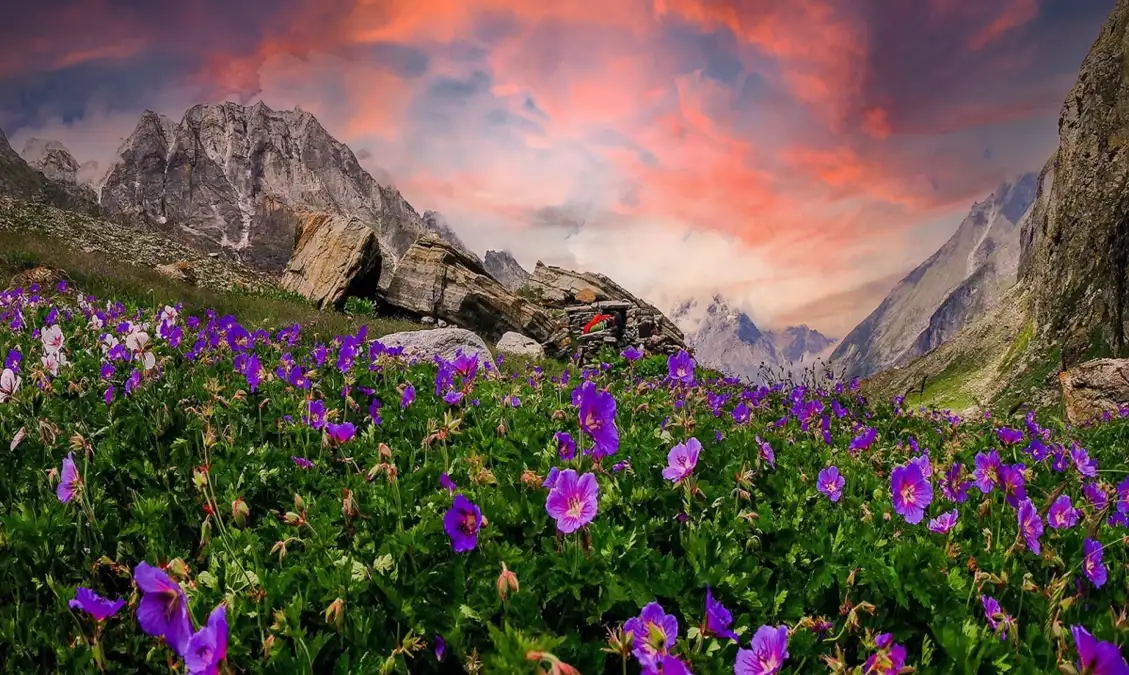
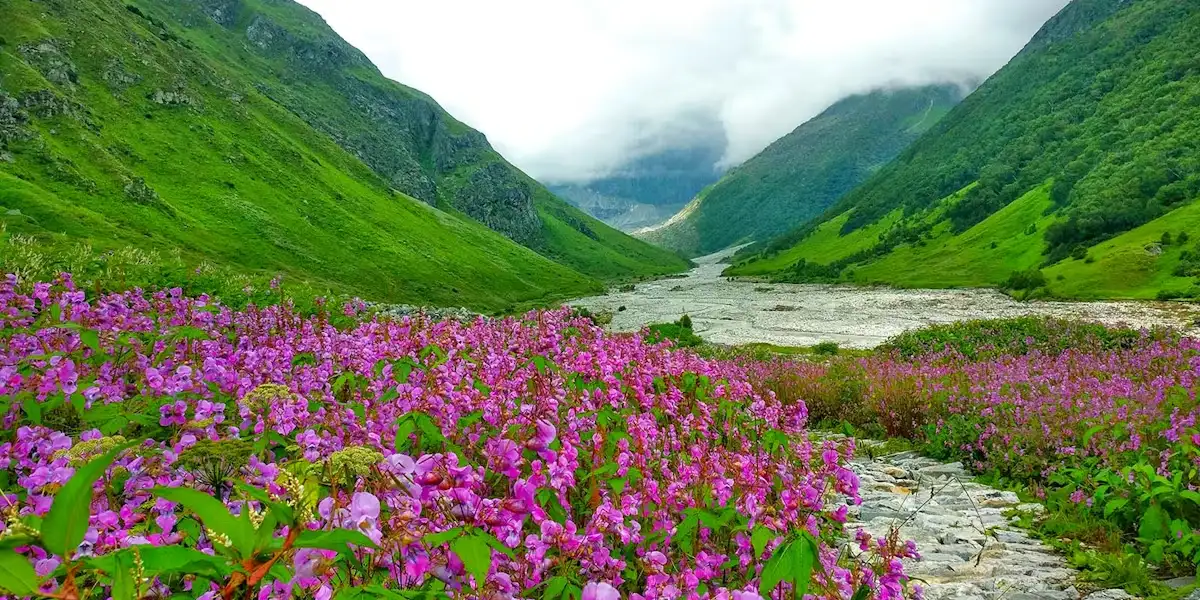
The Valley of Flowers National Park exists for everyone in theory and is accessible to almost nobody in practice because reaching it requires a 14-kilometre trek from Govindghat, and timing your visit to the peak bloom window, which falls in mid to late July, is everything. Go in June and the flowers are just emerging. Go in September and they are gone. Go in mid-July and you find a UNESCO World Heritage valley 87 square kilometres in the Garhwal Himalayas carpeted in over 300 endemic species of wildflowers: blue Himalayan poppies, cobra lilies, primulas, anemones, brahma kamal, orchids in every colour, and plants that exist nowhere else on earth at the same density.
The trek from Govindghat to Ghangaria (14 kilometres, approximately 5 hours at a comfortable pace) passes through rhododendron and birch forest beside the Pushpawati River. From Ghangaria the Valley of Flowers trail is a further 4 kilometres on a gentle gradient into the valley. The moment you enter the valley is one of those travel experiences that stays with you permanently the scale of the colour, the sound of the river, the surrounding Himalayan peaks. Stay overnight in Ghangaria and walk into the valley at dawn for the finest light and the fewest people.
Hemkund Sahib, the sacred Sikh gurudwara at 4,329 metres surrounded by a glacial lake, is reached from the same base at Ghangaria. It is a steep and demanding additional 6-kilometre trek but for those with the fitness it is a remarkable complement to the Valley of Flowers.
Best timing: Mid to late July for peak bloom. Check Uttarakhand Tourism reports before departure.
Trek difficulty: Moderate. Good fitness required. Not suitable for those with serious knee or heart conditions.
How to reach: Fly or train to Dehradun or Haridwar. Bus or shared taxi to Govindghat (approx 12 hours from Haridwar). Trek begins at Govindghat.
Do not miss: Dawn walk into the valley, Hemkund Sahib, the Pushpawati River gorge, rare Himalayan birds including the monal pheasant.
Permits: Entry permit required for the national park. Available at the forest office in Ghangaria.
Hemis Festival, Ladakh: The Most Spectacular Event in the Himalayas
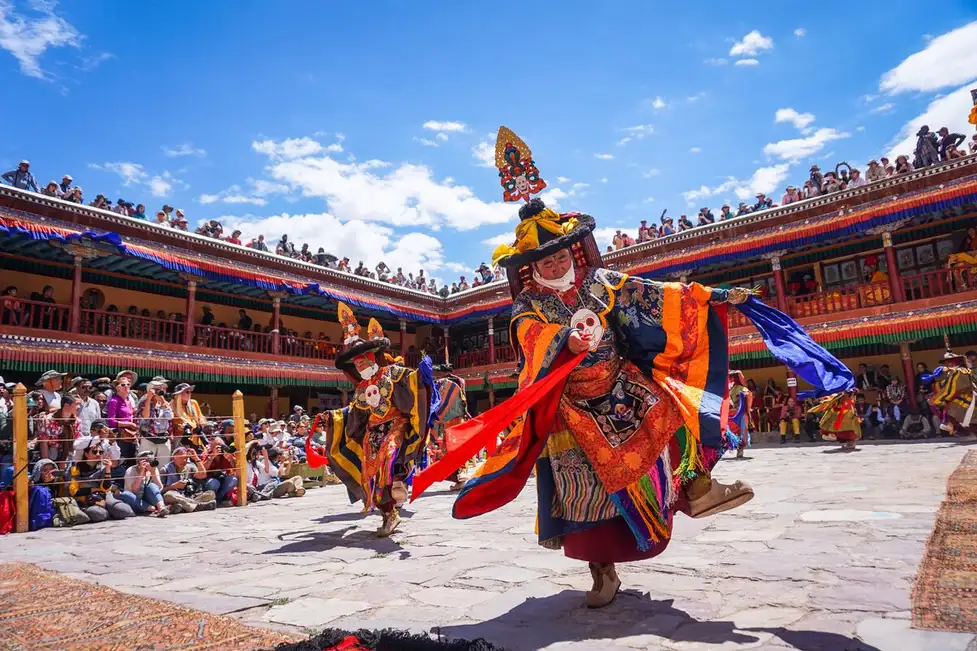
Once a year, Hemis Monastery the largest and wealthiest monastery in Ladakh, founded in 1672 opens its forecourt to thousands of pilgrims, monks, and travelers for a two-day festival that is unlike any other event in India. The Hemis Festival celebrates the birth anniversary of Guru Padmasambhava, the founder of Tibetan Buddhism, and takes the form of Cham sacred masked dances performed by monks in elaborate costumes representing deities, demons, and the forces of the universe. The masks and costumes, some centuries old, are extraordinary works of art. The dances are accompanied by long ceremonial horns, cymbals, and drums that echo off the monastery walls. Every twelve years a giant silk thangka, many metres high, is unveiled and 2026 is one of those years.
The setting amplifies everything. Hemis is in a narrow canyon in the Indus Valley, 45 kilometres from Leh, and the monastery buildings rise in tiers up the cliff face. The forecourt fills with monks in yellow and red robes, pilgrims in traditional Ladakhi dress, and an atmosphere of genuine devotion mixed with the extraordinary theatre of the dances. This is not a performance staged for tourists. It is a living religious tradition that happens to allow visitors to witness it.
To attend Hemis Festival: arrive in Leh at least two days early to acclimatise to the altitude. Book accommodation in Leh 6 to 8 weeks in advance the festival drives the busiest booking period of the year. Hire a taxi to Hemis on the festival days and arrive early in the morning to secure a position in the forecourt.
Festival dates 2026: Falls in July 2026 check the exact dates at hemisfestival.com closer to the time as the date is set by the Tibetan lunar calendar.
How to reach Hemis: 45 kilometres from Leh by taxi, approximately one hour.
Altitude note: Leh is at 3,524 metres. Acclimatise for two full days before the festival. Do not rush.
Ladakh Beyond the Festival: The Full July Picture
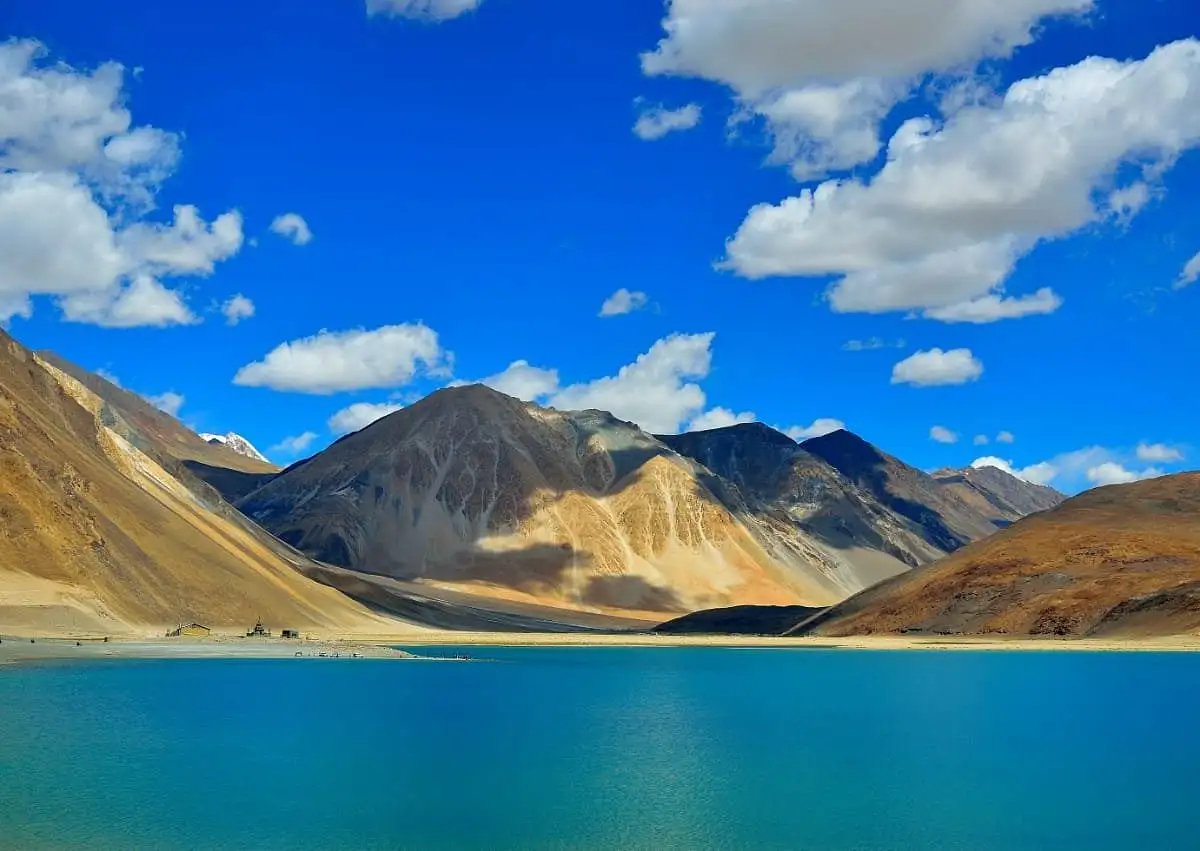
Ladakh in July is extraordinary whether or not your trip coincides with the Hemis Festival. All roads are fully open the Leh-Manali Highway, Leh-Srinagar Highway, and routes to Pangong Tso, Nubra Valley, and Tso Moriri are all accessible. The sky is the deep, clear blue that only exists above 3,500 metres above the monsoon line. The Pangong Tso lake shifts between shades of blue and green depending on the angle of the light and the time of day. The sand dunes of Hunder in Nubra Valley with Bactrian camels against the backdrop of the Karakoram range are one of the most photographically dramatic landscapes in India. The Zanskar Valley, for those with the time and nerve for the road, is one of the most remote and beautiful places in the country.
July is also peak season for Ladakh biking trips. The route from Manali to Leh on the world's second-highest motorable road, crossing Rohtang Pass, Baralacha La, and Tanglang La, draws thousands of bikers from across India in July. If you are not biking, shared jeep safaris and organized tours cover the same roads.
Temperature: 13 to 27 degrees in Leh. Colder at passes and lakes.
How to reach: Fly direct from Delhi, Mumbai, Srinagar, Jammu. Book 6 to 8 weeks ahead July flights fill fast.
Permits: ILP for Pangong Tso, Nubra Valley, Tso Moriri, and Dah-Hanu. Arrange in Leh at the DC Office.
Do not miss: Pangong Tso colour changes at dawn, Nubra Valley camel rides, Khardung La Pass, Thiksey Monastery, Shanti Stupa at sunset.
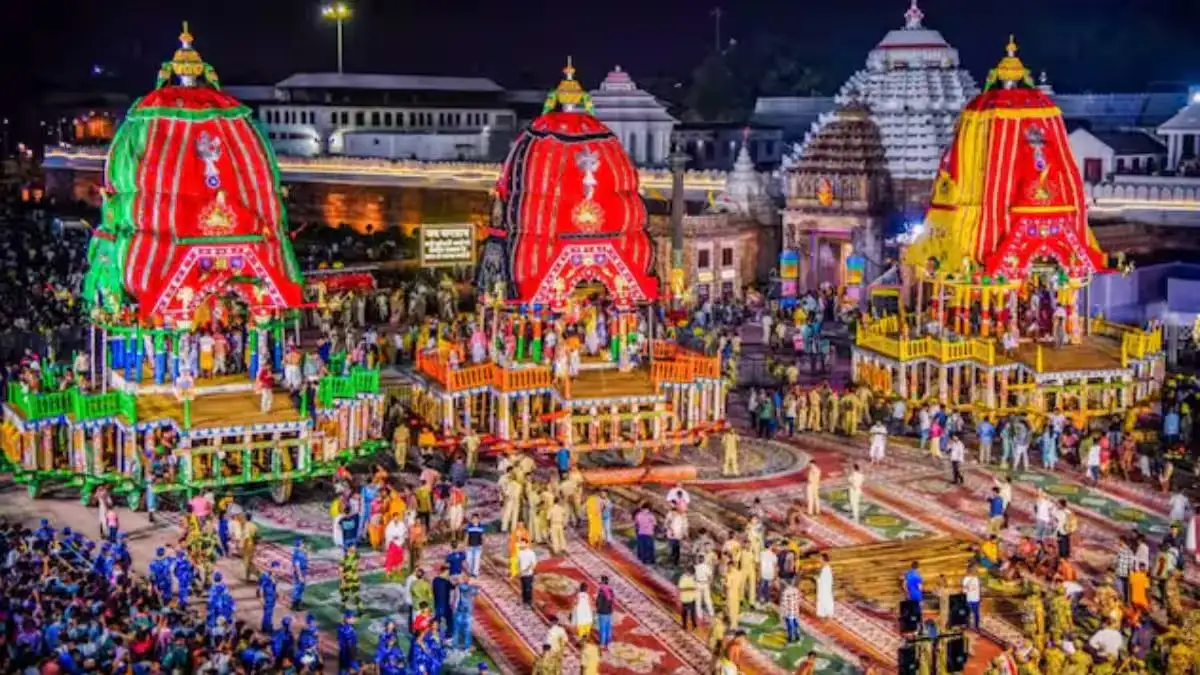
Rath Yatra, Puri: One of the Largest Gatherings on Earth
The Rath Yatra at Puri in Odisha is one of those events that Indian travelers talk about visiting their whole lives and almost never actually go to. In July 2026 it happens, as it has happened every year for over a thousand years, and going is worth the trip.
Three enormous wooden chariots each 14 to 16 metres high, built fresh every year from specific types of wood by hereditary craftsmen carry the deities Lord Jagannath, Balarama, and Subhadra from the Jagannath Temple to the Gundicha Temple, approximately three kilometres through Puri's main street. Hundreds of thousands of devotees pull the chariots by thick ropes. The noise of the crowd the chanting, the drums, the conch shells is something you feel as much as hear. The scale of the chariots, which dwarf the surrounding buildings, is something photographs do not convey.
The Jagannath Temple complex in Puri, one of the four sacred dhams of Hinduism, is open only to Hindus. But the Rath Yatra itself happens on the public street and is open to all. Arrive in Puri the day before, find your position on the Bada Danda (the main road) early on the morning of the Yatra, and stay for the full procession. The return Yatra, called Bahuda Yatra, happens nine days later and is equally spectacular.
How to reach Puri: Train from Kolkata, Bhubaneswar, or other major cities. Bhubaneswar airport is 60 kilometres away. Puri is well connected by rail from most of India.
When to go: The Rath Yatra date is set by the Hindu calendar. In 2026 it falls in July check the exact date at jagannath.nic.in.
Practical notes: Book accommodation in Puri at least 4 to 6 weeks ahead. The town fills completely around the Yatra. Arrive on Bada Danda by 7am on the day of the procession to secure a good position.
Western Ghats in July: Full Power
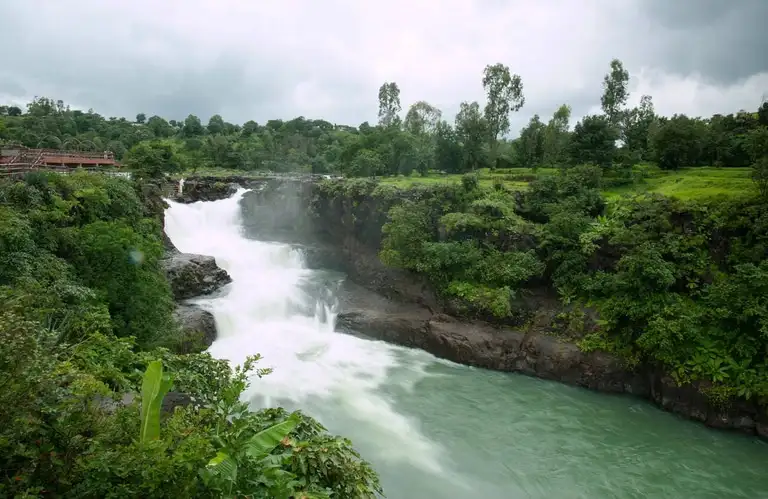
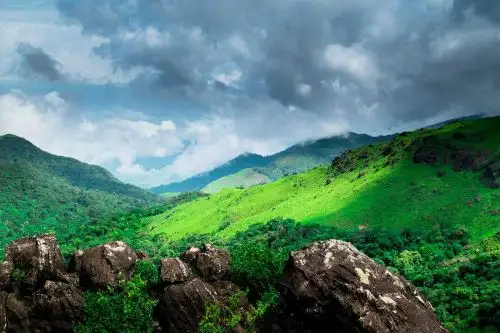
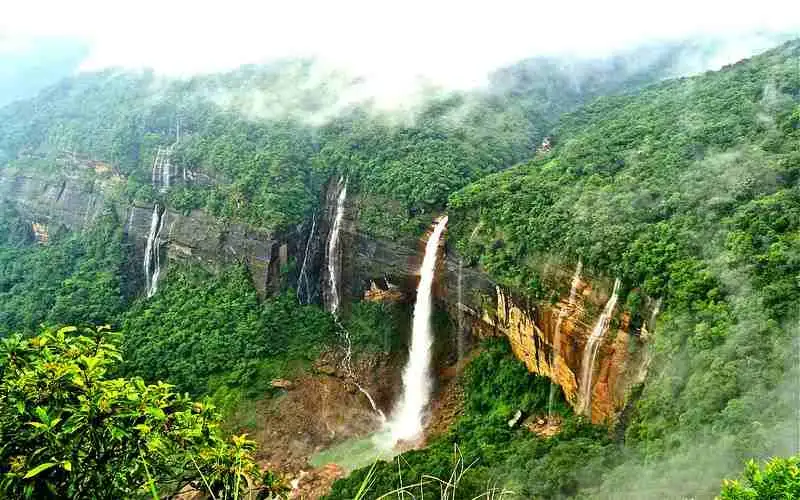
If June was the Western Ghats announcing the monsoon's arrival, July is the Western Ghats in full voice. Every waterfall that was beginning to run in June is now at maximum flow. Abbey Falls in Coorg is a curtain of white water 70 metres high. Athirapally Falls in Kerala, sometimes called the Niagara of India, is at its most thundering. Nohkalikai Falls in Meghalaya, one of the tallest plunge waterfalls in India at 340 metres, is at its most spectacular. The landscapes are the deepest green of the year.
Coorg, Karnataka
Coorg in July is one of the finest monsoon experiences in India. The coffee estates are at maximum green, Abbey Falls is running at full power, and the mist that sits in the Kodagu valleys in the mornings creates a landscape of genuine drama. Estate stays with covered verandahs, Kodagu home cooking pandi curry, kadumbuttu, puttu and the sound of the rain on coffee leaves produce an atmosphere that the Western Ghats in any other season simply cannot. This is a destination for those who want to slow completely down and let the monsoon set the pace.
Temperature: 15 to 24 degrees. Heavy rain, cool, deeply atmospheric.
Best for: Couples, honeymooners, slow travel enthusiasts.
Do not miss: Abbey Falls at full July flow, coffee estate walks in light rain, Raja's Seat viewpoint, Dubare Elephant Camp.
Kerala — Athirapally and the Backwaters
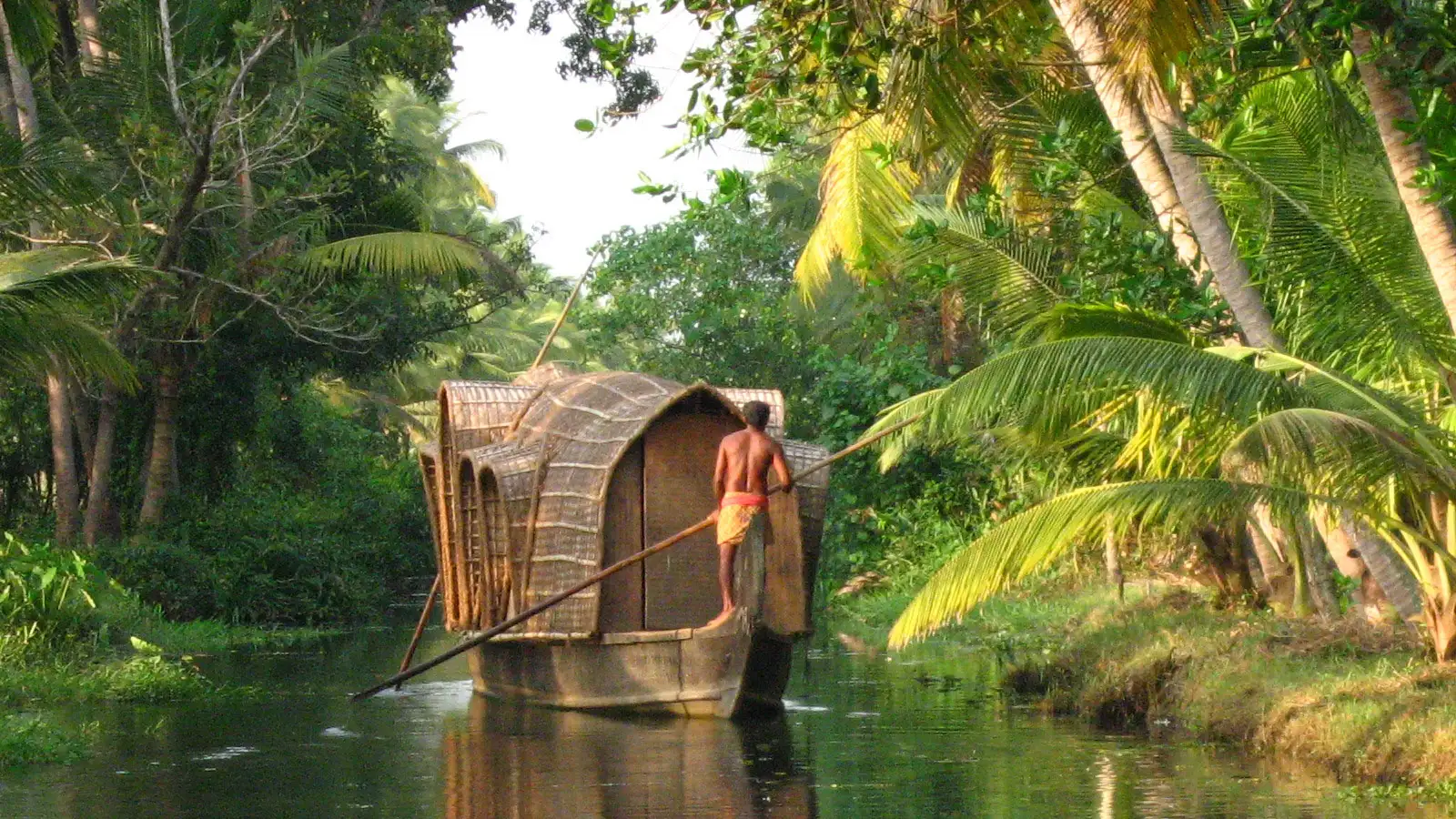
Athirapally Falls in Kerala's Thrissur district is at its most dramatic in July, with the full volume of monsoon water crashing 24 metres into the gorge below. The surrounding Sholayar forest is vivid green. The backwaters of Alleppey in July are quieter than in any other tourist season, deeply atmospheric, and exceptional from a houseboat the rain on the water, the coconut palms, and the complete absence of other boats creates a stillness that the dry season cannot produce. Ayurvedic resorts across Kerala run their most intensive and best-priced monsoon treatment packages in July.
Temperature: 23 to 29 degrees. Warm, very humid, heavy rain.
Best for: Nature lovers, Ayurveda seekers, couples, houseboat enthusiasts.
Do not miss: Athirapally Falls in full July flow, Alleppey houseboat in the monsoon, Munnar tea estates in the mist, Ayurvedic monsoon package.
Meghalaya — Cherrapunji and the Waterfalls
July is when Meghalaya earns everything its reputation promises. Nohkalikai Falls at 340 metres is at its maximum volume a wall of water you hear before you see. The Seven Sisters Falls cascade down the Khasi Hills in an extraordinary curtain visible from the road. The living root bridges near Nongriat, grown from the roots of rubber fig trees over generations, are surrounded by the most intensely green forest imaginable. The Dawki river's famous clarity is diminished by July's heavy rain but the surrounding landscape more than compensates. This is emphatically not a destination for people who want occasional drizzle. It is a destination for people who want to stand in front of the most spectacular waterfalls in India.
Temperature: Shillong 14 to 21 degrees. Expect very heavy rainfall.
Best for: Waterfall lovers, monsoon enthusiasts, nature photographers.
Do not miss: Nohkalikai Falls at peak July flow, Seven Sisters Falls, living root bridges at Nongriat, Mawlynnong village.
Udaipur: Rajasthan's One July Destination
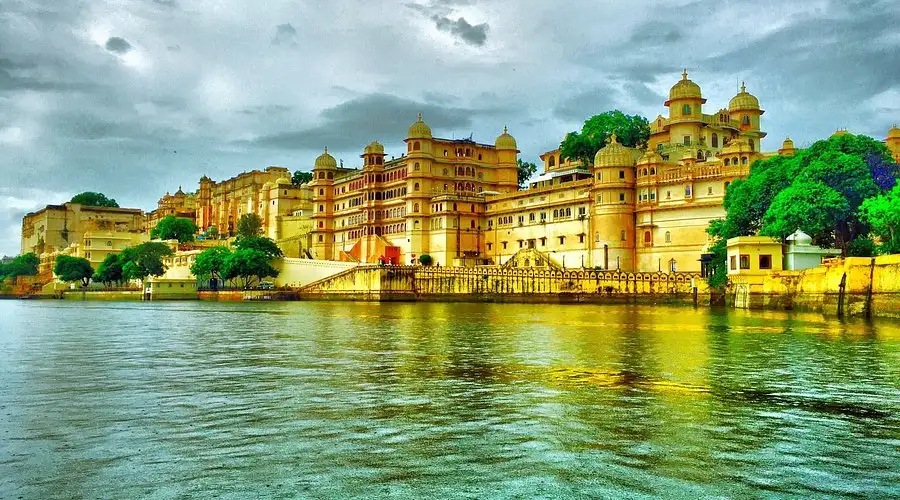
Almost every Rajasthan destination is wrong in July Jaisalmer is hot and humid, Jodhpur is uncomfortable, and the desert landscape looks nothing like it does in winter. Udaipur is the exception, and a significant one. The Aravalli hills that surround Udaipur receive enough monsoon rain to fill the lakes without the oppressive rainfall that makes many destinations difficult. Lake Pichola in July is full to the brim, the City Palace reflected in the water is extraordinary, and the Sajjan Garh Monsoon Palace on the ridge above the city built specifically to watch monsoon clouds rolling in from the hills makes complete sense as a destination in July in a way it does not in any other month.
The city's restaurants, rooftop cafes overlooking the lake, and the general ambiance of Udaipur's white and blue buildings against a monsoon sky create one of the most romantic atmospheres in India. Hotel rates are lower than in the peak October to March season. The Mewar Sound and Light Show at the City Palace runs through the monsoon and is worth attending. Udaipur in July is not the Rajasthan most people plan for it is better.
Temperature: 26 to 32 degrees. Monsoon-fresh, pleasant evenings.
Best for: Couples, honeymooners, history lovers, those who want Rajasthan without the crowds and heat.
Do not miss: Lake Pichola boat ride with monsoon-full lakes, Sajjan Garh Monsoon Palace, City Palace, Jagdish Temple, lakeside rooftop dining.
What to Avoid in India in July
Rajasthan except Udaipur: The desert is hot and humid in July. Jaisalmer, Jodhpur, and Bikaner are not enjoyable. Save these for October to February.
Delhi and the Agra Golden Triangle: Hot, humid, heavy rain that floods rather than transforms. The Taj Mahal in July heat and humidity is not the experience it is on a cool November morning.
Goa: July is Goa's heaviest monsoon month. Most beach shacks are closed, the sea is rough, and what you get is rain rather than the beach holiday Goa promises. Book Goa for November to February.
Andaman Islands: The monsoon continues in July with rough seas and unreliable boat connections to Havelock and Neil Island. Save the Andamans for December to February.
Himachal lower altitudes: The Kullu Valley and lower Himachal routes receive heavy rain in July with landslide risk on roads to Manali and Dharamshala. Always check BRO road status before departing for any Himalayan destination.
Practical Tips for Traveling in India in July
Time your Valley of Flowers trek precisely
Peak bloom is mid to late July. Going in the first week of July risks seeing a valley that has not yet reached full flowering. Check the Forest Department updates from Chamoli district and Uttarakhand Tourism's social media for current bloom reports before finalising your departure date. The trek is worth doing specifically at peak bloom it is a significantly different experience to arriving early or late.
Book Ladakh well ahead
July is Ladakh's peak season. Flights from Delhi to Leh fill 6 to 8 weeks ahead. Accommodation around Pangong Tso and in popular areas of Leh books up fast. The Hemis Festival drives additional demand. Do not plan a July Ladakh trip without confirmed flights and accommodation.
Monsoon road safety
Landslides are the primary July travel risk in the Himalayas and Western Ghats. Always check BRO road status for Himalayan routes. In Meghalaya and Western Ghats, be aware that roads through forests and hills can be blocked after heavy rain. Build buffer days into any July itinerary involving mountain roads.
Embrace the monsoon
For Western Ghats destinations Coorg, Kerala, Meghalaya the monsoon is why you are going. Pack quick-dry clothing, a quality waterproof jacket, waterproof footwear, and a dry bag for electronics. The rain at these destinations is not an inconvenience. It is the point.
Frequently Asked Questions
Which is the best place to visit in India in July 2026?
Ladakh for drama, adventure, and the Hemis Festival. The Valley of Flowers in mid to late July for something that exists for only a few weeks of the year. Udaipur for monsoon Rajasthan romance. Coorg or Kerala for the Western Ghats at full monsoon power. The best answer depends on what you want from the trip — all four are genuinely at their July best.
When is the Valley of Flowers best to visit?
Mid to late July is peak bloom for the Valley of Flowers, when over 300 species of wildflowers including blue Himalayan poppies, brahma kamal, and cobra lilies carpet the valley floor. The valley opens in June and closes in October, but July is the only month when it is in full glory. Check Uttarakhand Tourism bloom reports before finalising your trek dates.
When is the Hemis Festival in 2026?
The Hemis Festival falls in July 2026 check hemisfestival.com for the exact dates as they are set by the Tibetan lunar calendar. The festival features Cham sacred masked dances at Hemis Monastery, 45 kilometres from Leh. Book Leh accommodation 6 to 8 weeks ahead as the festival is the busiest booking period of the Ladakh season.
When is Rath Yatra 2026?
The Rath Yatra in Puri falls in July 2026. Check jagannath.nic.in for the exact date. Three enormous wooden chariots carrying Lord Jagannath, Balarama, and Subhadra are pulled through the streets of Puri by hundreds of thousands of devotees. Book Puri accommodation at least 4 to 6 weeks ahead. Arrive at the Bada Danda by 7am on the day of the procession.
Is Ladakh safe to visit in July?
Yes. July is one of Ladakh's finest and safest months for travel. All roads are open, weather is stable, and temperatures are comfortable in Leh at 13 to 27 degrees. The critical safety requirement is altitude acclimatisation rest for two full days in Leh on arrival before heading to high-altitude destinations. Altitude sickness is serious and the acclimatisation period is non-negotiable.
Is Coorg good to visit in July?
Yes, July is one of the finest months for Coorg. Abbey Falls is at its most dramatic, the coffee plantations are the deepest green of the year, and the mist over the Kodagu hills creates an atmosphere that no other season produces. Estate stays with home cooking in the monsoon rain are one of the most distinctive domestic travel experiences India offers. Go prepared for significant rain and embrace it.
Which are the best honeymoon places in India in July?
Ladakh for those who want dramatic mountain romance the landscapes, the monasteries, the sky. Coorg for those who want intimacy and the monsoon atmosphere of estate stays and rain on coffee leaves. Udaipur for lake-view romance with the City Palace reflected in monsoon-full water. Kerala's backwaters on a houseboat in the monsoon rain on the roof, green palms, complete stillness for those who want something entirely different.
Is it safe to travel in India in July?
Yes, with destination-appropriate preparation. Ladakh, Spiti, and Kashmir are safe and weather is excellent. The Western Ghats including Kerala, Coorg, and Meghalaya require waterproof preparation and awareness of monsoon road conditions. Avoid Goa, the Andamans, Rajasthan desert cities, and low-altitude plains travel in July.
The Valley of Flowers exists for these few weeks and then it is gone until next year. The Hemis Festival happens once a year. The Rath Yatra at Puri has happened every year for over a thousand years and continues this July. These are not things you can reschedule to a more convenient month. If July is when you can travel, go to the places that July makes extraordinary. You will not regret it.