Sicily Travel Guide for Indian Travelers: Everything You Need to Know
Ancient temples, a live volcano, Baroque towns built from golden stone, and street food descended directly from Arab cooking. Sicily is one of Europe's great destinations and it is closer and more affordable from India than most people expect.
Written by
Ananticaa Jaiswal
Published on
April 11, 2026
Why Visit Sicily?
Sicily is the largest island in the Mediterranean and, for many travelers, the most layered destination in all of Italy. In a single week you can stand inside a 2,500-year-old Greek temple, eat street food descended directly from Arab cooking traditions that are over a thousand years old, watch Mount Etna emit its habitual plume against a blue sky, and swim in water so clear you can see the bottom at eight metres depth. No other island in Europe packs this combination into one place.
For Indian travelers specifically, Sicily has a quality that is hard to find in Western Europe: it is genuinely affordable. Local food costs very little, accommodation outside the peak tourist towns is reasonable by any standard, and the train network, while imperfect, connects the major cities well enough that a car is optional for many itineraries. It rewards curiosity rather than punishing it. The more you wander away from the main tourist squares, the better everything gets.
In 2026, Sicily is firmly on the radar of Indian outbound travelers as Italy moves beyond Rome and Florence into the south. Industry data shows Indian bookings to Sicily growing year on year, driven by Air India and IndiGo routes to Rome and a growing awareness of what the island actually offers beyond the standard Italy itinerary.
Sicily is not a quieter version of Italy. It is a completely different country that happens to share a language.
Top reasons to visit Sicily
• More ancient Greek temples standing here than in Greece itself, including the extraordinary Valley of the Temples at Agrigento, where the Temple of Concordia has stood for 2,500 years.
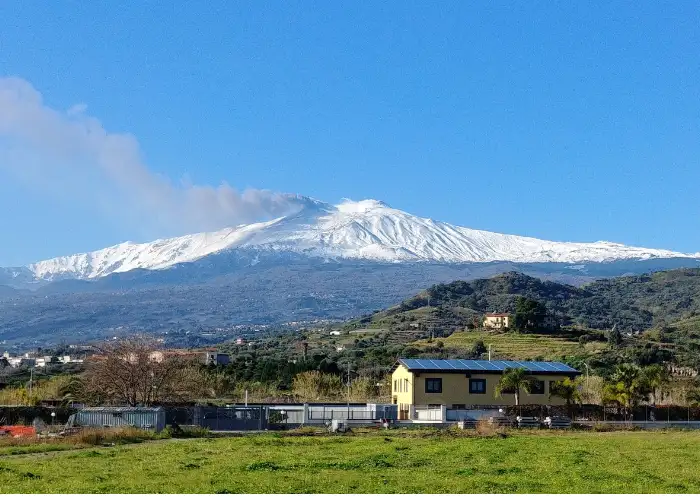
• Mount Etna, Europe's most active volcano, which you can hike, drive around, taste wine from, and watch erupting in real time from a distance at night.
• Street food in Palermo's Ballarò market that is unlike anything else in Italy, descended directly from the Arab souqs of the 9th-century Emirate of Sicily.
• Baroque towns in the southeast, Noto, Ragusa Ibla, and Ortigia in Syracuse, that are among the most beautiful and liveable urban environments in all of southern Europe.
• Beaches that are genuinely excellent, particularly San Vito Lo Capo in the west, Isola Bella near Taormina, and the volcanic black shores of the Aeolian Islands.
• A food culture ranked 7th in the world in 2025 by Condé Nast Traveler's Readers' Choice Awards, with the most exciting and varied street food scene in Italy.
• Significantly cheaper than mainland Italy, northern Europe, and most Indian travellers' other European alternatives, especially for food, local accommodation, and transport.
Best Time to Visit Sicily from India
Sicily's great advantage over most Mediterranean destinations is that it works year-round. The right season depends entirely on what you want from the trip, but there is no genuinely bad time to be here.
January and February — Off Season
Palermo and the cultural sites are uncrowded and atmospheric. Prices are at their lowest of the year. The sea is too cold for swimming at 15 to 16 degrees Celsius, but the archaeological sites, the markets, and the food are as good as ever. Carnival season in February brings colourful street celebrations, particularly in Acireale and Sciacca. An excellent window for a cultural-focused trip on a tight budget.
March and April — Shoulder Season
Weather improves steadily. Temperatures reach 18 to 22 degrees by April and the almond blossom season, which peaks in February around Agrigento and the Valle dei Templi, transitions into spring wildflowers across the interior. Easter week in Sicily is spectacular, with some of the most elaborate religious processions in Europe, particularly in Enna, Trapani, and Palermo. Book accommodation well ahead for Easter.
May and June — The Sweet Spot
The best overall window for most Indian travelers. Temperatures between 22 and 28 degrees Celsius, the sea swimmable from mid-May at around 20 to 21 degrees, crowds manageable, and prices well below the summer peak. Archaeological sites and markets are lively without being overwhelming. The Couscous Festival in San Vito Lo Capo happens in late September but the town itself is at its best in June with clean water and manageable numbers of visitors.
July and August — Peak Season
Extraordinary in terms of atmosphere and sea temperature, which reaches 26 to 28 degrees. But temperatures on land regularly hit 32 to 36 degrees Celsius and higher inland. The island is at its most expensive and most visited. Popular sites like the Valley of the Temples and Taormina require early morning visits to beat the worst of the crowds and the heat. Book everything weeks to months in advance for July and August travel.
September — Arguably the Single Best Month
The summer heat has eased to a much more comfortable 27 to 30 degrees. The sea is at its peak warmth at 25 to 26 degrees. Crowds drop noticeably from the August high and prices begin to fall. The Couscous Festival at San Vito Lo Capo celebrates Sicily's Arab culinary heritage with food from across the Mediterranean. Taormina's Greek Theatre film festival runs through the summer into September. If you can travel only once and want one recommendation, September is it.
October and November — Easing Down
October remains genuinely warm at 22 to 26 degrees and the sea is still swimmable in early October. Excellent for cultural sightseeing, hiking in the interior, and eating without the summer prices. By November, coastal businesses start closing and the weather becomes more unpredictable, but Palermo, Syracuse, and Agrigento remain excellent destinations all month.
December — Quiet and Festive
Christmas markets and light festivals in Palermo and the Baroque towns are genuinely lovely. Cool and occasionally rainy at 14 to 16 degrees. Off-peak prices and almost no tourist crowds. A great window for the Christmas week when many European destinations are overcrowded and overpriced.
Top Destinations in Sicily
Sicily is larger than most visitors expect, roughly the size of Chhattisgarh, and the drive from Palermo in the west to Syracuse in the east takes about three hours. The island rewards a decision to focus on either the west or the east for a first trip rather than trying to cover everything.
Palermo
The capital of Sicily and the starting point for most trips to the island. Palermo is loud, chaotic, historically dense, and genuinely extraordinary once you give it time. The Arab-Norman architecture, a UNESCO World Heritage Site, blends medieval Islamic design with Norman Christian influences in a way found nowhere else in Europe. The Palatine Chapel inside the Royal Palace contains mosaics so detailed and so golden that your first sight of them genuinely stops you. The Ballarò market, descended directly from the Arab souqs of the 9th-century Emirate of Sicily, is one of the great street food markets in Europe. Sfincione, panelle, arancini, and frittola are all eaten standing up, cheap, and genuinely unforgettable. Monreale Cathedral, a short bus ride uphill from the centre, has the largest mosaic programme in Europe and a cloister of 228 carved columns.
Taormina
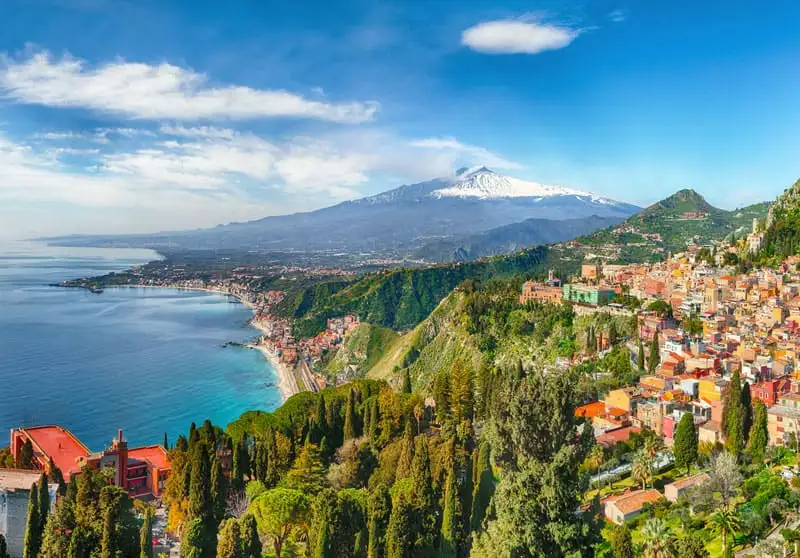
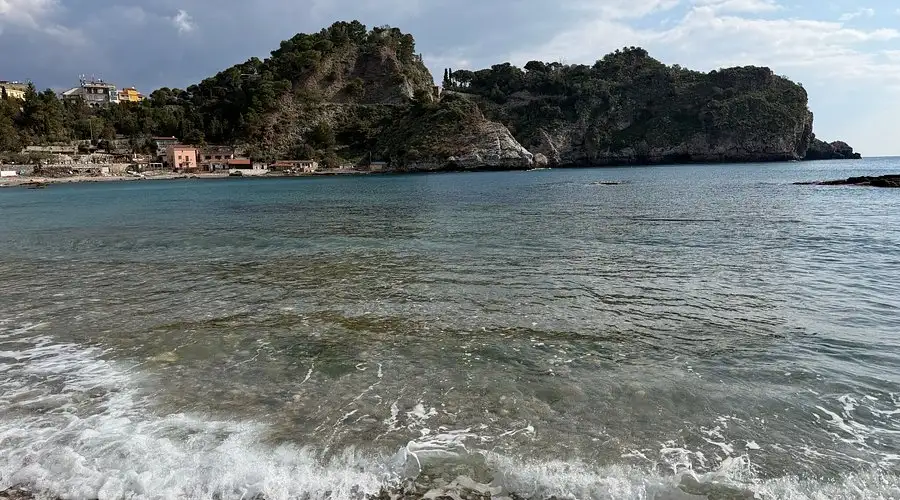
The most photogenic town in Sicily and the one most visited by international travelers. Taormina sits on a clifftop above the Ionian Sea with Mount Etna smoking in the background. The ancient Greek Theatre, built in the 3rd century BC and still used for concerts and film festivals, frames views of Etna and the coastline that are genuinely among the most beautiful in Europe. Below the town, Isola Bella is a tiny island connected to the shore by a narrow gravel bar, with crystal-clear water on both sides perfect for swimming and snorkelling. The San Domenico Palace hotel, where HBO's The White Lotus Season 2 was filmed, is the flagship luxury property. Taormina is more expensive than the rest of Sicily but even a day trip from a cheaper base like Catania is completely worth it.
Syracuse and Ortigia
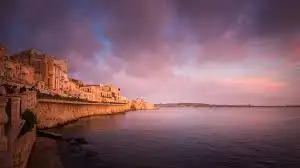
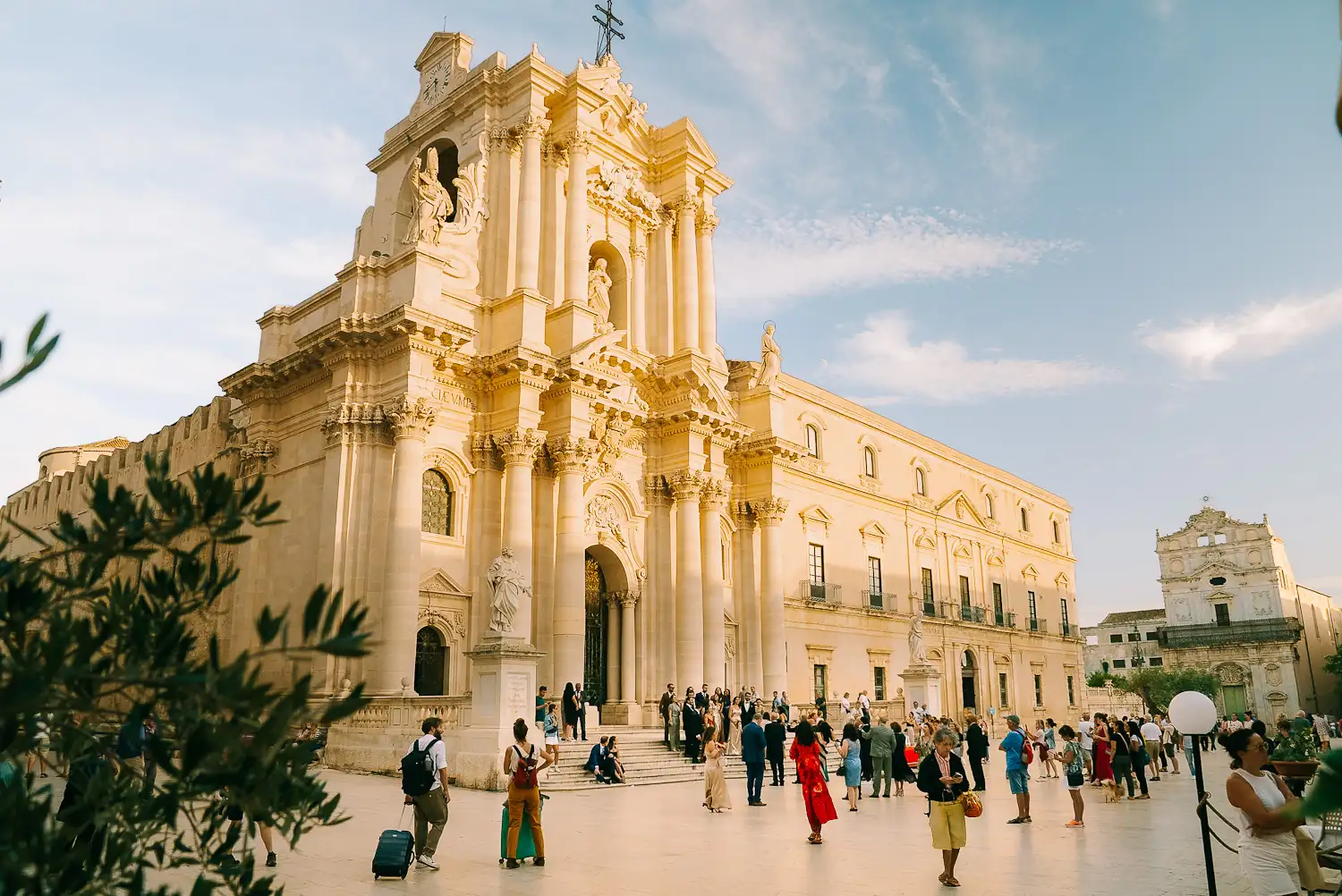
Syracuse was once one of the most powerful cities in the ancient world, rivaling Athens in size and influence during the 5th century BC. The mainland archaeological park has a 15,000-seat Greek theatre still used for annual drama performances, a Roman amphitheatre, and the extraordinary Ear of Dionysius, a 23-metre-high artificial cave with acoustics that amplify the faintest sound to a whisper. The real heart of the city, however, is Ortigia, the small island connected to the mainland by a bridge. A Baroque city built directly onto Greek foundations, with the Duomo sitting inside the walls of an ancient Greek temple whose original columns are still visible in the nave. The waterfront promenade at sunset, the Fountain of Arethusa, the fresh seafood restaurants, and the general atmosphere of Ortigia make it one of the most enjoyable places to spend time in all of Sicily. Two nights minimum.
Agrigento and the Valley of the Temples
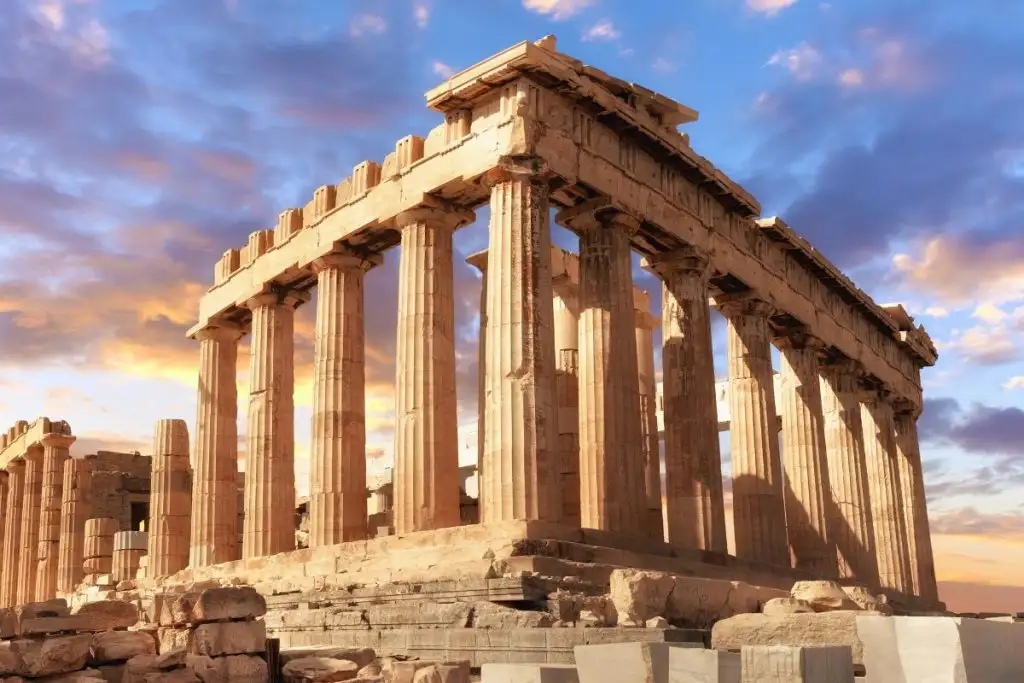
The Valley of the Temples is one of the most significant ancient Greek archaeological sites in the world, and the fact that it is in Sicily rather than Greece means it is visited at a fraction of the density of sites like the Parthenon. There are more standing Greek temples here than in Greece itself. The Temple of Concordia, built in 450 BC, is one of the best-preserved Doric temples anywhere on earth. The Temple of Hera stands on the ridge overlooking the Mediterranean in a position of extraordinary drama. Visit at sunset or book a guided night visit when the temples are lit from below and the atmosphere becomes almost surreal. The town of Agrigento itself has a medieval quarter and excellent local restaurants that most visitors miss entirely.
Cefalù
A small fishing town on the northern coast about an hour from Palermo that manages to be genuinely beautiful without feeling staged. The Norman cathedral, built in 1131 by Roger II, dominates the town with two towers visible from the sea for miles around. Inside, the Christ Pantocrator mosaic in the apse is one of the finest examples of Byzantine mosaic art in Sicily. The medieval streets below the cathedral are narrow, atmospheric, and full of good restaurants. The beach at Cefalù, a wide crescent of sand with clear shallow water backed by the cathedral and the rock formation of La Rocca, is one of the most scenically beautiful and easily accessible beaches in Sicily. An ideal base for the first or last few days of a trip.
Noto, Ragusa, and the Baroque Southeast
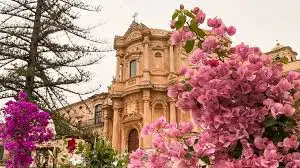
Noto was entirely rebuilt after the catastrophic earthquake of 1693 in a unified Baroque style using warm golden limestone, and the result is one of the most architecturally coherent and beautiful towns in Europe. The main street, Corso Vittorio Emanuele, is one of the finest in Italy. Nearby Ragusa Ibla occupies a hilltop above a limestone gorge and is similarly exceptional, with its own Baroque cathedral and a labyrinth of medieval lanes. Modica is famous for its ancient-style chocolate made without added fat, a tradition inherited directly from the Aztec recipe brought by the Spanish in the 16th century. These three towns together form what is called the Val di Noto and are among the most undervisited major sites in Italy.
Mount Etna
Europe's most active volcano and the dominant feature of eastern Sicily. Etna is visible from much of the eastern coastline and from Taormina in particular the view of the summit with its plume of steam and occasional glow at night is one of the defining images of Sicily. You can take a cable car from the south side at Rifugio Sapienza and then a guided jeep tour to within walking distance of the active craters. Hike through the black lava fields and ancient pine forests on the lower slopes. Visit the wine estates that produce Etna DOC wines from the volcanic soil, some of the most distinctive and increasingly expensive wines in Italy. Etna wine tours departing from Taormina or Catania are among the most popular activities on the island.
The Aeolian Islands
Seven volcanic islands off the northern coast of Sicily, accessible by ferry and hydrofoil from Milazzo, Palermo, and Naples. Each island has a completely distinct character. Stromboli has an active volcano that erupts every twenty minutes or so, visible at night from boats as a glow against the sky. Salina is green, fertile, produces exceptional capers and Malvasia wine, and feels genuinely unhurried. Panarea is the most fashionable, small, chic, and car-free with beautiful coves and upscale restaurants. Lipari is the largest and most accessible with a good archaeological museum. Visiting at least two or three islands on a day trip or overnight excursion from Sicily is one of the highlights of any trip to the island. Best from May to October.
Top 5 Beaches in Sicily
Sicily is not primarily a beach destination in the way Sardinia is, but the island has several genuinely outstanding beaches that reward a detour.
1. San Vito Lo Capo
On the north-west coast, this wide bay of white sand and turquoise water is by most measures the finest beach in Sicily. The water is shallow and clear, the sand is fine and genuinely white, and the town behind it has excellent restaurants and a good atmosphere. The Couscous Fest in September celebrates the Arab culinary heritage of north-west Sicily with food from across the Mediterranean. Easily accessible by bus from Trapani.
2. Scala dei Turchi
Near Agrigento on the south coast. Not a traditional beach but a set of white limestone cliffs that descend in natural carved steps to the sea. The formation is extraordinary and the photographs do not exaggerate it. The water below is exceptionally clear. Photogenic at all times but particularly at sunset. Best visited early in the day in summer before the crowds arrive.
3. Isola Bella, Taormina
A tiny island connected to the shore below Taormina by a narrow gravel sandbar that shifts with the tide. The water on both sides is clear and calm, good for swimming and snorkelling. The setting, with the cliff of Taormina above and Etna visible on a clear day, is one of the most dramatic beach settings in Sicily. Reached by cable car from Taormina town.
4. Mondello, Palermo
Eleven kilometres from Palermo, Mondello is a sheltered bay of fine sand with shallow, calm water and an extraordinary Art Nouveau bathing establishment built in 1913. Palermitani treat it as an extension of the city and the atmosphere on a Sunday afternoon, with locals eating at beach-side restaurants, is wonderful. The easiest excellent beach from the capital.
5. Stromboli Black Beach
The volcanic black sand beach of Stromboli island is unlike anything else in Sicily. You swim in the shadow of an active volcano that erupts every twenty minutes above you, and at night the glow from the crater is visible. Not a beach for sunbathing, but a beach for understanding that Sicily's geography is genuinely dramatic and unlike anywhere else in Europe.
Sicily for Indian Honeymooners
Sicily is a genuinely excellent honeymoon destination that is significantly undervalued by Indian couples compared to the Maldives or Bali. It combines the romantic elements of a beautiful destination with culture, extraordinary food, and experiences that go well beyond beach time.
Why Sicily works for honeymooners
Taormina is one of the most beautiful towns in the Mediterranean. Perched on a clifftop above the Ionian Sea with Mount Etna as a backdrop, it has the setting of a film and the restaurants and hotels to match. The San Domenico Palace, a converted 15th-century Dominican monastery where The White Lotus Season 2 was filmed, is arguably the most beautiful hotel in Sicily with a cliff-edge pool that belongs on a list of the world's finest. The Aeolian Islands, particularly Panarea and Salina, are car-free, intimate, and accessible by ferry, offering a second, quieter island experience within the trip. Dinner in Ortigia on a warm evening with a bottle of Etna Rosso is exactly as romantic as it sounds.
Honeymoon budget from India
Budget honeymoon (Cefalù or Noto boutique hotel): 90,000 to 1,20,000 INR per couple including return flights from India.
Mid-range honeymoon (Taormina 4-star or Ortigia boutique): 1,20,000 to 1,80,000 INR per couple including flights.
Luxury honeymoon (San Domenico Palace Taormina, Aeolian Islands stay): 2,00,000 to 3,00,000 INR per couple including flights.
Sicily Visa for Indian Passport Holders
Sicily is part of Italy and the Schengen Area. Indian citizens need a Schengen visa before travel. One visa covers Sicily, all of mainland Italy, and all other Schengen countries on the same trip.
How to apply
Apply through the Italian VFS Global centre in your city. Offices in Mumbai, Delhi, Bengaluru, Chennai, Hyderabad, and Kolkata. The visa fee is 90 euros, approximately 8,200 rupees at April 2026 rates, and is non-refundable regardless of outcome. Allow a minimum of four weeks and ideally six weeks during the peak April to July application season when delays are more common. Your travel insurance must provide minimum 30,000 euros of medical coverage and must explicitly state it is Schengen compliant.
Documents typically required
• Passport valid for at least three months beyond your return date, with at least two blank pages.
• Completed Schengen visa application form, filled accurately.
• Two recent passport-size photographs meeting Schengen photo specifications.
• Confirmed return flight booking and hotel reservations for the full trip duration.
• Bank statements for the last three to six months showing sufficient funds.
• Travel insurance with minimum 30,000 euro Schengen-compliant medical coverage.
• Proof of employment, business ownership, or student enrollment, plus leave sanction letter if employed.
• Income tax returns for the previous two years in most cases.
Do not book non-refundable flights or accommodation before the visa is granted. In case of rejection, you have the right to appeal and your VFS centre can advise on the process.
How to Get to Sicily from India
International flights to Rome
There are no direct flights from India to Sicily. The standard route is to fly into Rome Fiumicino (FCO) or Milan Malpensa (MXP) and connect onward to Sicily. Air India, IndiGo, Lufthansa, Emirates, Qatar Airways, and Etihad all operate India to Rome routes from Delhi, Mumbai, Bengaluru, Chennai, and Hyderabad. Flight time from Delhi to Rome is approximately 8 to 9 hours direct. From Mumbai it is around 9 to 10 hours. Book 8 to 12 weeks ahead for summer travel. Return fares from major Indian cities to Rome typically range from 40,000 to 75,000 rupees per person.
From Rome to Sicily
• By air: Domestic flights from Rome Fiumicino to Palermo (PMO) or Catania (CTA) take about one hour fifteen minutes. Book with ITA Airways, Ryanair, or easyJet. Fares from 3,500 to 6,500 rupees one way if booked in advance. Catania airport is the better gateway for eastern Sicily including Taormina, Etna, and Syracuse. Palermo is the better choice for western Sicily and the Aeolian Islands.
• By train and ferry: The train from Rome to Palermo takes around 11 hours and crosses the Strait of Messina on a ferry, which the train boards in Messina and rides across. It is a genuine experience and the Intercity Notte overnight service is a practical and atmospheric option. Worth doing at least once if you have the flexibility.
Getting around Sicily
Within Sicily, the train connects Palermo, Catania, Messina, Taormina, and Agrigento adequately for a highlights itinerary. The Palermo to Catania train takes about three hours. The Catania to Syracuse train takes about one hour. Bus services from Interbus and AST cover destinations not reached by train. For the interior, western coastline, Etna's slopes in detail, and the smaller towns, a hire car gives significantly more freedom and is recommended for ten-day or longer trips. International car hire companies operate at both Palermo and Catania airports. ZTL zones in historic town centres are clearly signed but require attention.
Sicily Travel Budget in INR
Sicily is one of the most affordable major destinations in Western Europe. Here is a realistic breakdown per person per day at three levels, not including international flights from India.
Budget traveler — 4,500 to 7,000 INR per day
• Accommodation: Guesthouses and B&Bs in Palermo, Catania, and Syracuse at 2,500 to 4,500 INR per night.
• Food: Street food for most meals at 300 to 700 INR per serving. Panelle, arancini, sfincione, and granita keep costs extremely low in Palermo.
• Transport: Train between cities at 500 to 1,500 INR per journey. Local buses at 200 to 600 INR.
• Sites: Valley of the Temples entry at approximately 1,500 INR. Most historic town centres are free to walk.
Mid-range traveler — 9,000 to 14,000 INR per day
• Accommodation: Three-star hotels or boutique B&Bs at 5,500 to 11,000 INR per night.
• Food: One sit-down meal per day at a good local trattoria at 1,500 to 3,000 INR per person. Street food for other meals.
• Transport: Occasional car hire or private transfers for day trips.
• Activities: Etna guided tour at 3,500 to 6,000 INR. Aeolian Islands day trip from Milazzo at 3,000 to 5,000 INR.
Comfortable traveler — 18,000 to 30,000 INR per day
• Accommodation: Boutique hotels in Taormina, Noto, or Ortigia at 11,000 to 22,000 INR per night.
• Food: Fine dining at 3,000 to 6,000 INR per person per meal.
• Activities: Private guided Etna tour, car hire for full trip, boat trips to the Aeolian Islands.
Overall 7-day trip budget including flights
Budget: 65,000 to 85,000 INR per person.
Mid-range: 85,000 to 1,15,000 INR per person.
Comfortable: 1,40,000 to 2,00,000 INR per person.
Sicily Tour Packages and Sample 7-Day Itinerary
Most Indian travelers visit Sicily either as a standalone trip or as part of a broader Italy itinerary combining it with Rome and sometimes Naples. A dedicated seven-day Sicily trip is the minimum needed to do the island any justice, and ten days is noticeably better.
Day 1 — Arrive Palermo
Arrive at Palermo airport, collect hire car if using one, check in. Afternoon walk through the historic centre. Visit the Quattro Canti crossroads, the Fontana Pretoria, and the Ballarò market if it is still running. First arancino of the trip. Dinner in the Vucciria quarter.
Day 2 — Palermo and Monreale
Morning at the Palatine Chapel inside the Norman Palace. Book in advance, it is one of the most extraordinary rooms in Europe and queues without a booking can be long. Afternoon bus to Monreale Cathedral with its extraordinary Byzantine mosaics and 228-column cloister. Return to Palermo for dinner.
Day 3 — Agrigento
Drive or bus to Agrigento. Spend the afternoon in the Valley of the Temples, allowing at least three to four hours. If possible, book in advance for the sunset visit when the temples are lit from below. Overnight in Agrigento or drive east toward Syracuse.
Day 4 — Syracuse and Ortigia
Morning in the Archaeological Park on the mainland: Greek theatre, Roman amphitheatre, Ear of Dionysius. Cross to Ortigia for the afternoon and evening. Walk the Duomo square, visit the Fountain of Arethusa, eat seafood pasta at a waterfront restaurant. Stay in Ortigia overnight. This is one of the great evenings of any Sicily trip.
Day 5 — Noto and Taormina
Morning in Noto, thirty minutes from Syracuse, to walk Corso Vittorio Emanuele and eat granita with brioche at one of the historic cafes on the corso. Drive north to Taormina, arriving in the afternoon. Walk Corso Umberto, visit the Greek Theatre, take the cable car down to Isola Bella for a swim. Overnight in or near Taormina.
Day 6 — Mount Etna
Book a guided Etna morning tour from Taormina or Catania at least two days in advance. Weather can force cancellations so an early booking with a weather-check clause is wise. The standard tour goes to the cable car at Rifugio Sapienza then by jeep to the upper craters. Return to Taormina for a final evening. If budget allows, book dinner at a restaurant with Etna views and order a bottle of Etna Rosso.
Day 7 — Depart Catania
Morning free in Taormina or drive to Catania for a few hours before the flight. Catania's fish market at La Pescheria is one of the most atmospheric in Sicily and worth an hour of anyone's time. Fly from Catania to Rome and connect home.
Sicily Food Guide: What to Eat and Drink
Sicilian cuisine is the result of 2,500 years of invasion, trade, and cultural mixing. Greeks, Romans, Arabs, Normans, and Spanish all left something in the cooking, and the result is the most distinctive regional food in Italy. The Arab influence is the most significant and most visible: the spices, the sweet-and-sour combinations, the rice dishes, and the street food culture of Palermo all trace directly back to the 9th-century Emirate of Sicily.
Must-try food
• Arancini are fried rice balls stuffed with ragù, cheese, or pistachio cream. They exist everywhere, at any time of day, and the best ones in Palermo are found hot from the fryer at Ballarò market and at Antico Caffè Spinnato on Via Principe di Belmonte.
• Granita with brioche is the Sicilian breakfast and nothing else compares in summer. A semifrozen slush of fresh fruit, almond, or coffee, eaten by dipping a soft brioche bun. The almond granita around Agrigento and the coffee granita at Bar Turrisi in Castiglione di Sicilia near Etna are outstanding.
• Palermo street food from Ballarò and Vucciria: panelle (chickpea fritters), sfincione (thick Sicilian pizza closer to focaccia), fritto misto di pesce (fried seafood mix), and pani câ meusa (spleen bread in a sesame roll) for the adventurous.
• Pasta alla Norma is aubergine, tomato, basil, and ricotta salata. Simple, perfect, and found on every menu in eastern Sicily. The best versions are in Catania, which claims it as its own dish.
• Cannoli with fresh ricotta, not the pre-filled ones sitting in a display case but made to order when you ask. The ricotta should be sweet, fresh, and slightly grainy. The best in Palermo are at I Segreti del Chiostro in Piazza Bellini.
• Pistachio from the town of Bronte on Etna's slopes, which produces what many consider the world's finest pistachios. Pistachio gelato, pistachio pesto, pistachio arancini, pistachio cannoli, and pistachio cream spread on almost anything. Buy a jar to take home.
• Fresh seafood: swordfish (pesce spada), sea urchin (ricci di mare), fresh tuna cooked in the traditional way, and calamari so fresh it barely needs cooking. The best waterfront restaurants are in Ortigia, Cefalù, and on the Aeolian Islands.
Drinks
• Nero d'Avola is Sicily's signature red grape, producing full-bodied, deeply fruited wines. Etna Rosso, from the volcanic soil of Etna's slopes, is more complex, more mineral, and increasingly fashionable internationally. Both are excellent and affordable compared to equivalent wines from mainland Italy or France.
• Marsala is the fortified wine from the west of the island around the town of Marsala, ranging from dry to sweet. The dry versions work well as an aperitivo. The sweeter versions are what most people know from cooking.
• Fresh almond milk, particularly in the area around Agrigento and Noto, is genuinely unlike anything sold elsewhere and worth seeking out at any bar or café.
For vegetarians: Sicily is very manageable. Arancini with cheese or pistachio, pasta alla Norma, panelle, caponata (sweet and sour aubergine stew), pizza, and the extraordinary variety of fresh vegetables, cheese, and antipasti at every market and trattoria make eating well without meat entirely straightforward.
Sicily Travel Tips: Essentials for Indian Travelers
Cash
Carry cash, particularly outside the main tourist towns. Markets, smaller trattorias, and local cafes often do not accept cards. ATMs are available in all cities and most towns. A practical guide is 50 to 100 euros in cash per person per week for markets, tips, and smaller purchases.
ZTL zones
Most historic town centres in Sicily are ZTL (zone a traffico limitato) where private cars cannot enter during certain hours. If you rent a car, your hotel will advise you where to park outside the ZTL. Driving into a ZTL without authorisation results in an automatic fine sent to your home address weeks later via the hire car company. Follow the red signs carefully and use designated car parks.
Dress codes
Churches and cathedrals require covered shoulders and knees for entry. This applies to everyone. Carry a light scarf or use the wraps sometimes provided at the entrance. This is particularly important at the Palatine Chapel in Palermo, Monreale Cathedral, and the Duomo in Syracuse.
Booking in advance
Book the Palatine Chapel in Palermo in advance to avoid long queues. Book Etna tours at least two days ahead as weather can force cancellations and the jeep tours to the upper craters sell out quickly. For July and August travel, book all accommodation and major site tickets weeks ahead.
Language
English is spoken at most hotels, tourist sites, and restaurants in the major towns. Outside tourist areas, Italian is necessary. Locals are genuinely warm and even a basic attempt at Italian is met with visible appreciation. Google Translate handles Italian menus and signs well.
Safety
Sicily is generally safe for tourists. Petty theft and pickpocketing in Palermo's Ballarò market and Catania's city centre are the main concerns, standard advice for any busy European city market. Smaller towns like Taormina, Ortigia, Noto, and Cefalù feel very relaxed and safe at all hours. Use hotel safes for passports and keep bags in front of you in crowded market areas.
Frequently Asked Questions About Sicily Travel
Is Sicily good for first-time visitors to Italy?
Sicily is an excellent choice for a first Italy visit, either as a standalone trip or combined with Rome. The combination of ancient temples, a live volcano, Baroque towns, world-class street food, and decent beaches gives you an extraordinary range of experiences in a compact area. It is also more affordable than northern Italy and rewards curiosity in a way that few destinations do.
How many days do I need in Sicily?
Seven days is the minimum to cover the main highlights without feeling rushed. A practical seven-day route covers Palermo, Agrigento, Syracuse and Ortigia, Noto, Taormina, and Mount Etna. Ten days adds Cefalù, the Baroque southeast towns of Ragusa and Modica, or a night or two on the Aeolian Islands. Two weeks allows a proper loop around the full island.
Do I need a car in Sicily?
It depends on your itinerary. For eastern Sicily, the train connects Catania, Taormina, Messina, and Syracuse reasonably well. For western Sicily, the interior, Etna's slopes in detail, and the smaller coastal areas, a car gives significantly more freedom. If renting, pick up at Palermo airport and drop off at Catania, or vice versa, to avoid backtracking.
What is the best base in Sicily?
For eastern Sicily, Catania or Taormina work well. Catania is cheaper and more central. Taormina is more beautiful and more expensive. For western Sicily, Palermo is the obvious base. For the southeast, Ortigia in Syracuse is one of the most enjoyable places to stay in all of Sicily.
Is Sicily good for a honeymoon from India?
Yes, genuinely. Taormina, Ortigia, and Noto are among the most beautiful and romantic towns in the Mediterranean. The San Domenico Palace in Taormina, where The White Lotus was filmed, is exceptional. A mid-range Sicily honeymoon from India including flights typically costs 1,20,000 to 1,80,000 rupees per couple, significantly less than the Maldives for a far richer experience.
Is Sicily vegetarian-friendly?
Very much so. Arancini with cheese or pistachio, pasta alla Norma, panelle, caponata, and the extraordinary variety of fresh vegetables, cheese, and antipasti at every market make eating without meat straightforward and genuinely excellent.
What is the Schengen visa fee for Sicily from India?
The Schengen visa fee is 90 euros, approximately 8,200 rupees at April 2026 rates, for adults. The fee is non-refundable. Apply through Italian VFS Global in Mumbai, Delhi, Bengaluru, Chennai, Hyderabad, or Kolkata and allow four to six weeks for processing.
Is Sicily safe for Indian tourists?
Yes. Sicily is generally safe for tourists. Petty theft in busy markets in Palermo and Catania is the main concern, standard advice for any popular European city. Smaller towns like Taormina, Ortigia, Noto, and Cefalù feel very relaxed and safe at all hours. Standard travel precautions apply.
Sicily does not reveal itself immediately. The best version of the island belongs to the traveler who stays long enough to eat from a market stall at midnight, drive up Etna before sunrise, and sit in Ortigia on a warm evening with a glass of Etna Rosso and no particular agenda. That version of Sicily is more accessible for Indian travelers than most people realise, and it is worth every minute of the planning it takes to get there.