Why Sri Lanka Should Be Your Next Holiday (And When to Go)
Closer than Europe, more diverse than Bali, and still surprisingly under the radar. From wild safaris and golden beaches to misty tea estates and one of the world’s most scenic train journeys, Sri Lanka packs an entire travel experience into an island just a few hours from India. Here is everything you need to know before you go.
Written by
Ananticaa Jaiswal
Published on
April 2, 2026
Beaches, ancient ruins, leopard safaris, misty tea plantations, one of the most scenic train rides on earth, and food that will ruin every other holiday for you. All of this is packed into an island roughly the size of Tamil Nadu.
For Indian travelers especially, Sri Lanka hits different. The culture feels familiar but foreign in all the right ways. The food speaks your language. Coconut, spice, rice and curry. You already know the drill. And getting there takes two to three hours on a flight from most Indian cities, or you can take a ferry from Rameshwaram if you want a story to tell.
Sri Lanka feels like countless countries rolled into one, and you can experience them all in a single trip.
This is not one of those destinations where you have to choose between beach and culture. Sri Lanka does both at the same time, without apology. You can wake up in a colonial fort town, take a train through tea gardens, and watch whales by sunset. That is just a regular Tuesday here.
Sri Lanka was named one of Travel + Leisure's 50 Best Places to Travel in 2026, ranked 7th in Conde Nast Traveler's global culinary awards, and took the top spot as the Most Desirable Island in the World at the Wanderlust Reader Travel Awards. The world has finally caught on.
When Should You Go?
Sri Lanka has two monsoon seasons, which means the best time to visit question is really a which part of the island question. The good news is there is always somewhere great to be, no matter when you travel.
December to March — West and South Coast Peak Season
Clear skies, warm beaches, and ideal conditions for the south coast and cultural sites. Whale watching in Mirissa peaks during this window and the pilgrimage season on Adam's Peak runs from December to mid-April. This is the busiest and most expensive time to visit, so book accommodation well in advance. For Indian travelers escaping north India's winter, this is the obvious window to aim for.
April to September — East Coast Season
While the south and west get monsoon rain, the east coast is dry and sunny. Arugam Bay's surf season peaks here, Trincomalee's beaches are at their best, and from August into September hundreds of elephants gather at Minneriya National Park in one of Asia's most spectacular wildlife events.
April to May and September to November — Shoulder Season
Agreeable weather across most of the island, lighter crowds, and noticeably better hotel rates. A good time for hill country trekking, climbing Sigiriya, and exploring the Cultural Triangle without the peak season rush.
May to August — Budget Season
Accommodation prices on the south coast drop significantly. Landscapes turn lush and green with the rains. Cultural heritage sites like Sigiriya and Polonnaruwa are just as rewarding regardless of the monsoon. If you are flexible and budget-conscious, this season rewards you well.
One month to avoid
October is the wettest month across most of the island and the one window where travel becomes genuinely difficult everywhere. Plan around it if you can.
Where to Go Based on What You Want
Rather than listing places alphabetically or by region, here is Sri Lanka broken down by what you are actually looking for. Most good itineraries end up mixing two or three of these categories naturally.
Beaches
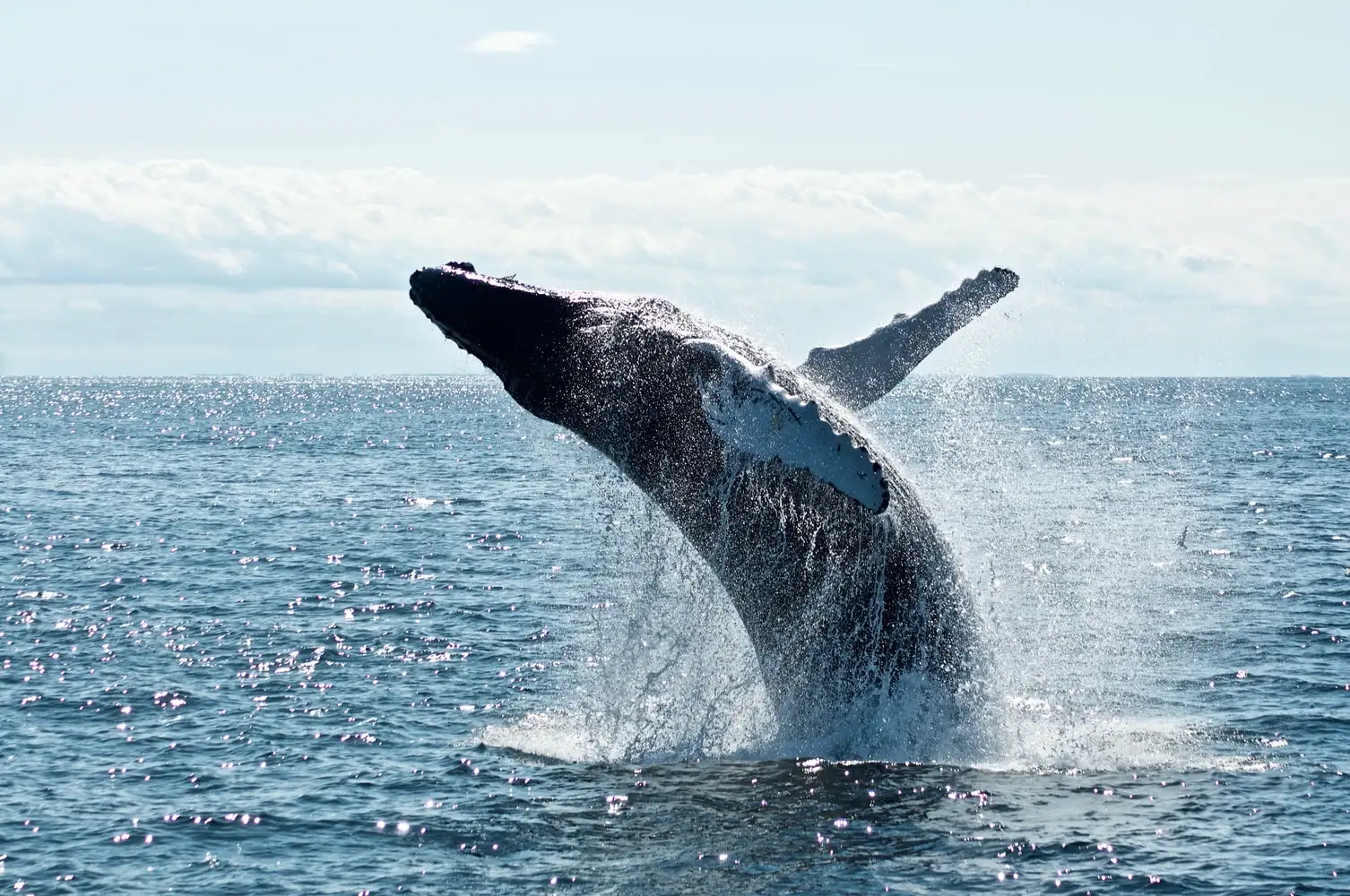
• Mirissa is the south coast favourite, famous for whale watching and a relaxed stretch of sand that is hard to leave. Blue whales are visible from relatively close to shore between November and April.
• Unawatuna has a sheltered, crescent-shaped bay that is ideal for swimming. It is calmer and more family-friendly than Mirissa and still genuinely beautiful.
• Arugam Bay on the east coast is one of Asia's better surf destinations. It comes alive between May and September when the waves are at their best and the west coast is in monsoon.
• Trincomalee is the east coast's gem, with clear water, coral reefs, and a quieter atmosphere than the south. The beaches at Nilaveli and Uppuveli are among the most underrated in the country.
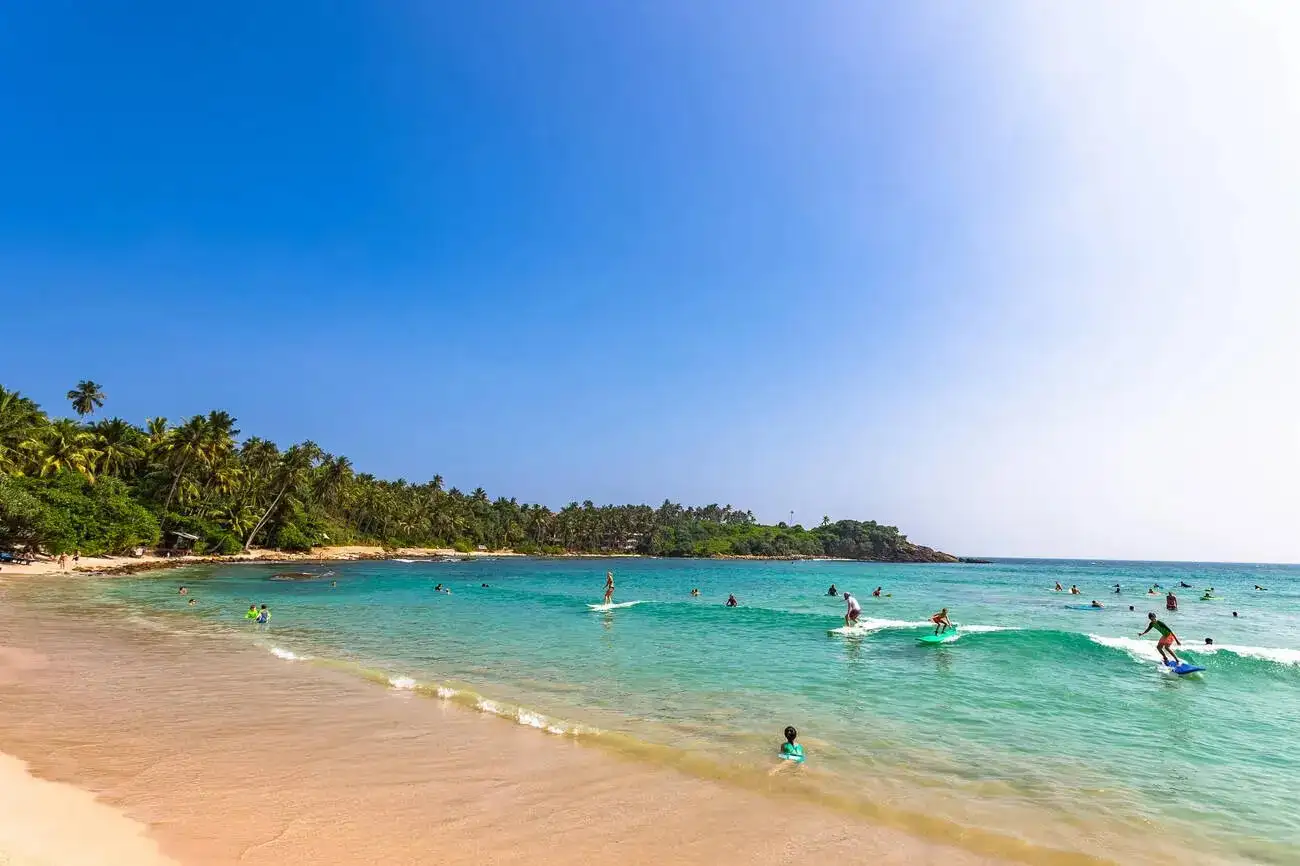
• Hiriketiya is a small horseshoe bay near Dickwella that has become the go-to for surfers and slow travelers who want something away from the main tourist trail.
Forts and Heritage
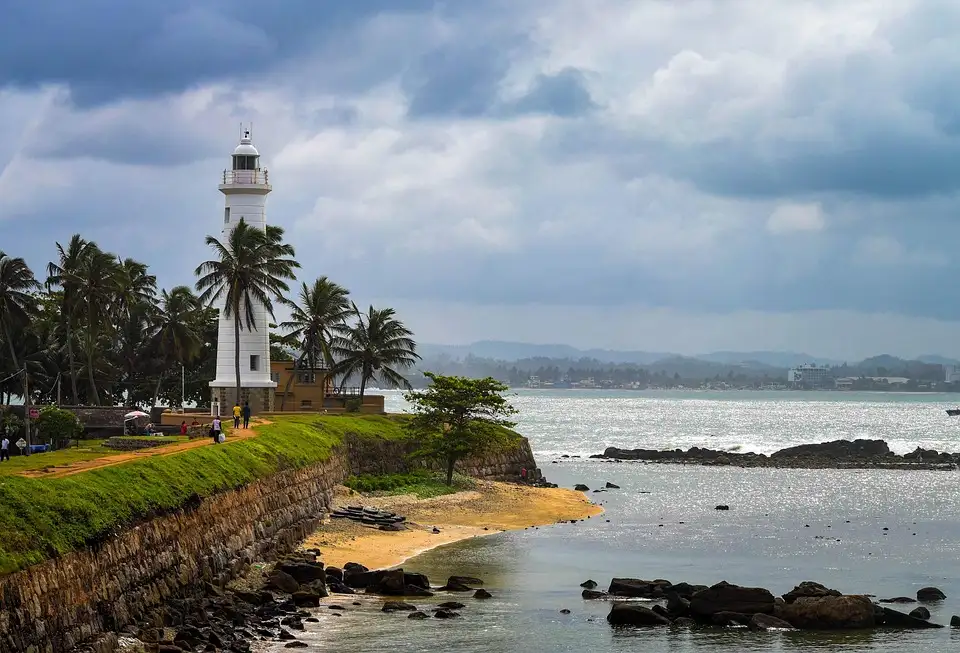
• Galle Fort is the standout. A UNESCO World Heritage Site on the southern coast with Dutch colonial architecture, boutique hotels, good cafes, and a rampart walk at sunset that genuinely stops you in your tracks.
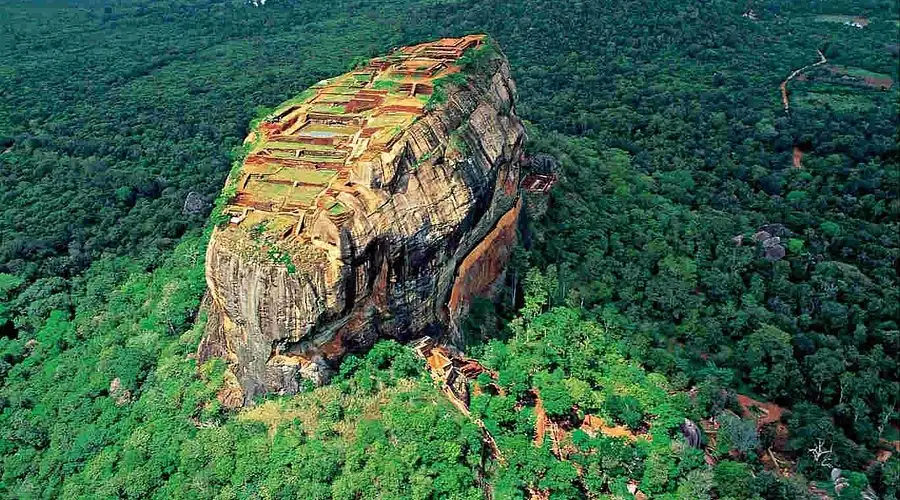
• Sigiriya Rock Fortress is a 5th century citadel perched on a volcanic rock column rising out of the jungle. The frescoes, the mirror wall, and the views from the top are extraordinary. Go early to beat the heat.
• Dambulla Cave Temple is one of Sri Lanka's most important religious sites, a complex of cave temples filled with Buddhist murals and statues built into a granite outcrop.
• Kandy's Temple of the Tooth Relic is the most sacred Buddhist site in Sri Lanka and worth visiting for the atmosphere alone, particularly in the evening during the daily ceremony.
• Anuradhapura and Polonnaruwa are ancient cities full of stupas, palaces, and ruins that most visitors skip. If you have time for either, Polonnaruwa is the more compact and rewarding of the two.
Scenic Experiences
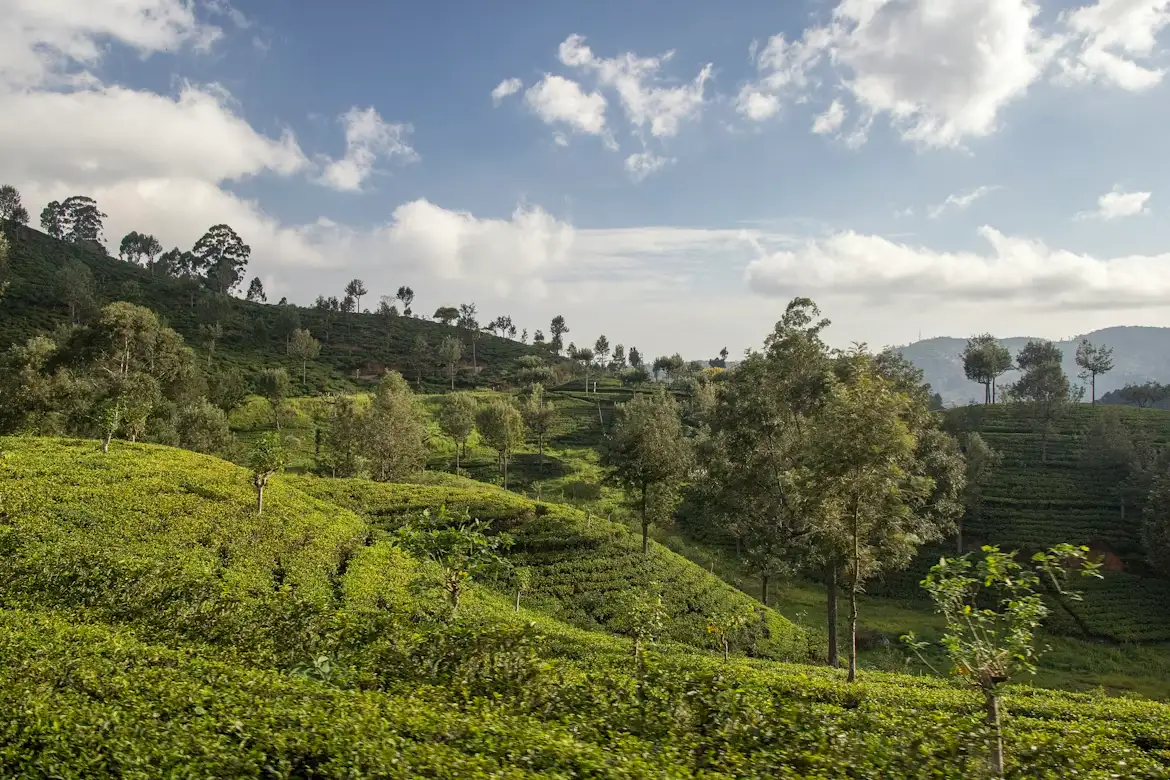
• The Kandy to Ella train journey is widely regarded as one of the most beautiful rail rides in the world. Rolling tea estates, misty hills, and bridges over deep valleys. Book the first class observation car well in advance because it sells out weeks ahead.
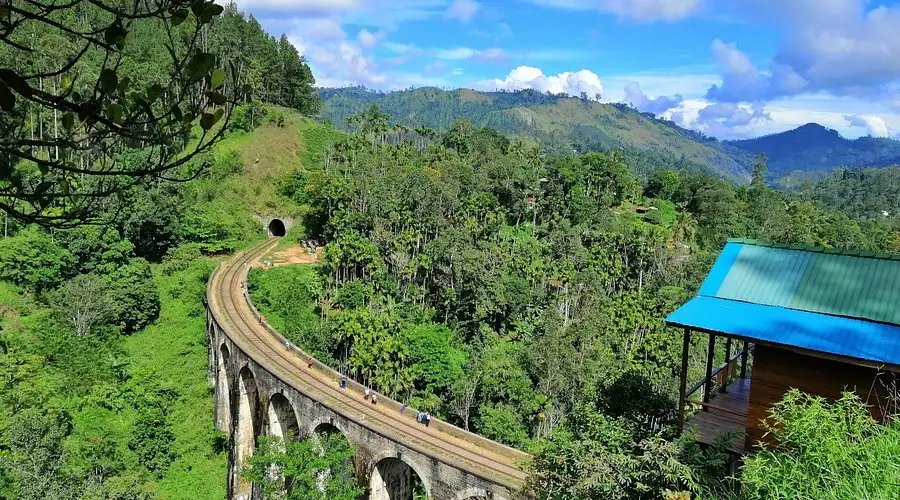
• Ella itself rewards slow exploration. The Nine Arches Bridge, Little Adam's Peak, and Ella Rock are all within easy reach and each one offers views that photographs genuinely struggle to capture.
• Nuwara Eliya sits at nearly 2,000 metres and has a cool, almost colonial hill station feel. The tea estates around it are beautiful and several factories offer tastings with views across the valley.
• The road through the Knuckles Mountain Range is one of the more dramatic drives in the country, less visited than the main tourist circuit and genuinely rewarding for the scenery.
• Adam's Peak is a sacred mountain that draws pilgrims of multiple faiths. The climb starts before midnight so you arrive at the summit in time for sunrise. It is a bucket list experience that delivers on the promise.
National Parks and Wildlife
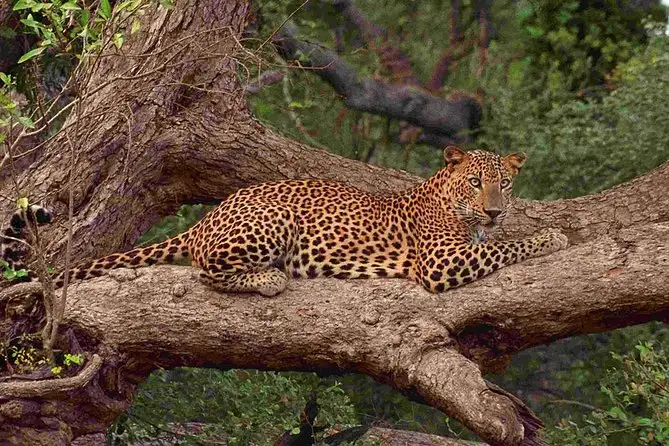
• Yala National Park has one of the highest densities of leopards of any national park in the world. Early morning and late afternoon game drives give the best chances of sightings. Elephants, sloth bears, and crocodiles are also commonly seen.
• Udawalawe is the best park for elephant sightings. Herds of 30 or more are not unusual and the open grassland landscape makes spotting them straightforward even on a short visit.
• Minneriya National Park is worth timing your trip around if possible. From August into September, hundreds of elephants gather around the reservoir in what is called the Gathering, one of Asia's most spectacular wildlife events.
• Wilpattu in the north is the largest national park in Sri Lanka and one of the least visited. Leopard sightings here are less reliable than Yala but the landscape is wilder and the experience more solitary.
• Pigeon Island near Trincomalee is a marine park where snorkeling with sea turtles and reef sharks is genuinely accessible, just a short boat ride from the beach.
A Simple 7-Day Route Most People Take
Sri Lanka rewards slow travel but if you have a week, this is the route that most first-time visitors follow and with good reason. It covers the main highlights without feeling like a sprint and gives you a genuine sense of how varied the island is.
Colombo — Start in the capital, get your bearings, eat well, and explore Pettah and the waterfront. One night is enough.
Cultural Triangle (Sigiriya and Dambulla) — Head north to the ancient sites. Sigiriya deserves an early morning visit. Dambulla's cave temples are nearby and usually done on the same day. Two nights works well here.
Kandy — Drive south to the hill country capital. Visit the Temple of the Tooth, walk around the lake, and if timing allows catch the evening cultural show. One night.
Ella — Take the train from Kandy. This is the journey, not just the destination. Allow the full day for the ride, explore Ella the following morning. Two nights.
South Coast (Mirissa or Galle) — Head down to the coast for your final stretch. Galle Fort for history, Mirissa for the beach and a chance at whale watching if the season lines up. Two nights.
This route runs roughly top to bottom and finishes on the coast, which makes for a satisfying arc. Most people either fly out of Colombo at the end or add a few more days on the beach before heading back.
The Food Alone Is Worth the Trip
Sri Lanka ranked 7th in the world for food in Conde Nast's 2025 Readers' Choice Awards, ahead of Japan, Spain, and Greece. For Indian travelers, there is the comfort of recognisable spices and cooking techniques, but with enough difference to make every meal feel like a new discovery. The best part is that eating well here costs very little.
What to eat and drink
• Rice and curry, the national dish, is steamed rice served alongside four to eight different curries, sambols, and papadums. Every meal is a different combination and it never gets old.
• Hoppers, or appa, are bowl-shaped pancakes made from fermented rice flour. The egg hopper at breakfast, with a runny egg cooked right in the centre, is one of those things you will think about for weeks after you leave.
• Kottu roti is chopped flatbread stir-fried with vegetables, egg, and your choice of meat. The rhythmic clanging sound of the metal blades chopping everything together is the unofficial soundtrack of Sri Lankan nights.
• String hoppers are steamed rice noodle nests, typically eaten for breakfast with a coconut milk curry. Light, delicate, and completely addictive.
• Coconut sambol is the spicy, tangy shredded coconut condiment that goes with practically everything. You will find yourself wanting it on things back home.
• Sri Lankan crab at Ministry of Crab in Colombo has a genuine reputation. Black pepper crab or chilli crab, order either and wear something you do not mind ruining.
• Ceylon tea drunk fresh at a hill country estate tastes nothing like the tea bags you have had before. It is worth stopping at a working tea factory in Ella or Nuwara Eliya just for this.
For vegetarians, Sri Lanka is genuinely one of the better destinations in Asia. Rice and curry is naturally plant-based at most local restaurants, jackfruit is widely used as a meat substitute, and you will find dosa, idli, and other South Indian staples everywhere, especially as you go further north toward Jaffna.
Practical Tips for Indian Travelers
Getting there
Direct flights to Colombo run from Delhi, Mumbai, Chennai, Bengaluru, Hyderabad, and Kochi. Most south Indian cities are two to three hours away. Watch for promotional fares on newer routes from Hyderabad and Kochi during the shoulder seasons as prices can drop considerably.
Visa
Indian citizens need an Electronic Travel Authorization, or ETA, before arriving. You apply online at eta.gov.lk, it takes only a few minutes to complete, and it covers 30 days with double entry. Completing this before you travel rather than on arrival at the airport saves time and avoids queues.
Budget
Sri Lanka is genuinely affordable by international standards. Local food costs very little, public transport is cheap, and even a mid-range trip comes in well below what you would spend in Bali or Thailand. Budget travelers can get by comfortably on 2,000 to 4,000 rupees per day not counting accommodation.
Getting around
The train from Kandy to Ella is a world-class experience and worth booking specifically for. First class observation car tickets sell out weeks ahead, so plan early. For flexibility between cities, hiring a driver for a few days is practical, affordable, and something most visitors end up saying was the best decision they made.
How long to go for
Seven days is the minimum to see the island properly. Ten days is the sweet spot, enough for the Cultural Triangle, the hill country, and at least one beach. Fourteen days gives you room to add the east coast or head north to Jaffna. Sri Lanka rewards slow travel more than most places, so resist the urge to pack in too much.
Cash and payments
Carry Sri Lankan rupees for smaller towns, local restaurants, and markets. Cards are accepted at most hotels and tourist-facing restaurants in bigger destinations, but outside Colombo and the main tourist towns you will want cash on hand.
Frequently Asked Questions
Is Sri Lanka safe for Indian tourists?
Yes. Sri Lanka has low crime rates and the kind of genuine warmth toward visitors that is increasingly hard to find. For Indian travelers specifically, the cultural familiarity helps too. Shared religious traditions, similar food, and a large Tamil-speaking population in the north make the country feel comfortable from the very first day. The usual common sense travel precautions apply, but there is nothing specific about Sri Lanka that should give you pause.
How many days do I need for Sri Lanka?
Seven days is the minimum if you want a proper feel for the island. Ten days is the sweet spot and lets you cover the Cultural Triangle, the hill country around Ella, and at least one good beach destination without rushing. Fourteen days opens up the east coast and Jaffna. What most first-time visitors underestimate is how much there is to see once they arrive. Sri Lanka is always worth more time than you planned for.
What is the best time to visit Sri Lanka from India?
December to March is the classic window for the west and south coasts, with clear skies, calm seas, and great conditions for both beaches and cultural sightseeing. For north Indians escaping the winter cold, this period is ideal. South Indians looking for better value might find the shoulder months of April to May and September to November more attractive, with noticeably fewer crowds and lower prices. October is the one month to avoid as it brings heavy rain across most of the island.
Do I need a visa to visit Sri Lanka from India?
Yes. Indian citizens need to apply for an Electronic Travel Authorization online before travelling. You do it at eta.gov.lk, it takes a few minutes, costs a small fee, and gives you 30 days with the option to enter twice. Apply before you travel rather than on arrival at the airport.
Is Sri Lanka expensive for Indian tourists?
Not at all. Sri Lanka is one of the more affordable international destinations accessible from India. Local food is very cheap, public transport costs little, and a good mid-range trip comes in well below what you would spend in Bali or anywhere in Europe. You can control your budget easily by eating at local restaurants most of the time while treating yourself occasionally, and still have a genuinely excellent trip.
Can vegetarians eat well in Sri Lanka?
Very well, actually. Rice and curry is naturally vegetarian at most local restaurants. Jackfruit is widely used as a meat substitute. And the closer you get to Jaffna in the north, the more you find a strong vegetarian tradition rooted in Tamil culture, with dosa, idli, and familiar South Indian dishes everywhere. Just check with restaurants on what goes into the curry bases if you are strictly vegetarian.
Is Sri Lanka a good honeymoon destination?
Genuinely yes. Galle Fort has boutique hotels that are romantic without being over the top. Ella has hilltop resorts with views that photographs honestly cannot do justice to. Mirissa and Unawatuna have beautiful beach properties. What sets Sri Lanka apart from somewhere like the Maldives is that you get real culture, exceptional food, and genuine adventure alongside the luxury, which tends to make for a much richer and more memorable first trip together.
Will I manage without knowing Sinhala or Tamil?
Easily. English is spoken widely across Sri Lanka, particularly in hotels, restaurants, tourist areas, and anywhere you are likely to spend time as a visitor. Signage is commonly in English alongside Sinhala and Tamil. Most Indian travelers find communication far easier than they expected.
In 2026, one of the best journeys you can make might be the one closest to home. Sri Lanka is at that rare point where it is well-connected enough to be easy to travel but not yet so crowded that the experience feels like everyone else's holiday. The beaches are genuinely beautiful. The food is extraordinary. The people are warm. And the island gives back more than you put into it, no matter what kind of traveler you are.
The only real question is whether you go before the rest of the world catches up.