
Japan · Destination guides
A 7-Day Japan Itinerary Through Tokyo and Osaka
A seven-day Japan itinerary with three nights each in Tokyo and Osaka, plus Mt. Fuji, Kyoto and Nara as day trips. Two bases mean fewer hotel changes.
In this story 10
- Two bases, three nights each
- Days 1–2: Tokyo, one old side and one new
- Day 3: Mt. Fuji from Tokyo, if the sky allows
- Day 4: Shinkansen to Osaka, Dotonbori by night
- Day 5: Kyoto, starting under the torii
- Days 6–7: Nara's deer, Osaka Castle, then Kansai
- How many days you need
- Eating vegetarian or Jain along the route
- Before you book
- Questions travellers ask
For a first week in Japan, we'd stay in just two cities: three nights in Tokyo, then three in Osaka, with Mt. Fuji, Kyoto and Nara as day trips. We've planned 9 trips to Japan for travellers, and this is the shape we reach for when someone has seven days. You unpack twice, you skip the hotel shuffle, and you still see the mountain, the temples and the deer.
Two bases, three nights each
Many seven-day plans online run Tokyo, Hakone, Kyoto and Osaka back to back, which means changing hotels almost every other day. Each change costs a morning of packing, checking out and finding your feet again. That adds up fast in a week.
Tokyo and Osaka make better anchors. The bases our Japan trips use most are Tokyo (9 of 9), Osaka (8 of 9) and Kyoto (6 of 9), and this route leans on the first two. Kyoto sits about 30 minutes from Osaka by train, so it works as a day out without a third check-in. The route also flies into Tokyo and out of Osaka's Kansai airport. That way you never spend a half-day riding back to Tokyo just to catch your flight home.
Days 1–2: Tokyo, one old side and one new
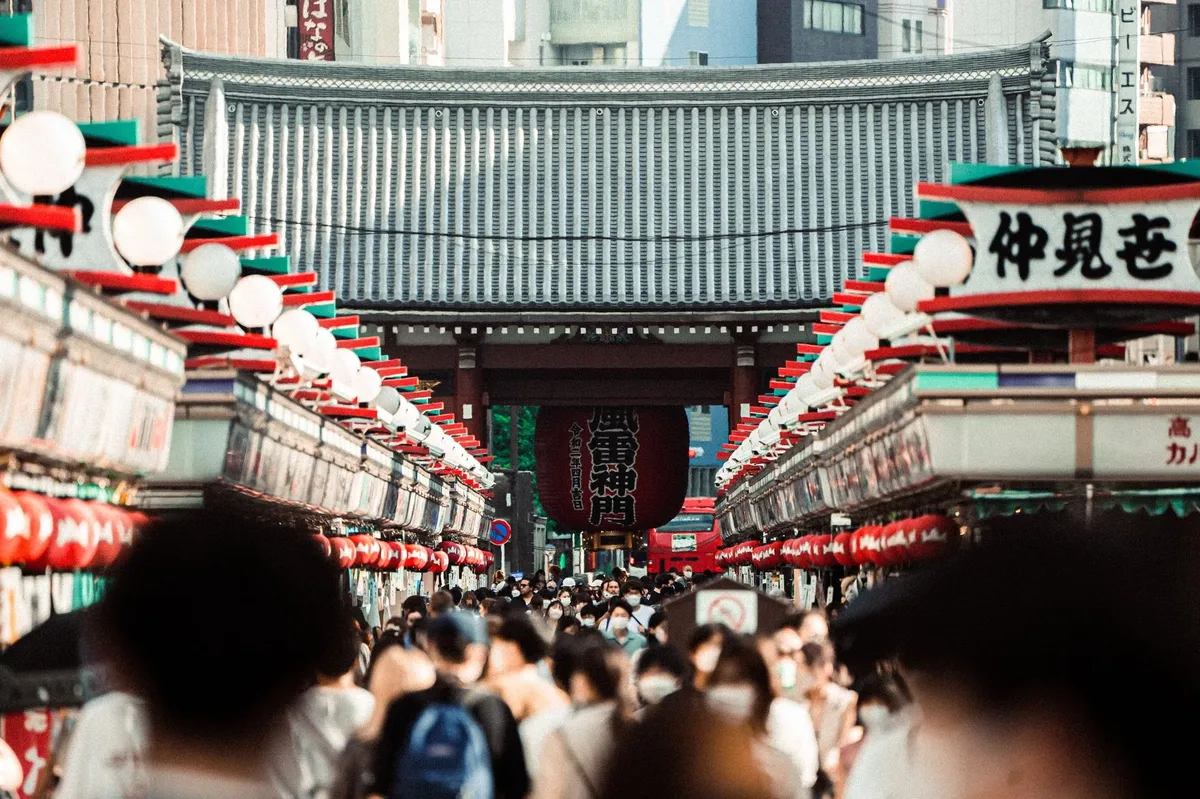
Your first day depends on which airport you land at. Haneda is about 25 minutes from the city, while Narita takes closer to an hour, so Haneda gives you a longer first afternoon. Check in near Shinjuku, drop your bags and keep the rest of the day light.
That afternoon, head to Senso-ji in Asakusa, Tokyo's old temple quarter, and walk Nakamise Street, the lane of stalls that leads up to it. It is a gentle way to start after a long flight. If you are up early on another morning, travellers say it's worth coming back before the shops open. You beat the crowds and get to see the paintings on the closed shop shutters.
Day 2 is the newer Tokyo. Start at Meiji Jingu, the forested shrine that costs nothing to enter, then walk into Harajuku for its fashion streets. From there it is a short hop to Shibuya Crossing. For the skyline, we'd go up Shibuya Sky; it gives you the wider city view, so you can leave out Skytree on a short trip. Families with younger children can swap part of the day for teamLab Planets, the walk-through digital art space, but book it ahead.
In the evening, go back to Shinjuku for Golden Gai. More than 200 tiny bars are packed into a few narrow lanes, many seating only a handful of people. Pick one that looks friendly and settle in. Shinjuku also sets you up well for tomorrow, because the Fuji train leaves from here.
Day 3: Mt. Fuji from Tokyo, if the sky allows
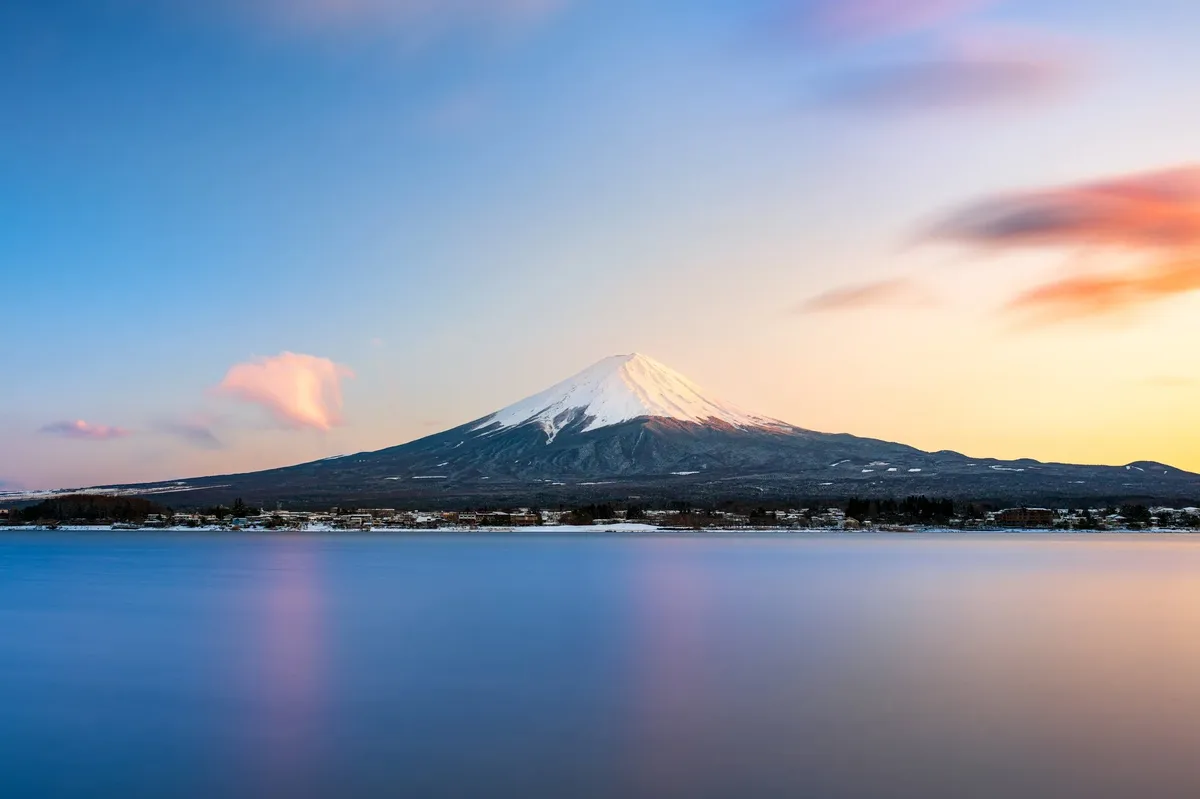
The direct train from Shinjuku takes you to Kawaguchiko, one of the Fuji Five Lakes, as an easy day trip. You spend the day around the lake, where the mountain rises across the water on a clear day. It is the picture most people come to Japan for.
The catch is that cloud can hide Fuji completely. Keep this day movable within your three Tokyo nights. If the forecast looks grey on day 3, switch it with day 2 and go when the sky clears.
Hakone is the other classic Fuji trip, with a cruise across Lake Ashi and black-boiled eggs at Owakudani, the volcanic valley. Both are lovely, and people who have done both often favour the ropeway and Owakudani for the higher, more open view. On a seven-day trip, though, Hakone is usually done as an overnight, and that brings back the hotel change this route avoids. We'd save Hakone for a longer trip and take the Kawaguchiko day now.
Day 4: Shinkansen to Osaka, Dotonbori by night
Riding the bullet train is part of the fun. The Nozomi gets you from Tokyo to Osaka in about three hours, gliding past towns and rice fields at speed. Travel light for it. Send your main suitcases ahead with Ta-Q-Bin, Japan's luggage forwarding service, for about ₹1,500–2,100 a case, and keep an overnight bag with you. Confirm the delivery timing when you book, since bags don't always arrive the same day.
You'll reach Osaka by afternoon. Once you've checked in, spend the evening in Dotonbori, the canal-side strip of giant neon signs. Eat takoyaki, the hot octopus balls, straight from a stall. If the queues look long, travellers say walking a few blocks away from the main strip turns up equally good takoyaki with no wait.
We picked Osaka over Kyoto as the second base mostly for the price. An Osaka business hotel runs about ₹4,300–6,800 a night (¥7,000–11,000). Kyoto costs more for a similar room, and Kyoto also adds a lodging tax per person per night.
Day 5: Kyoto, starting under the torii
Kyoto is about 30 minutes from Osaka, so leave early. Aim to reach Fushimi Inari before 9 am, when the paths are still quiet. Thousands of vermilion gates line the trails up the hillside, and each carries the name of the person or business that donated it. The fox statues you pass are messengers of Inari, the rice deity.
The full hike takes two to three hours, which is too much on a packed day. Walk 30 to 45 minutes up to the Yotsutsuji intersection instead, where you get a view over the city, then come back down.
From there, head to Kinkaku-ji, the Golden Pavilion, for about ₹310 (¥500). Travellers often say they could happily watch it and its reflection in the pond for hours. After that, Nishiki Market works for a wander and a snack, and the evening belongs to Gion, Kyoto's old geisha district with its wooden teahouses.
Arashiyama and its bamboo grove are tempting, but they sit on the other side of the city. They only fit if you drop one of the stops above.
Days 6–7: Nara's deer, Osaka Castle, then Kansai
Nara makes an easy half-day from Osaka. Nara Park is home to the famous free-roaming deer, and Todai-ji's Great Buddha Hall (about ₹490, ¥800) holds one of the largest bronze Buddhas you will see. Kasuga Taisha, the shrine of stone and bronze lanterns, sits a short walk away. People who have been suggest buying deer crackers further in, past Todai-ji, where the deer are calmer than at the entrance.
Back in Osaka for the afternoon, visit Osaka Castle and its grounds. Families with children can trade Nara for a day at Universal Studios Japan, which is in Osaka itself.
Day 7 is the train to Kansai airport and the flight home. Because Nara takes only a morning, your last full day stays relaxed, and you're not rushing to pack.
How many days you need
Seven days is the minimum for a first trip on this route. It covers the two cities and the three day trips without anyone feeling rushed, as long as you keep the Fuji day flexible.
With eight days, we'd add a fourth night in Tokyo, which gives you room for Hakone or a slower Asakusa morning. With ten days, a third base starts to make sense, either Kyoto or Fujikawaguchiko by the lake. Hiroshima is worth seeing, but it adds too much travel to fit into a week, so keep it for a longer trip.
Eating vegetarian or Jain along the route
Vegetarian eating in Japan is very doable, but it needs a little planning. The tricky part is dashi, a stock usually made from kelp and bonito flakes. It goes into miso soup, noodle broths and the dipping sauce for tempura, so a dish can look vegetarian when it isn't. Asking for "vegetarian" is not always enough, since the word is understood loosely.
Carry a printed card that says "Niku, sakana, dashi nuki de onegaishimasu", which means "No meat, fish or dashi, please." When you're on the move, convenience store onigiri, the rice balls filled with umeboshi (pickled plum) or kombu, make a reliable snack.
Your most dependable meal of the week is likely on day 5. Shojin ryori, the Buddhist temple cuisine served at many Kyoto temples, is free of meat and fish. Jain travellers should give the temple their full list in advance, including onion, garlic and root vegetables, as these aren't always left out. One more tip: don't pack fruit, vegetables or meat from India, as Japan does not allow them in.
Before you book
Indian passport holders need a visa before flying to Japan. Apply through the VFS Japan Visa Application Centre between one and three months ahead; it costs ₹1,300 in total, and our Japan visa guide walks you through it. Book an open-jaw fare, flying into Tokyo and out of Kansai. Skip the JR Pass on this route. You only need one Nozomi ticket from Tokyo to Shin-Osaka, about ₹8,960 (¥14,520) on smartEX in the normal season. The 7-day pass costs about ₹30,850 (¥50,000), rising to ¥53,000 if bought overseas from 1 October 2026.
October and the dry winter months make a good window; plan around the June rains and August heat. Our Japan cost and when-to-go guides have the detail.
Questions travellers ask
Is 7 days enough for Japan?
Yes, for a first trip covering Tokyo, Fuji, Kyoto, Nara and Osaka, with just two hotel bases.
Tokyo and Osaka or Tokyo and Kyoto for a week?
We'd pick Tokyo and Osaka. Osaka hotels cost less, and Kyoto is only about 30 minutes away for a day trip.
Is JR Pass worth it for 7 days in Japan?
Not on this route. A single Nozomi ticket from Tokyo to Osaka costs far less than the 7-day pass.
Is 1.5 lakh enough for a 7-day Japan trip from India?
Possibly, for a budget trip with flights and a shared room. One operator's estimate for a seven-night trip, one night longer than this route, comes in under that, so treat it as a rough guide.
Destination guidesPlanning tips
Know someone who should read this?
Send on WhatsAppKeep reading
All stories-
 Read
Bali, Japan +2 · Planning tips
Best Countries to Visit in May from India (2027)
Where to go abroad in May 2027 from India: Europe's sweet spot, Bali and Vietnam for value, Japan after Golden Week and Sri Lanka's east coast, with 2027 visa rules.
Read the story
-
 Read
Japan & Thailand · Destination guides
Best International Trips from India from March to May 2027
Beat the summer crowds: where to travel abroad from India in March, April and May 2027, from Japan's cherry blossoms and Songkran to Europe in spring, with visa tips.
Read the story
-
 Read
Vietnam · Destination guides
How Much a Vietnam Trip Costs from India
A comfortable week in Vietnam costs about ₹85,000 to ₹1,10,000 per person from India, return flights included. Flights and the cruise set the budget.
Read the story
-
 Read
Indonesia & Bali · Destination guides
Places to Visit in Bali, from Ubud to the Nusa Islands
Most Bali trips work best with two or three bases: Ubud for the green highlands, a southern beach base and a Nusa island if you have the nights.
Read the story
-
 Read
Thailand & Vietnam · Destination guides
Best Honeymoon Destinations for First-Time Travellers Abroad
Thailand, Vietnam and Dubai compared for a first international honeymoon, with entry rules, trip lengths and month-by-month weather for each.
Read the story
-
 Read
Destination guides
Ladakh Trip Guide: Leh, Nubra and Pangong in 7 or 10 Days
Plan a Ladakh trip in 7 or 10 days: acclimatise in Leh, cross Khardung La to Nubra Valley, and add Pangong Lake with ten days.
Read the story
-
 Read
Vietnam · Destination guides
Vietnam with Kids: 7 and 10-Day Family Route
Pick a few hands-on stops for children, keep transfers short, and leave out overnight legs. Ninh Binh, Hoi An and Hanoi suit a first family trip best.
Read the story
-
 Read
Vietnam · Destination guides
Vietnam Itinerary: 7, 10 or 14 Days for a First Trip
Choose a 7, 10 or 14-day Vietnam route by the time you have, with a day-by-day plan from Hanoi to Ho Chi Minh City. The guide covers Ha Long Bay, Ninh Binh, Hue, Hoi An and Sapa.
Read the story
-
 Read
Destination guides
Best Places to Visit in India in August and September 2027
Monsoon green and post-monsoon calm: where to go in India in August and September 2027, from Ladakh and Spiti to Meghalaya, Ziro, Hampi and the Andamans.
Read the story



This starts with a conversation.
Tell us where you're headed — we'll take it from there.