
Destination guides
Kashmir in Winter, from Dal Lake to Gulmarg's Snow
Kashmir in winter suits travellers who want real snow, quiet houseboats and lower rates. A five-day plan around Srinagar and Gulmarg suits the season.
In this story 6
Kashmir in winter suits you if you want real snow, quiet houseboats and hotel rates that often sit below summer's. We've planned 10 trips to Kashmir for travellers, and our view is simple: five days work well when Srinagar is your base, Gulmarg gets the snow day and the plan leaves room for fog and closed roads. Pahalgam is a calm add-on if its valley road is open. Sonamarg is a bonus for a clear-road morning, not something to build around.
The reason for that shape is the weather itself. From late December the heavy snow arrives, and the season's real character is a beautiful valley where roads and flights occasionally pause. A Srinagar base means every day trip starts and ends in the same warm room. Srinagar is the base on every one of them.
Days 1–2: Srinagar, Dal Lake and the Old City at dawn

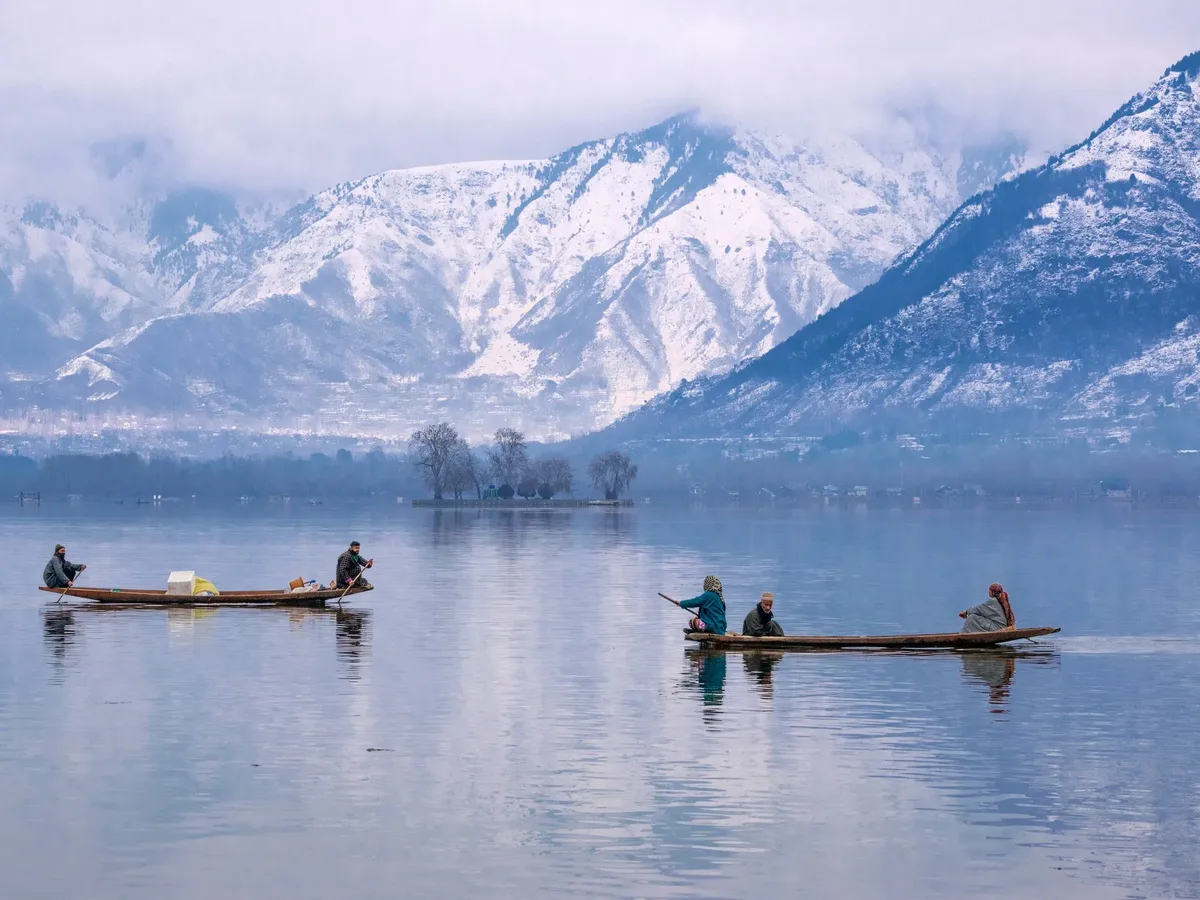
You land at Srinagar's airport, about 13 km from Dal Lake, and a prepaid taxi from the arrivals exit gets you to the water in 30 to 40 minutes. Keep that first afternoon gentle. Srinagar sits at about 1,600 m, and you may feel a little breathless at first, so drink water and save the walking for tomorrow. If you have a heart or breathing condition, check with your doctor before you go. A slow shikara ride is the right first outing. Ask for kahwa, the spiced green tea with saffron, and hold the cup for warmth while the boatman paddles past snow-capped mountains.
In deep winter parts of Dal Lake freeze, and the lake takes on a stillness summer visitors never see. If you're staying on a houseboat, you'll be sleeping under carved cedar ceilings on thick Kashmiri carpets, which is half the reason to come. The catch is warmth. A houseboat can feel colder than a hotel, and room heaters are often a separate charge, so we'd confirm heating in writing before you book. Some modern houseboats have central heating and fireplace lounges, and in January those are worth paying a little more for.
Day two belongs to the Old City and the gardens, and it starts early. Harissa is Srinagar's winter breakfast: mutton slow-cooked overnight, sold only from 21 December to the end of February. People eat it at Aali Kadal in the Old City before 8 am, and a plate costs about ₹100 to ₹150. Vegetarians are well looked after too, with nadru monje, crisp lotus stem fritters, and sheermal, a sweet bread that pairs nicely with kahwa.
From there, walk the markets around Lal Chowk and look for a kangri, the charcoal fire-pot Kashmiris carry under their cloaks through winter. They range from about ₹200 for a simple one to ₹2,000 for a finely woven piece, and it makes a better souvenir than most. In the afternoon, Nishat and Shalimar, the Mughal gardens, are at their quietest, often dusted with snow and with the fountains frozen. Two nights covers the lake, the gardens and the Old City without rushing.
Day 3: Gulmarg, the gondola and the surest snow
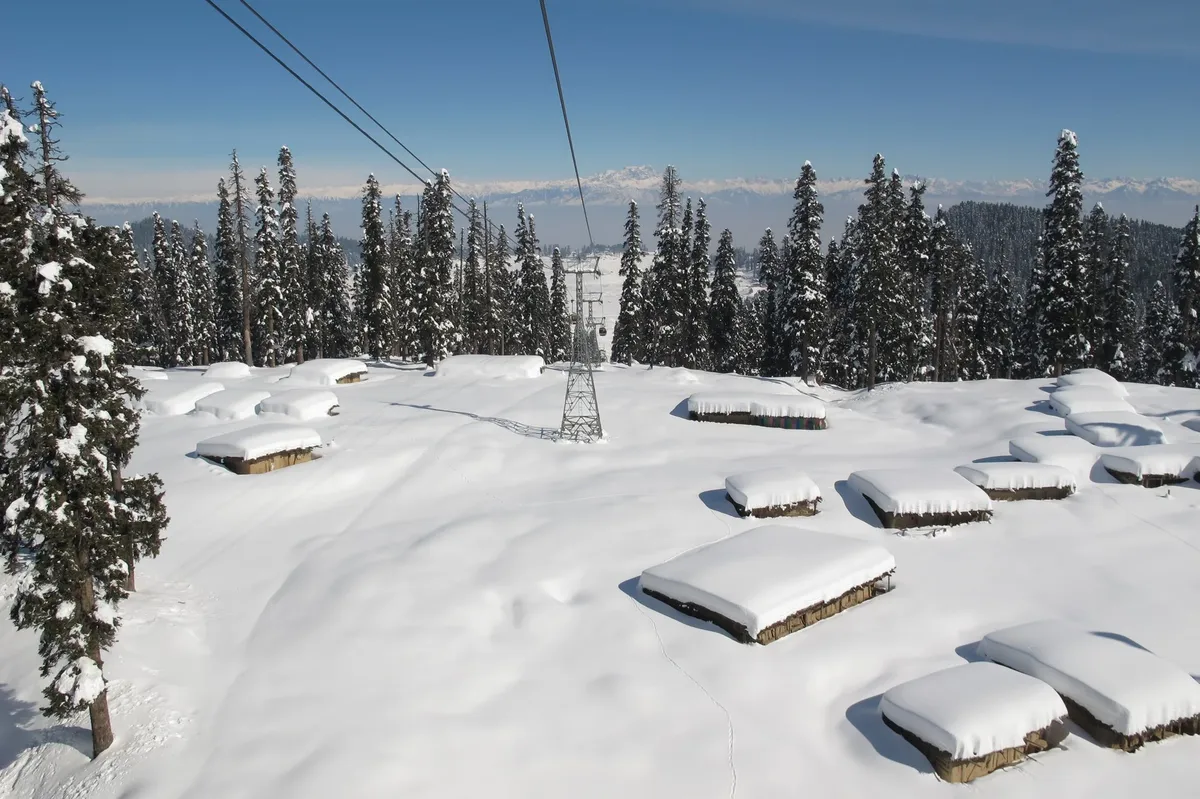
Gulmarg is about 50 km from Srinagar, roughly two hours by road, and it is the most reliable snow in the valley. By January some sources put the snow 10 to 15 feet deep. A taxi costs about ₹2,500 to ₹3,500 one way. On a budget, you can take a shared cab or bus to Tangmarg, 12 km short, then a local taxi uphill.
The gondola is the reason most people come, and it rewards an early start on a clear morning. It runs in two phases, and the full ride takes three to four hours with time at the top. Phase 2 often shuts for wind or safety, so treat it as a bonus rather than the point of the day. Both phases together cost around ₹1,800, but go by the price at checkout. Book only on etickets.jammukashmircablecar.com, the official site, with a name that exactly matches your photo ID, and avoid the 2nd and 4th Mondays of the month, when it closes for maintenance. For January dates, book a few weeks ahead.
After the gondola, the snow is yours to play in. Families do well on the designated sledging slopes, and if you've never skied, a beginner's half-day at Kongdori, the lower slope at about 8,530 ft, is the easy way in. A ski day pass runs about ₹800 to ₹1,200. If skiing is the dream, stay the night. Gulmarg is about −15°C to −2°C in January, so pack properly and check the road, which can close in heavy snow.
Rooms range from Tangmarg guesthouses at ₹1,000 to ₹3,000 to hotels near the gondola at ₹4,000 to ₹10,000. We'd pay for the closer option if you're skiing, because an early lift is easier when you can walk to it.
Day 4: Pahalgam, or a slower Srinagar return
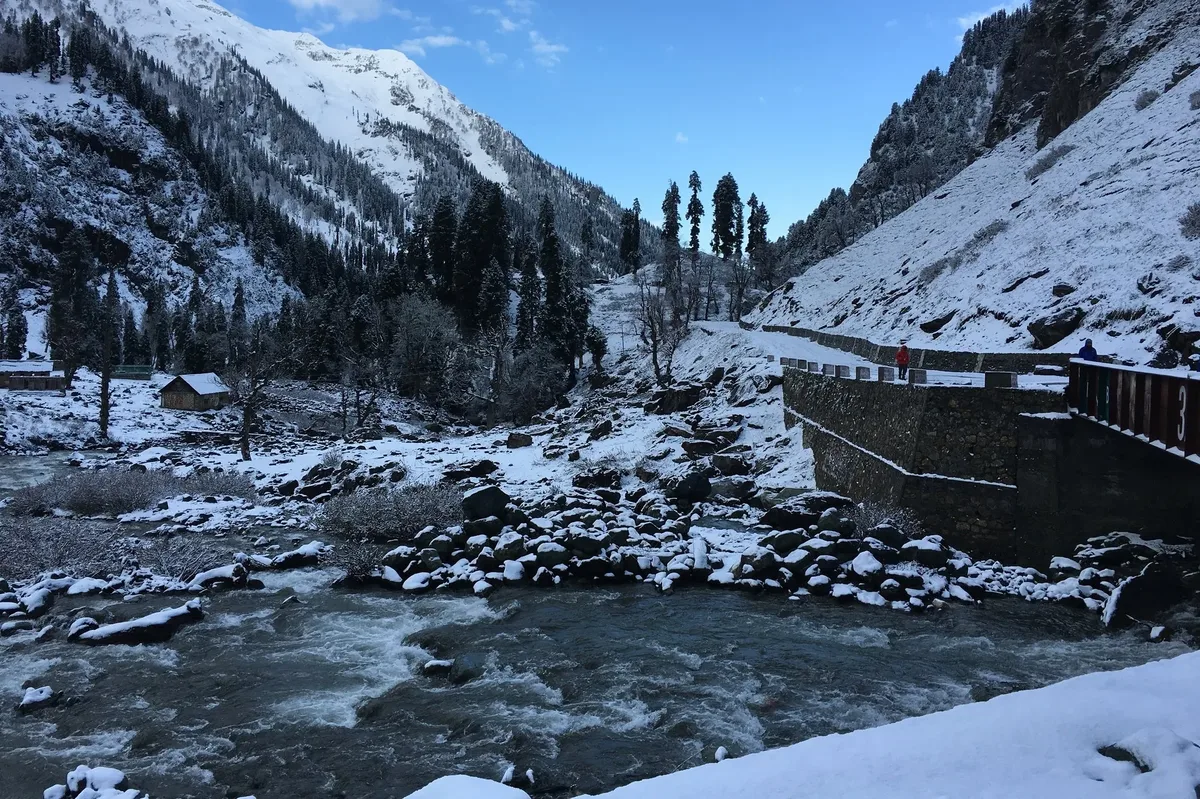
Pahalgam is the gentle counterpart to Gulmarg. It is snowy pine forest, the frozen Lidder River and a calm pace that suits families especially well, with lighter snowfall than Gulmarg. It sits about three hours by road from Srinagar. It features in 8 of our 10 Kashmir trips.
In a five-day winter plan, Pahalgam is the day that depends on the road. Its valley roads can close between December and February, so decide this one the evening before, once you've checked the road. If it's open, the drive itself is part of the reward, and travellers who've been in winter say Betaab Valley is far quieter than the main spots and lovely under snow. We don't yet know the winter status of Betaab, Aru and Baisaran for this season, so check locally before you set out.
If snow or advisories say no, a slower day back in Srinagar is a fine trade. Hokersar Wetland is excellent for winter birding, and it gives you a quiet morning by the water before the last stretch of the trip.
Sonamarg only on a clear-road day
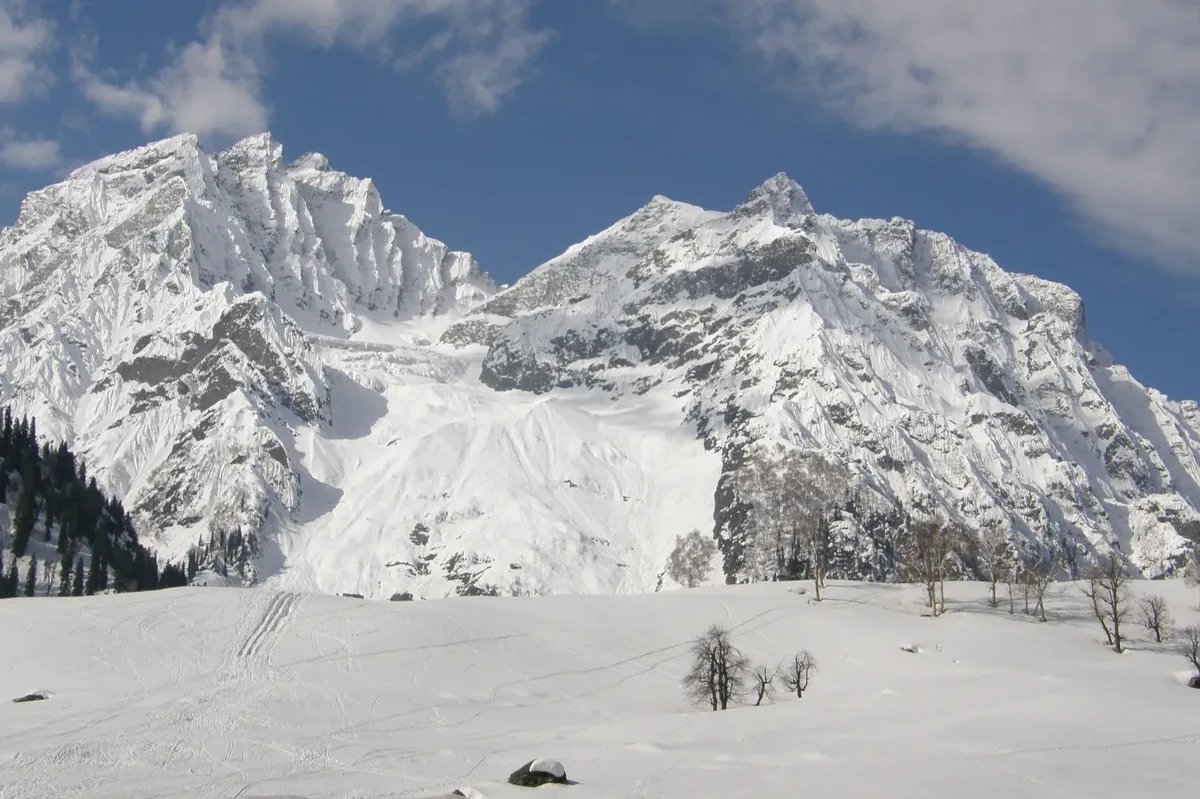
Sonamarg is the one place we'd hold loosely. The Z-Morh tunnel, opened in January 2025, has made it easier to reach, and several sources now say it stays reachable all year. Others still describe it as hard going after heavy snow. That gap is why we plan Sonamarg only as an optional day trip from Srinagar, taken when the road is confirmed open that morning, and never as a night's base.
When it does open up, the snowfields are worth the drive, and Thajiwas Glacier nearby reopened on 17 February 2026. Leave Zojila out of a winter plan entirely.
Day 5, and which winter month to pick
The last day is a buffer, and it is the most important day in the plan. From December to February, fog in Delhi and snow in Srinagar often delay or divert flights, sometimes to Jammu or back to Delhi. Spend the morning in Srinagar with a last shikara or a Hazratbal visit, and fly out in the afternoon. Don't book a tight onward connection that day. Allow extra time at the airport, where security is stricter than at most Indian airports, and eat before you go through, because dining airside is limited.
Here is how the five days come together:
- Day 1: Fly into Srinagar, settle into a heated houseboat, short shikara ride with kahwa.
- Day 2: Harissa at Aali Kadal before 8 am, Old City and Lal Chowk, Nishat and Shalimar in the afternoon.
- Day 3: Drive to Gulmarg for the gondola and sledging or a ski lesson; stay the night if you want to ski.
- Day 4: Pahalgam if its road is open, or back to Srinagar for Hokersar; Sonamarg only on a confirmed clear-road day; if you stayed the night in Gulmarg, make this the slower Srinagar day.
- Day 5: Easy Srinagar morning, afternoon flight home.
As for the month, January is peak snow and the prime time for skiing, and the Gulmarg Winter Festival brings ski competitions and cultural shows. It also falls inside Chillai Kalan, the 40 hardest days of cold, which run from 21 December to late January. February is the easier window, with better roads, still-good snow, longer days and slightly fewer crowds. December brings the first snows and a festive feel. If snow is the whole point, choose January; if you want comfort with your snow, February suits most couples and families better.
The logistics are light because Kashmir is within India. If you're an Indian citizen, you don't need a special permit for Srinagar, Gulmarg, Pahalgam or Sonamarg, so there's nothing to apply for and no permit fee to pay. You just need to carry government photo ID. Prepaid SIMs from outside J&K don't work, so bring a postpaid SIM, download offline maps and carry cash, since remote ATMs can be hard to reach after snow. IndiGo, Air India, SpiceJet and Akasa Air fly Delhi to Srinagar daily in about an hour and a half, and one-way fares can drop to about ₹3,000 to ₹4,500 in January and February outside school holidays. If the highway closes near Banihal, the Katra to Srinagar Vande Bharat, about three hours, is the more reliable way in. Our cost guide and when-to-go guide fill in the rest.
Questions travellers ask
Is 5 days enough for Kashmir in winter?
Yes, if you base yourself in Srinagar, give Gulmarg a full day and keep the last day as a buffer.
Gulmarg or Pahalgam in winter, which is better for snow?
Gulmarg has the more reliable and deeper snow. Pahalgam has lighter snow and a calmer feel that suits families.
Is Kashmir safe for Indian travellers in winter now?
Follow local advisories and check government travel updates before you go.
How much does a Kashmir winter trip cost per person from Delhi?
Operator packages for 4 nights start at about ₹15,000 per person and reach about ₹29,000 for deluxe.
Destination guidesAdventurePlanning tips
Know someone who should read this?
Send on WhatsAppKeep reading
All stories-
 Read
Destination guides
How to Plan a Trip Like a Pro: From Research to Packing
Plan better trips with clarity, balance, and flexibility.
Read the story
-
 Read
Finland · Destination guides
Where to See the Northern Lights in Finnish Lapland
Learn where to base yourself in Finnish Lapland, which months give the clearest skies, and how to plan your nights around the northern lights and clouds.
Read the story
-
 Read
Sri Lanka · Destination guides
What a Sri Lanka Trip Costs from India
A 5-night Sri Lanka beach trip costs about ₹35,000 to ₹55,000 per person on a budget and ₹60,000 to ₹90,000 mid-range, flights included.
Read the story
-
 Read
Japan · Destination guides
A 7-Day Japan Itinerary Through Tokyo and Osaka
A seven-day Japan itinerary with three nights each in Tokyo and Osaka, plus Mt. Fuji, Kyoto and Nara as day trips. Two bases mean fewer hotel changes.
Read the story
-
 Read
Vietnam · Destination guides
How Much a Vietnam Trip Costs from India
A comfortable week in Vietnam costs about ₹85,000 to ₹1,10,000 per person from India, return flights included. Flights and the cruise set the budget.
Read the story
-
 Read
Indonesia & Bali · Destination guides
Places to Visit in Bali, from Ubud to the Nusa Islands
Most Bali trips work best with two or three bases: Ubud for the green highlands, a southern beach base and a Nusa island if you have the nights.
Read the story
-
 Read
Thailand & Vietnam · Destination guides
Best Honeymoon Destinations for First-Time Travellers Abroad
Thailand, Vietnam and Dubai compared for a first international honeymoon, with entry rules, trip lengths and month-by-month weather for each.
Read the story
-
 Read
Destination guides
Ladakh Trip Guide: Leh, Nubra and Pangong in 7 or 10 Days
Plan a Ladakh trip in 7 or 10 days: acclimatise in Leh, cross Khardung La to Nubra Valley, and add Pangong Lake with ten days.
Read the story
-
 Read
Vietnam · Destination guides
Vietnam with Kids: 7 and 10-Day Family Route
Pick a few hands-on stops for children, keep transfers short, and leave out overnight legs. Ninh Binh, Hoi An and Hanoi suit a first family trip best.
Read the story



This starts with a conversation.
Tell us where you're headed — we'll take it from there.