
Destination guides
Masai Mara Safari Guide: How to Plan Your Kenya Safari
Plan your Africa safari with our Masai Mara guide! Discover when to visit, what to pack, and how to experience Kenya’s wildlife intimately.
In this story 27
- Why Masai Mara Should Be On Your Africa Safari List
- Where is Masai Mara and What is it?
- Best Time to Visit Masai Mara
- For The Great Migration
- For Fewer Crowds & Green Landscapes
- How to Get to Masai Mara
- By Air
- By Road
- Where to Stay in Masai Mara
- Luxury Camps & Lodges
- Mid-range Camps
- Budget Options
- Staying in Conservancies
- Types of Masai Mara Safaris
- Game Drives
- Hot Air Balloon Safari
- Walking Safaris
- Cultural Visits
- Photography Tips for Your Africa Safari in Masai Mara
- What to Pack for Your Masai Mara Safari
- Food & Drink
- Practical Tips for Your Masai Mara Africa Safari
- Why the Masai Mara is More Than Just a Safari
- Planning Your Masai Mara Safari
- When to Book
- How Long to Stay
- Questions travellers ask
Why Masai Mara Should Be On Your Africa Safari List
If you’ve ever dreamt of Africa, chances are you’ve dreamt of the Masai Mara. Golden savannahs stretching to the horizon, acacia trees silhouetted against a fiery sunset, and the distant rumble of wildebeests on the move—this is where those dreams come alive.
The Masai Mara, Kenya’s iconic wildlife reserve, is not just a destination; it’s a feeling. It’s the thrill of spotting a lioness on the hunt, the peace of watching elephants lumber by your safari vehicle, and the humility that comes with being surrounded by life, raw and beautiful, in one of Africa’s last truly wild places.
This Africa safari guide will help you plan your Masai Mara trip with warmth, practicality, and that sense of soulful wonder every traveller seeks.
Where is Masai Mara and What is it?
Located in southwestern Kenya, the Masai Mara National Reserve spans approximately 1,510 square kilometres and is part of the larger Mara-Serengeti ecosystem shared with Tanzania. It is named after the Maasai people, the semi-nomadic pastoralists who have lived in harmony with this land for centuries, and the Mara River, which snakes through the park providing life to the plains.
The Masai Mara is famed for:
- The Big Five: Lions, leopards, elephants, buffaloes, and rhinos
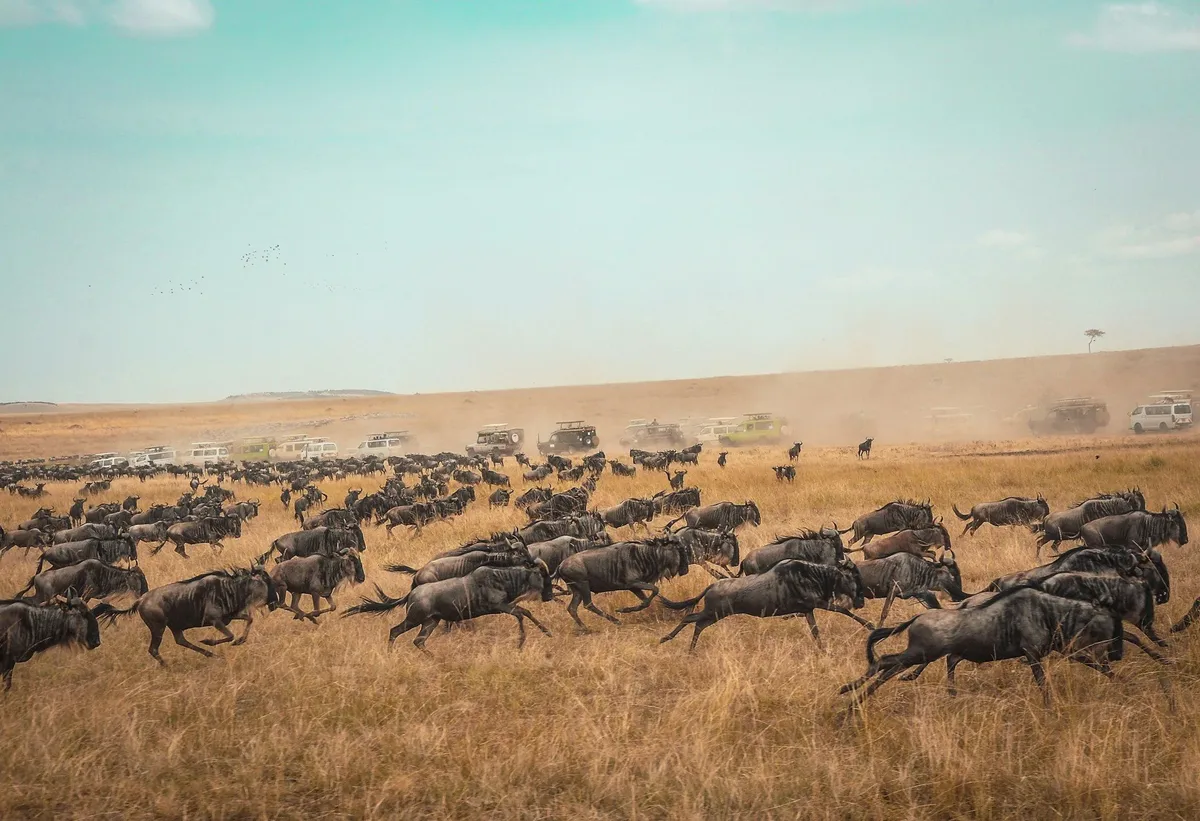
- The Great Migration: Over 1.5 million wildebeest, zebras, and gazelles crossing from the Serengeti into the Mara between July and October
- Predator sightings : Cheetahs sprinting across the plains, prides of lions, and stealthy leopards
- Incredible birdlife : 470+ bird species
- Dramatic landscapes : Rolling grasslands, acacia-dotted plains, and riverine forests.
If you want to witness wildlife in its most untouched form, there are few places better than the Masai Mara for your Africa safari.
Best Time to Visit Masai Mara
For The Great Migration
July to October : Peak time for the Great Migration, river crossings, and high predator activity. Expect dry, sunny days with cool mornings and evenings.
For Fewer Crowds & Green Landscapes
November to March : Post-migration, you get lush green scenery, baby animals, and great birdwatching. Afternoon showers may occur but wildlife is still abundant.
How to Get to Masai Mara
By Air
The fastest and most comfortable way is to fly from Nairobi’s Wilson Airport to airstrips like Keekorok, Ol Kiombo, or Mara Serena. The flight takes around 45 minutes.
By Road
Approximately 5–6 hours from Nairobi (250 km). The road can be rough near the reserve, so a 4x4 vehicle is recommended.
Where to Stay in Masai Mara
Your Masai Mara experience can be as luxurious or as wild as you wish. Options include:
Luxury Camps & Lodges
- Angama Mara: Stunning views from the Oloololo Escarpment.
- Mara Bushtops: Private decks, hot tubs, and exceptional service.
- Sanctuary Olonana: Eco-friendly luxury by the Mara River.
Mid-range Camps
- Governors’ Camp: Classic tented camp feel with great river views.
- Ashnil Mara Camp: Comfortable tents with good amenities.
Budget Options
- Manyatta Camps: Simple tents with essential facilities near the park gates.
- Public Campsites: For those truly looking for an adventure.
Staying in Conservancies
Private conservancies around the Mara (e.g., Naboisho, Olare Motorogi) allow off-road driving, night safaris, and walking safaris for a more intimate wildlife experience.
Types of Masai Mara Safaris
Game Drives
The most common way to explore the Masai Mara. Choose between:
- Morning drives: Active wildlife, cooler temperatures.
- Evening drives: Beautiful sunsets and predators starting to hunt.
Plan this trip
Want a trip like this?
We build every trip from scratch around you. Tell us your dates and we take it from there.
Start Planning WhatsApp usHot Air Balloon Safari
A bucket-list experience where you drift over the Mara at sunrise, watching herds move below before landing for a champagne breakfast.
Walking Safaris
Offered in conservancies, allowing you to learn about tracks, plants, and smaller wildlife on foot with a Maasai guide.
Cultural Visits
Visit a Maasai village to learn about their way of life, traditions, and connection with the land.
Photography Tips for Your Africa Safari in Masai Mara
✅ Carry a zoom lens (200–400mm recommended).
✅ Morning & evening light is golden for wildlife photography.
✅ Be patient and allow wildlife to come closer rather than chasing them.
✅ Use beanbags or vehicle window mounts for stability.
✅ Respect wildlife and avoid loud noises.
What to Pack for Your Masai Mara Safari
- Neutral-coloured, lightweight clothing
- Warm jacket for mornings and evenings
- Sun hat & sunglasses
- Binoculars & camera
- Insect repellent & sunscreen
- Personal medication
- Reusable water bottle
- Comfortable closed shoes
Food & Drink
Most lodges and camps provide full board with fresh, hearty meals. Vegetarian and special dietary requirements can usually be catered for with prior notice.
Water in lodges is filtered, but it is advisable to drink bottled or treated water.
Practical Tips for Your Masai Mara Africa Safari
✅ Entry: Indians apply online for a Kenyan Electronic Travel Authorisation (eTA) before travel. Park fees are about US$200 per adult per day from July to December.
✅ Vaccinations: Get a yellow fever vaccine at least 10 days before you leave: India asks for the certificate when you return from Kenya. Routine vaccines and malaria advice from your doctor are also recommended.
✅ Currency: Kenyan Shilling (KES). Credit cards accepted in most lodges, but keep cash for tips and small purchases.
✅ Tipping: $5–$10 per person per day for guides, and around $2 for staff is customary.
✅ Connectivity: Limited, allowing you to truly disconnect. Some lodges have Wi-Fi in common areas.
Why the Masai Mara is More Than Just a Safari
The Masai Mara isn’t just about ticking off wildlife sightings; it’s about connecting—with nature, with the Maasai people, and with yourself. Sitting by a campfire under a sky overflowing with stars while lions roar in the distance will change you in ways you can’t plan for.
It’s watching the sun rise over the plains, the air cool on your skin, as elephants make their slow, dignified walk across your path. It’s the laughter of Maasai children waving as you drive past their manyattas, and the quiet moments of awe as you witness the endless cycle of life in the wild.
Planning Your Masai Mara Safari
When to Book
For July–October (Migration), book 6–8 months in advance. Shoulder months (March, November) offer better rates with good wildlife viewing.
How Long to Stay
3–5 days in the Mara itself is ideal for a fulfilling Africa safari experience.
Combine with:
- Amboseli National Park: For elephants against Kilimanjaro.
- Laikipia: For rhino conservation experiences.
- Diani or Lamu: To unwind on the Kenyan coast post-safari.
The Masai Mara has a way of staying with you long after you’ve returned home. The raw, humbling beauty, the kindness of the Maasai people, and the heart-pounding moments of wildlife encounters shape memories you will treasure forever.
If you’ve ever felt the call of Africa, let the Masai Mara be where you answer it. We have the perfect itineraries for you whether you want a safari adventure or a mix of safari with beach relaxation.
Questions travellers ask
What is the best time to visit the Masai Mara?
July to October for the Great Migration and river crossings; November to March for green landscapes, young animals and lower prices.
What do Indians need for a Kenya safari?
A Kenyan Electronic Travel Authorisation (eTA), applied for online before travel, and a yellow fever vaccination at least 10 days before you leave, because India checks the certificate on your return from Kenya.
How much are Masai Mara park fees?
Foreign adults pay about US$200 per day from July to December and about US$100 the rest of the year; most safari packages include them.
How many days are enough in the Masai Mara?
Three to five nights; add Amboseli or Lake Naivasha for a 7 to 9 day Kenya trip.
Destination guidesAdventurePlanning tips
Know someone who should read this?
Send on WhatsAppKeep reading
All stories-
 Read
Destination guides
How to Plan a Trip Like a Pro: From Research to Packing
Plan better trips with clarity, balance, and flexibility.
Read the story
Read
Destination guides
How to Plan a Trip Like a Pro: From Research to Packing
Plan better trips with clarity, balance, and flexibility.
Read the story
-
 Read
Destination guides
Best Places to Visit in India in August and September 2027
Monsoon green and post-monsoon calm: where to go in India in August and September 2027, from Ladakh and Spiti to Meghalaya, Ziro, Hampi and the Andamans.
Read the story
Read
Destination guides
Best Places to Visit in India in August and September 2027
Monsoon green and post-monsoon calm: where to go in India in August and September 2027, from Ladakh and Spiti to Meghalaya, Ziro, Hampi and the Andamans.
Read the story
-
 Read
Destination guides
Best Places to Visit in India in July 2027
Valley of Flowers, the Hemis festival on 13 and 14 July, Rath Yatra on 5 July and the monsoon Ghats: the best places to visit in India in July 2027.
Read the story
Read
Destination guides
Best Places to Visit in India in July 2027
Valley of Flowers, the Hemis festival on 13 and 14 July, Rath Yatra on 5 July and the monsoon Ghats: the best places to visit in India in July 2027.
Read the story
-
 Read
Destination guides
Best Places to Visit in India in June 2027
Himachal, Ladakh, Kashmir, the Western Ghats and the Northeast: where to go in India in June 2027, and what the monsoon means for each place.
Read the story
Read
Destination guides
Best Places to Visit in India in June 2027
Himachal, Ladakh, Kashmir, the Western Ghats and the Northeast: where to go in India in June 2027, and what the monsoon means for each place.
Read the story
-
 Read
Destination guides
Best Places to Visit in India in May 2027
Escape the May heat: the hill stations, Himalayan valleys, Northeast getaways and islands that are at their best in May 2027, and the places to skip.
Read the story
Read
Destination guides
Best Places to Visit in India in May 2027
Escape the May heat: the hill stations, Himalayan valleys, Northeast getaways and islands that are at their best in May 2027, and the places to skip.
Read the story
-
 Read
Destination guides
How to Travel Without Feeling Rushed: Slow Travel Tips
A practical guide to traveling at a comfortable pace without losing the joy of exploration.
Read the story
Read
Destination guides
How to Travel Without Feeling Rushed: Slow Travel Tips
A practical guide to traveling at a comfortable pace without losing the joy of exploration.
Read the story
-
 Read
Destination guides
Wayanad Travel Guide: Treks, Wildlife and Waterfalls
Explore Wayanad with this travel guide—covering Kerala waterfalls, wildlife safaris, spice plantation visits, and serene treks for heart and soul.
Read the story
Read
Destination guides
Wayanad Travel Guide: Treks, Wildlife and Waterfalls
Explore Wayanad with this travel guide—covering Kerala waterfalls, wildlife safaris, spice plantation visits, and serene treks for heart and soul.
Read the story
-
 Read
Destination guides
6 Best Places to Go Scuba Diving
From the Maldives to Raja Ampat and the Andamans, six of the best scuba diving spots for Indian travellers, with the level and best season for each.
Read the story
Read
Destination guides
6 Best Places to Go Scuba Diving
From the Maldives to Raja Ampat and the Andamans, six of the best scuba diving spots for Indian travellers, with the level and best season for each.
Read the story
-
 Read
Destination guides
Self-Drive Safaris in Africa: Is It Safe and How to Plan
Embark on an unforgettable self-drive safari in Africa. Our comprehensive guide offers tips and insights to help you plan your independent wildlife adventure seamlessly.
Read the story
Read
Destination guides
Self-Drive Safaris in Africa: Is It Safe and How to Plan
Embark on an unforgettable self-drive safari in Africa. Our comprehensive guide offers tips and insights to help you plan your independent wildlife adventure seamlessly.
Read the story
This starts with a conversation.
Tell us where you're headed — we'll take it from there.