
Destination guides
Mawlynnong, Meghalaya: Visiting Asia's Cleanest Village
Mawlynnong, a serene village in Meghalaya, is renowned as Asia’s cleanest village. With blooming gardens, bamboo dustbins, and eco-living, it offers peaceful walks, living root bridges, and authentic Khasi meals—making…
In this story 6
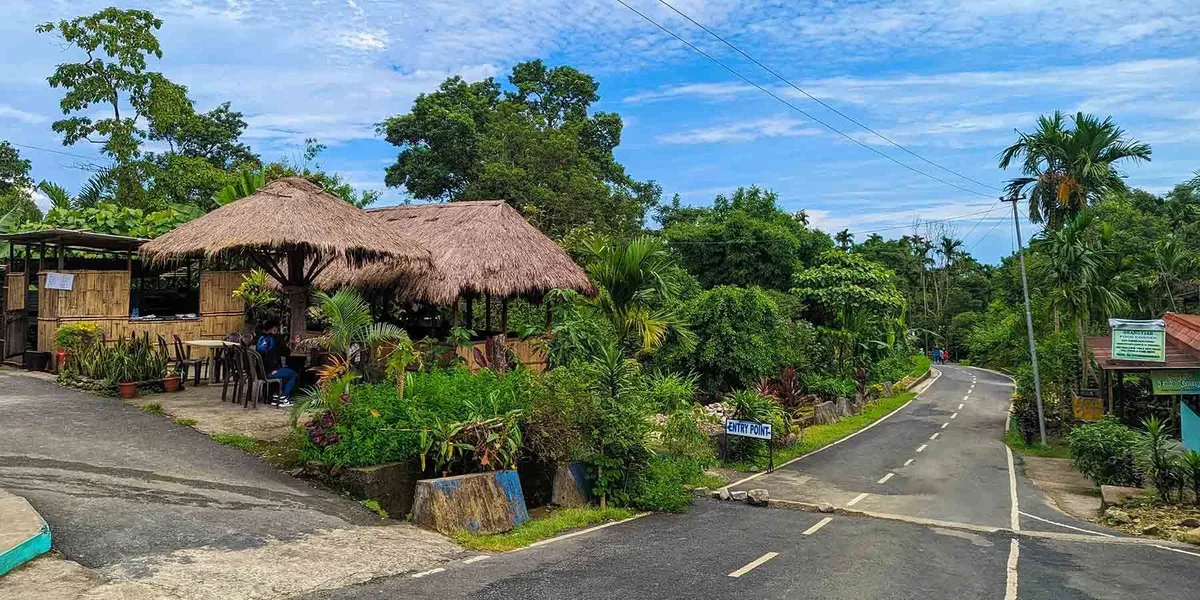
There are places in India that will blow your mind with their beauty. Then there are places that make you think, “Why can’t every place be like this?” Mawlynnong, a quiet little village in Meghalaya’s East Khasi Hills, is definitely the second kind. Famous for being the cleanest village in Asia, this tiny settlement doesn’t shout for attention — it sort of whispers it, through spotless footpaths, neatly trimmed gardens, and bamboo dustbins that seem to magically empty themselves.
Located about 80 km from Shillong and not far from the India-Bangladesh border, Mawlynnong sits at a height that gives it pleasantly cool weather and lush greenery pretty much year-round. But what really stands out here isn’t the scenery — it’s the people, and the way they’ve turned cleanliness into a community ritual. It’s the kind of place that makes you take a deep breath, slow down, and rethink what ‘clean’ really means.
Where Is Mawlynnong Exactly?
If you were looking for it on a map, Mawlynnong is tucked into the East Khasi Hills, surrounded by forested hills and winding mountain roads. It doesn’t pop out the way touristy places usually do. It’s small — like, really small — with just a few hundred residents. But don’t let the size fool you. The village is beautiful in the most humble way. Think narrow paths with flowering shrubs on both sides, houses with spotless verandas, and zero plastic waste in sight.
The vibe? Peaceful. Almost like the world slowed down here, but in a good way.
Getting There: A Little Effort, A Big Reward
You can’t just hop on a flight to Mawlynnong, of course. The usual route starts in Shillong, which is the capital of Meghalaya and a pretty cool city in its own right. From Shillong, it takes about 3 to 4 hours to reach the village by road. It’s not a boring drive — in fact, it’s quite the opposite. You pass through misty hills, small roadside waterfalls, and villages that seem frozen in time.
For folks coming from further away, Guwahati is the closest big city with an airport and train station. From there, it’s another 3-hour drive to Shillong, and then onward to Mawlynnong. The roads are mostly decent, though they twist and turn quite a bit — standard hill driving stuff. Hiring a private car is the most comfortable option, but if you’re up for an adventure, there are shared taxis too.
What To Do There? Not Much — And That’s The Point
Here’s the thing: Mawlynnong isn’t packed with ‘attractions’ in the usual sense. No fancy cafes, no big sightseeing buses, no long checklist of places to “cover.” But that’s exactly why it’s special. You don’t go there to do a million things — you go to feel.
Wander The village
Honestly, just walking around is half the experience. Every lane looks like it’s been cleaned five minutes ago. Kids play outside, locals go about their day, and flowers bloom like they’re part of some curated garden display. The community uses bamboo bins for waste and has completely banned plastic. It’s one of those places where even visitors feel guilty dropping a wrapper.
Check Out The Living Root Bridge At Riwai
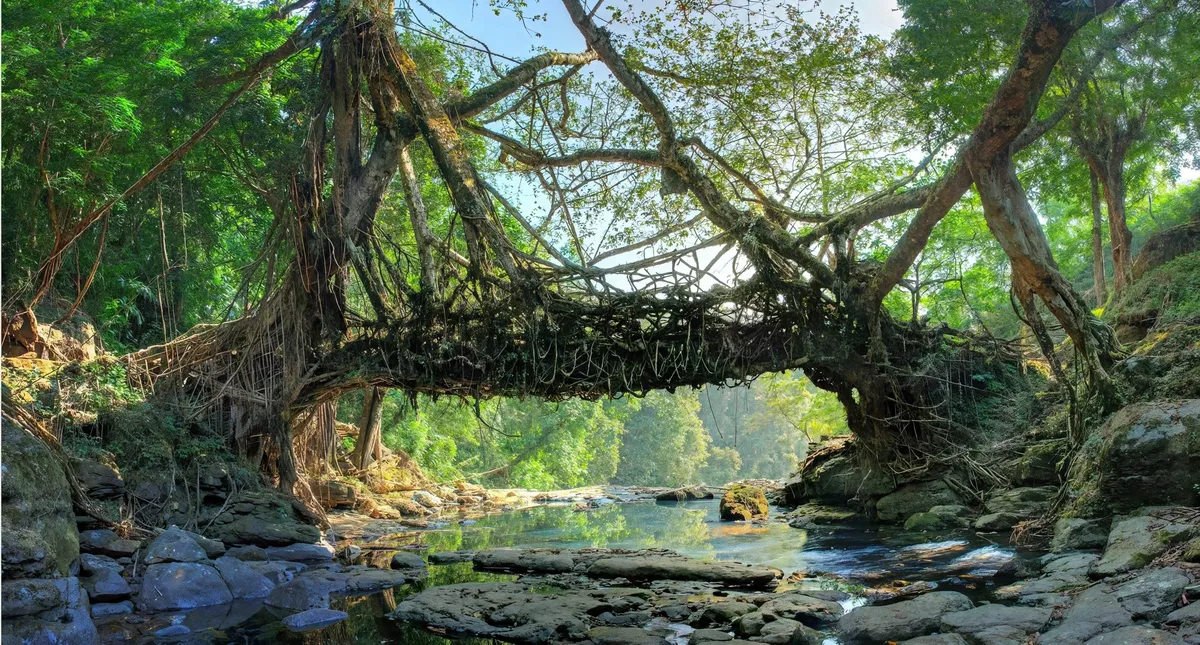
A short walk from the village, about 10 minutes or so, leads you to a living root bridge — one of Meghalaya’s signature sights. These bridges aren’t built with concrete or steel. Instead, the roots of rubber trees are trained and intertwined over years to form a natural, walkable bridge. It’s strong, beautiful, and honestly kind of magical when you first see it.
Climb The Bamboo Skywalk
For those not scared of heights, there’s a handmade bamboo skywalk that offers a panoramic view of the area. It’s not a polished structure, but it’s sturdy enough and totally worth the climb. On clear days, you can even see across the border into Bangladesh. The view is just... endless. Forests, hills, clouds — everything rolls out in front of you like a painting.
Enjoy A Home-Cooked Meal
There are no restaurants in the village, but several homes offer homestay experiences — and with that, you get some fantastic Khasi-style food. Meals are simple and hearty: steamed rice, fresh veggies, lentils, and smoked or dried meat cooked in traditional styles. If you’ve ever wanted to try authentic tribal cuisine, this is the place.
Talk To People
The locals are warm and curious, especially about where you're from and what brought you to their village. Many speak basic English or Hindi, and a lot of younger folks help bridge any language gaps. Ask about their customs, their way of life — and you’ll find stories that no guidebook can tell.
Plan this trip
Want a trip like this?
We build every trip from scratch around you. Tell us your dates and we take it from there.
Start Planning WhatsApp usWhat’s Mawlynnong Known For?
The cleanliness, of course, is what put Mawlynnong on the map. In 2003, it was declared the cleanest village in Asia by Discover India magazine, and that title has stuck around ever since. But unlike cities that spruce up before a VIP visit, Mawlynnong didn’t suddenly decide to get clean — it’s been this way for years.
What’s amazing is that the cleanliness isn’t enforced by outsiders. It’s internal — a habit passed down through generations. Everyone participates: kids sweep the front yards, elders compost kitchen waste, and households take pride in keeping the village spotless. It’s a lifestyle, not a campaign.
Also interesting is that Mawlynnong follows a matrilineal system — meaning property and family lineage are passed down through women. Daughters inherit the home, and the family name continues through the mother’s side. It might seem surprising to outsiders, but for the Khasi people, it’s just how things have always been.
Best Time To Visit
The ideal time to visit Mawlynnong is October to April. During these months, the weather is pleasant — not too cold, not too hot, and relatively dry. It’s perfect for walking around and taking in the greenery without getting drenched.
That said, the monsoon (June to September) has its own charm. Sure, it rains a lot, but the entire region turns a brighter shade of green. Mist rolls over the hills, the air smells of earth and flowers, and the whole place feels straight out of a fantasy novel. Just be aware that the roads can get slippery, so drive with caution.
Winter is light and gentle — no harsh cold. Summer is comfortable too, especially compared to other parts of India. So really, there’s no bad time to visit, unless you absolutely can’t stand rain.
Mawlynnong isn’t the kind of place you brag about ticking off your bucket list. It’s not flashy or filled with Instagram spots. But it is the kind of place that stays with you, quietly. It teaches you something without saying much — about community, pride, and how even the smallest places can set the biggest examples.
If you’re ever in Meghalaya, make the detour. Stay a night, take long walks, talk to locals, eat their food, and let the peace soak in. Sometimes, all it takes is one small village to remind you that clean living isn’t impossible — it just takes people who care.
Questions travellers ask
How far is Mawlynnong from Shillong?
About 80 to 90 km, roughly 3 hours by road. Many visitors combine it with Dawki and the Umngot river on the same day.
Is there an entry fee for Mawlynnong?
Yes, the village charges a small entry and parking fee, used for its upkeep.
What is the best time to visit Mawlynnong?
October to April for dry walks. The monsoon (June to September) is very green but wet and slippery.
Can you stay in Mawlynnong?
Yes, in a few simple homestays and guesthouses. Staying overnight lets you see the village quiet after the day visitors leave.
Know someone who should read this?
Send on WhatsAppKeep reading
All stories-
 Read
Destination guides
Best Places to Visit in India in August and September 2027
Monsoon green and post-monsoon calm: where to go in India in August and September 2027, from Ladakh and Spiti to Meghalaya, Ziro, Hampi and the Andamans.
Read the story
Read
Destination guides
Best Places to Visit in India in August and September 2027
Monsoon green and post-monsoon calm: where to go in India in August and September 2027, from Ladakh and Spiti to Meghalaya, Ziro, Hampi and the Andamans.
Read the story
-
 Read
Destination guides
Best Places to Visit in India in July 2027
Valley of Flowers, the Hemis festival on 13 and 14 July, Rath Yatra on 5 July and the monsoon Ghats: the best places to visit in India in July 2027.
Read the story
Read
Destination guides
Best Places to Visit in India in July 2027
Valley of Flowers, the Hemis festival on 13 and 14 July, Rath Yatra on 5 July and the monsoon Ghats: the best places to visit in India in July 2027.
Read the story
-
 Read
Destination guides
Best Places to Visit in India in June 2027
Himachal, Ladakh, Kashmir, the Western Ghats and the Northeast: where to go in India in June 2027, and what the monsoon means for each place.
Read the story
Read
Destination guides
Best Places to Visit in India in June 2027
Himachal, Ladakh, Kashmir, the Western Ghats and the Northeast: where to go in India in June 2027, and what the monsoon means for each place.
Read the story
-
 Read
Destination guides
Best Places to Visit in India in May 2027
Escape the May heat: the hill stations, Himalayan valleys, Northeast getaways and islands that are at their best in May 2027, and the places to skip.
Read the story
Read
Destination guides
Best Places to Visit in India in May 2027
Escape the May heat: the hill stations, Himalayan valleys, Northeast getaways and islands that are at their best in May 2027, and the places to skip.
Read the story
-
 Read
Destination guides
Best International Trips from India from March to May 2027
Beat the summer crowds: where to travel abroad from India in March, April and May 2027, from Japan's cherry blossoms and Songkran to Europe in spring, with visa tips.
Read the story
Read
Destination guides
Best International Trips from India from March to May 2027
Beat the summer crowds: where to travel abroad from India in March, April and May 2027, from Japan's cherry blossoms and Songkran to Europe in spring, with visa tips.
Read the story
-
 Read
Destination guides
How to Travel Without Feeling Rushed: Slow Travel Tips
A practical guide to traveling at a comfortable pace without losing the joy of exploration.
Read the story
Read
Destination guides
How to Travel Without Feeling Rushed: Slow Travel Tips
A practical guide to traveling at a comfortable pace without losing the joy of exploration.
Read the story
-
 Read
Destination guides
How to Plan a Trip Like a Pro: From Research to Packing
Plan better trips with clarity, balance, and flexibility.
Read the story
Read
Destination guides
How to Plan a Trip Like a Pro: From Research to Packing
Plan better trips with clarity, balance, and flexibility.
Read the story
-
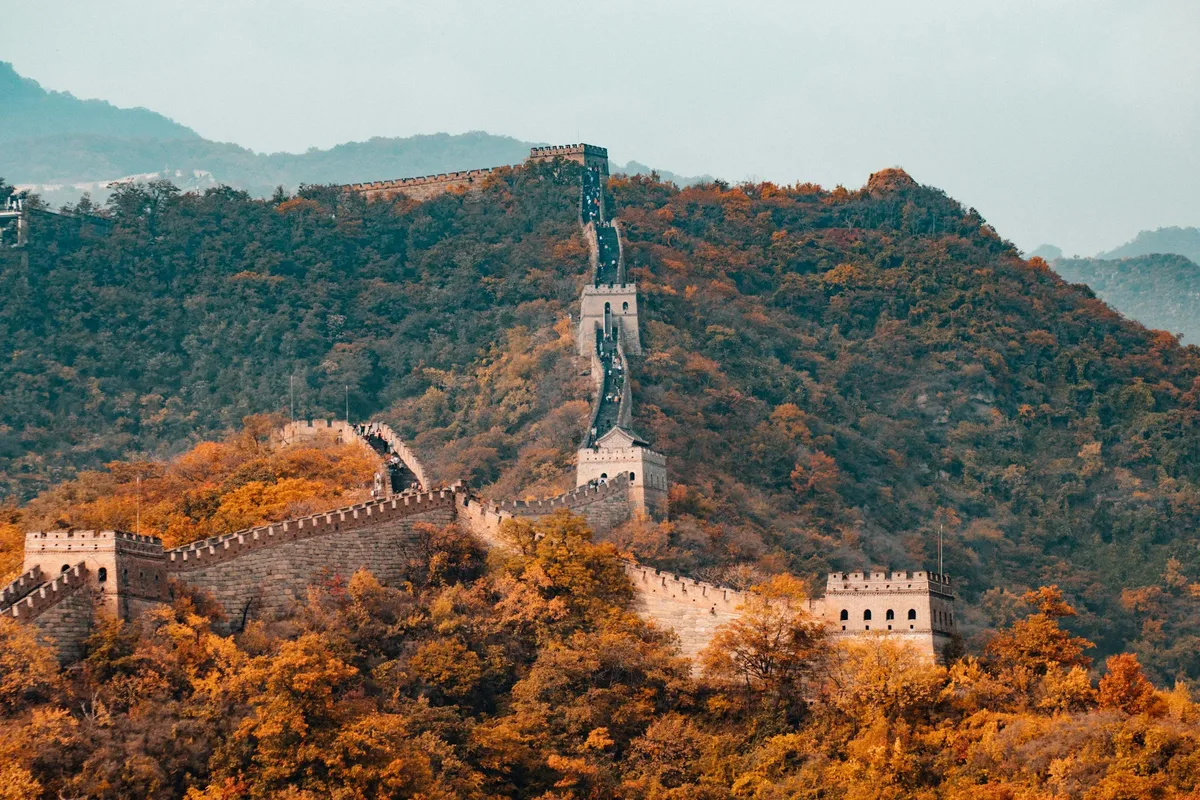 Read
Destination guides
China Travel Guide for Indians: Flights, Days and Must-Visit Places
Plan your dream trip to China with our ultimate travel guide, offering essential tips, stunning destinations, and cultural insights for every traveler.
Read the story
Read
Destination guides
China Travel Guide for Indians: Flights, Days and Must-Visit Places
Plan your dream trip to China with our ultimate travel guide, offering essential tips, stunning destinations, and cultural insights for every traveler.
Read the story
-
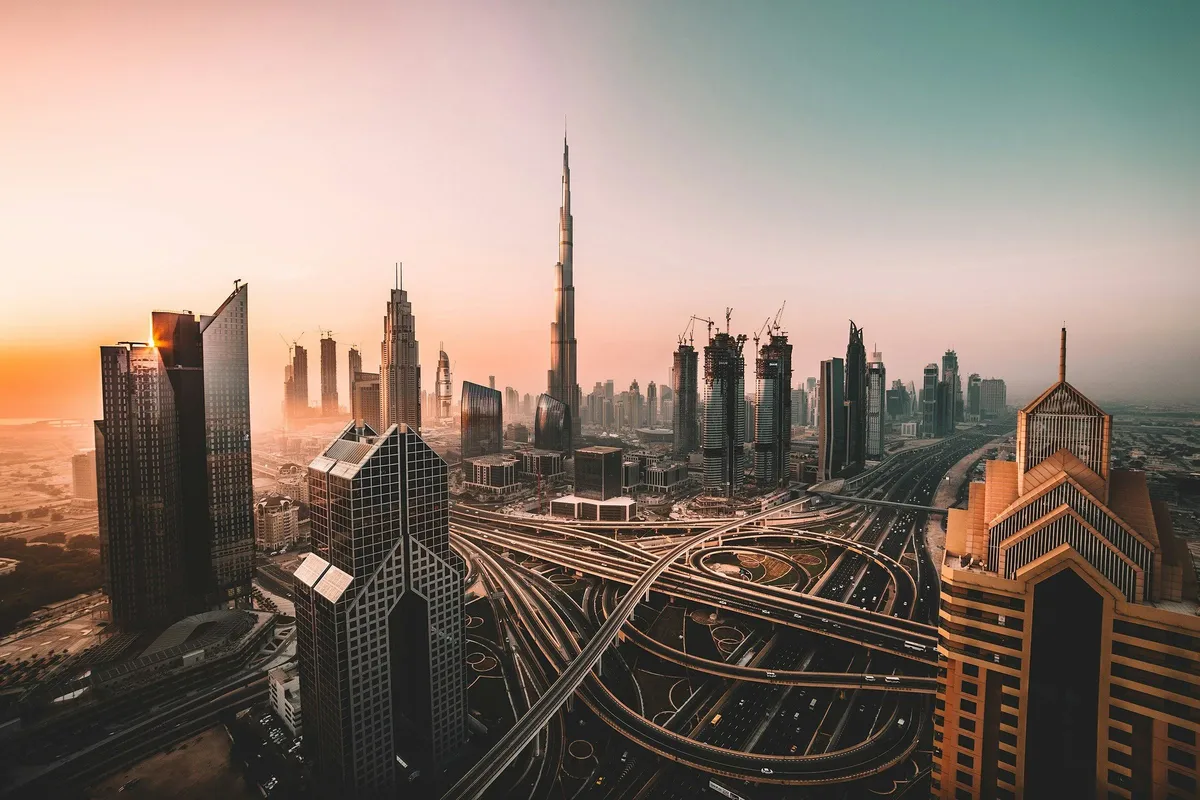 Read
United Arab Emirates · Destination guides
Dubai in Summer: Is It Worth It, and What to Do
Experience the best of summer in Dubai with our comprehensive guide. Uncover exciting activities, dining options, and essential tips for a memorable trip.
Read the story
Read
United Arab Emirates · Destination guides
Dubai in Summer: Is It Worth It, and What to Do
Experience the best of summer in Dubai with our comprehensive guide. Uncover exciting activities, dining options, and essential tips for a memorable trip.
Read the story
This starts with a conversation.
Tell us where you're headed — we'll take it from there.