
Malaysia · Destination guides
Malaysia Tourist Places: Where to Go and How Many Days
Malaysia blends buzzing cities, lush rainforests, and dreamy beaches—plus the food is out of this world! From KL’s towers to Borneo’s rainforests, there’s something for every traveler.
In this story 9
Malaysia rewards the traveller who picks a line and follows it. For a first trip from India, that line runs up the west coast: Kuala Lumpur for the big-city days and a temple you will recognise, a day in Melaka for its night market, a cool break in the Cameron Highlands tea country, then Penang for the food and Langkawi for the beach at the end. It is a trip built around what you eat and what the weather does, and it fits comfortably into nine or ten nights.
How many days you need
Think of the route as a slow climb north. You land in Kuala Lumpur and give it two or three nights, enough for the city, Batu Caves and a day out to Melaka. From there the road climbs into the Cameron Highlands for a night or two of cool air, then drops back down towards the coast and Penang, where two or three nights go mostly on eating. Langkawi comes last, reached by a ferry of about two and three-quarter hours from Penang or a short flight, and how long you stay there depends on the weather you get. Two nights covers the cable car and a mangrove trip; three lets you add island hopping and a slow beach day.
Put together, that is roughly nine nights at a comfortable pace and eleven if you want Langkawi to feel like a holiday rather than a stop. Ten is what we'd suggest for most couples and families.
If you only have five or six nights, keep it to Kuala Lumpur and Penang. The ETS train links them in about three and a half to four hours, from KL Sentral to Butterworth on the mainland, and a short hop across the water takes you onto Penang island. You lose the hills and the beach, but you keep the two places that give a first trip its flavour, and you never spend a day on a road.
Kuala Lumpur: the base and the day trips
Start with the steps. Batu Caves sits just outside the city, a Murugan shrine set into limestone, and the first thing you see is the golden statue of the god, about 43 metres tall, standing beside a staircase of 272 steps. You climb them up into the caves. For many Indian travellers this is the moment Malaysia stops feeling foreign, because the shrine, the devotees and the offerings could be somewhere in Tamil Nadu, and yet the setting is pure Southeast Asian jungle rock. It is an easy half-day, so go early, before the heat builds, and keep the afternoon for the city.
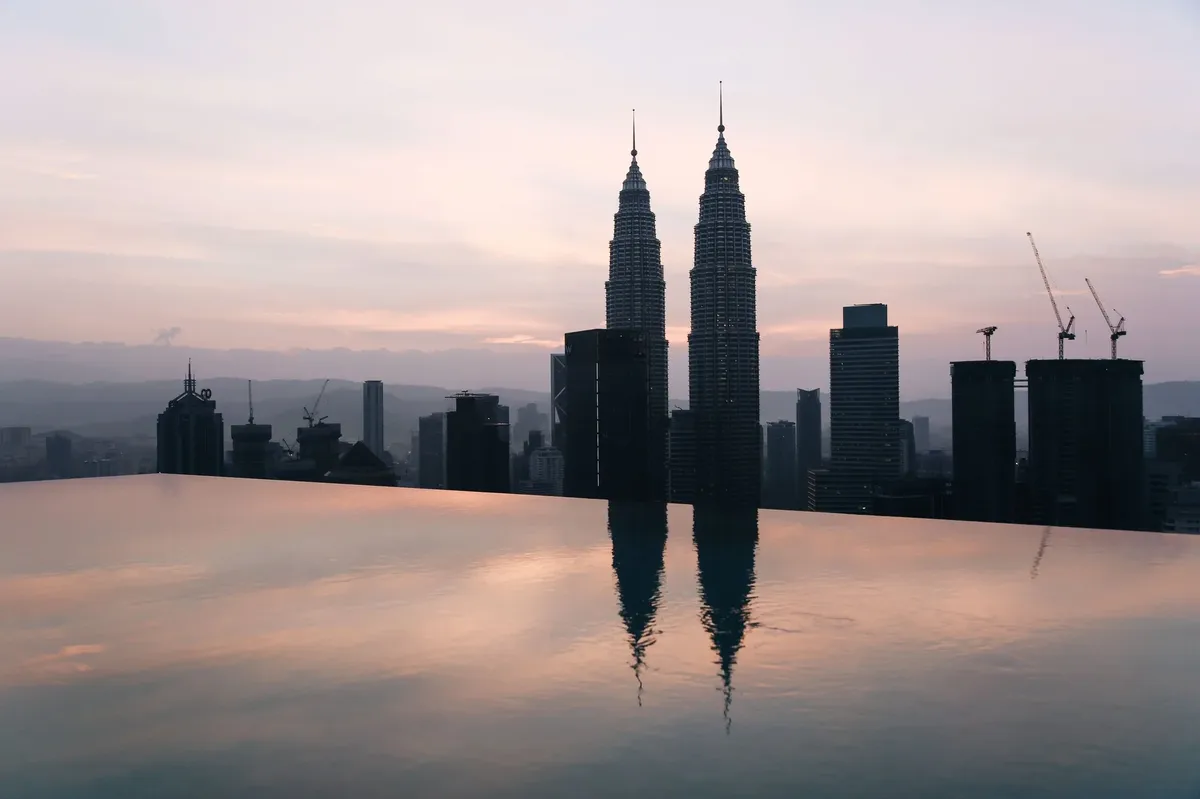
Kuala Lumpur itself works best as a base rather than a list of sights. The Petronas Towers are the reason most people come, and the visit has two levels: the Skybridge that joins the towers on floors 41 and 42, about 170 metres up, and a higher viewing deck on floor 86. Book a timed slot ahead, since walking up on the day often means a long wait. Around the towers you have the shopping and the food that make the city easy for a first night, and Brickfields, the city's Little India, if you are already missing a proper dosa.
Getting around is cheap and simple. The LRT and MRT trains cost about RM1–6 a trip, Grab rides run about ₹200 to ₹600 (RM10–30), and the GO KL City Bus is free. From the airport, the KLIA Ekspres train costs about RM55 and is the least stressful way in after a flight.
Two nights covers the city and Batu Caves. A third gives you a full day in Melaka without rushing.
Melaka: Dutch squares and Nyonya food
Melaka is the day trip that people end up wishing was an overnight. The old town grew from centuries of trade, and you walk through its layers in a single morning: Dutch Square with its colonial buildings, the Cheng Hoon Teng temple, and the Peranakan houses that belonged to the Straits Chinese families whose cooking became Nyonya food.
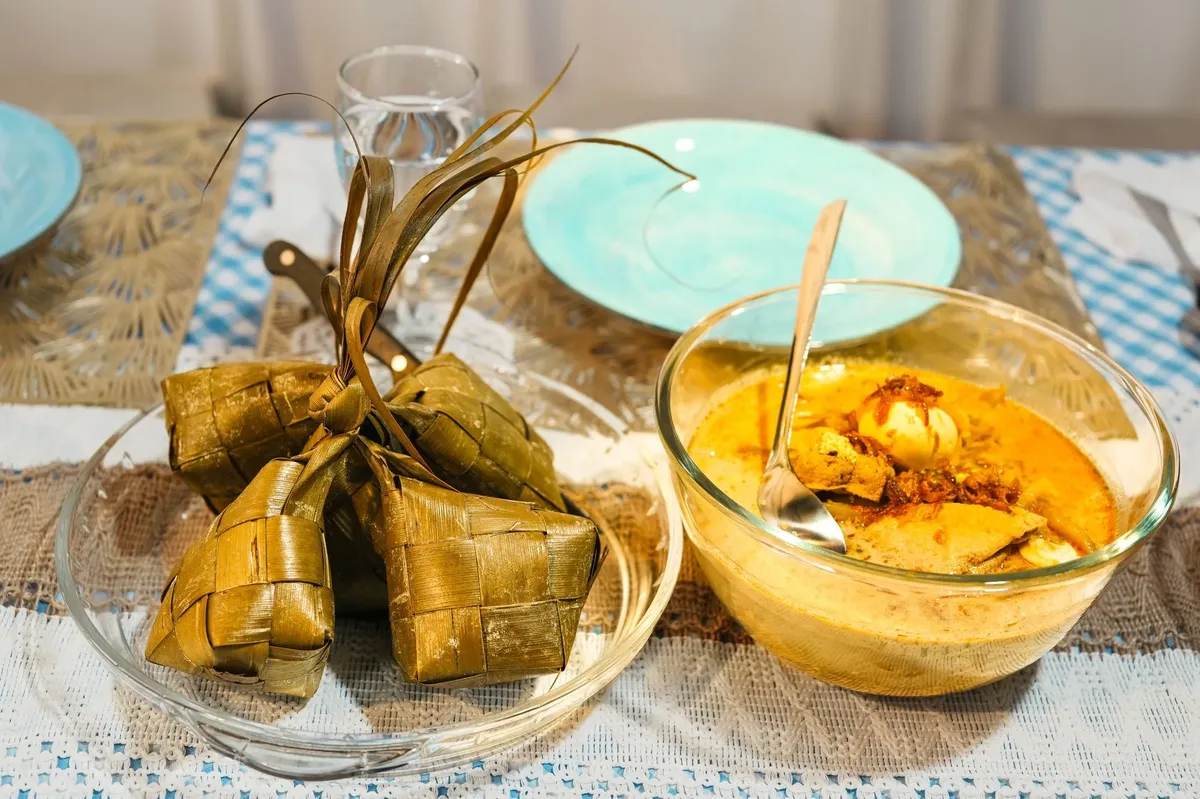
That food is the reason to time your visit. The Jonker Street night market runs Friday to Sunday, with around 450 stalls under lanterns and buskers playing between them. Eat cendol, the shaved ice with green rice-flour noodles, coconut milk and palm sugar syrup. Then try Nyonya laksa, a coconut-rich noodle soup, and satay celup, where you dip skewers of raw ingredients into a shared pot of bubbling peanut sauce, much like a hot pot. It is busy in the way Chandni Chowk is busy, only slower and with better seating.
We'd plan Melaka for a weekend if your dates allow, and stay the night if they really do, because the market is the point. Melaka is also one of the cheaper places on the route, at roughly RM90–180 a day for a budget traveller.
Cameron Highlands: tea country above the heat
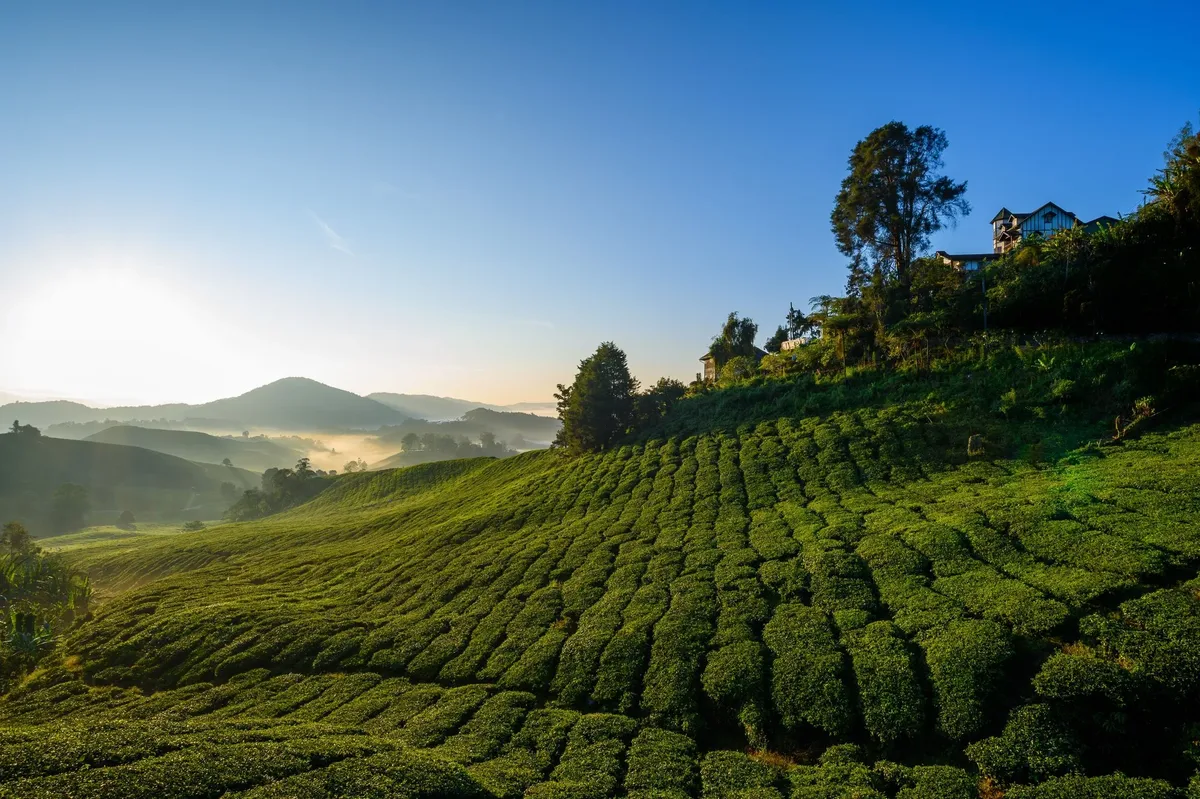
After Kuala Lumpur's humidity, the Cameron Highlands feel like a different country. The hills stay around 15 to 25°C all year, against about 35°C down in the city, which is why Malaysians have come up here for generations, much as you'd escape to Ooty or Munnar in May. Pack a jacket. You will want it in the evenings.
The reason to come is tea. BOH Sungei Palas is a working estate with free entry and a walk through the factory, so you can see the leaves go from the slopes to the packet. Then sit on the café balcony, which looks straight over the rows of tea running down the hill. Order a pot and stay longer than you planned. The estate opens early in the morning and closes by mid-afternoon, Tuesday to Sunday, and it is shut on Mondays, so build your day around that and arrive in the morning when the light on the slopes is softest.
One night is enough to see the estate and breathe the air. Two lets you slow down properly before the road takes you back down towards the coast and Penang.
Some travellers ask about Genting Highlands instead. It is a different kind of hill: a resort and theme park with 26 rides, reached by the Awana Skyway, a 2.8 km cable car with glass-floored cabins that rises through forest into cloud. It suits families with children who want a day of rides, about 90 minutes from KL Sentral by the Genting Express bus. For a couple, the tea country is the better fit.
Penang: eat your way through George Town
Penang is where your days start to revolve around meals. George Town's heritage streets are worth walking for themselves (the Ernest Zacharevic murals on Armenian Street, the Blue Mansion, the Peranakan Mansion), but most people remember Penang by what they ate and when.
That "when" matters. Hawker food here runs on a clock: breakfast stalls cook until they sell out, and many stalls close one day a week. So the practical trick is to plan your sightseeing around the food, not the other way round. Walk the murals in the morning, rest in the heat of the afternoon, and save the evening for Chulia Street.
The Chulia Street night hawker, on Lebuh Carnarvon, runs from 6pm to midnight and is closed on Mondays. The sound arrives before the smell: spatulas clanking on woks, vendors calling out orders, tables full of people talking over each other. Start with curry mee, a noodle soup in a spicy coconut curry broth, from a stall that has been cooking it for about 80 years, at roughly ₹100 to ₹120 (RM5–6). Follow it with char kuey teow, flat rice noodles fried hard over high heat, for about ₹160 to ₹180. Finish with apom, small crepes that cost very little each, so you order a handful. Prices move, so treat these as a rough guide, but a full hawker dinner rarely goes past ₹300 (RM15).
Penang Hill makes a good half-day out of the city. Two nights is the minimum here; three gives you a slow morning to eat breakfast at a stall like a local and a second evening at the night market. From Penang, the ferry to Langkawi runs once a day each way and takes about two and three-quarter hours, at roughly RM70–120.
Langkawi: beaches and the SkyCab
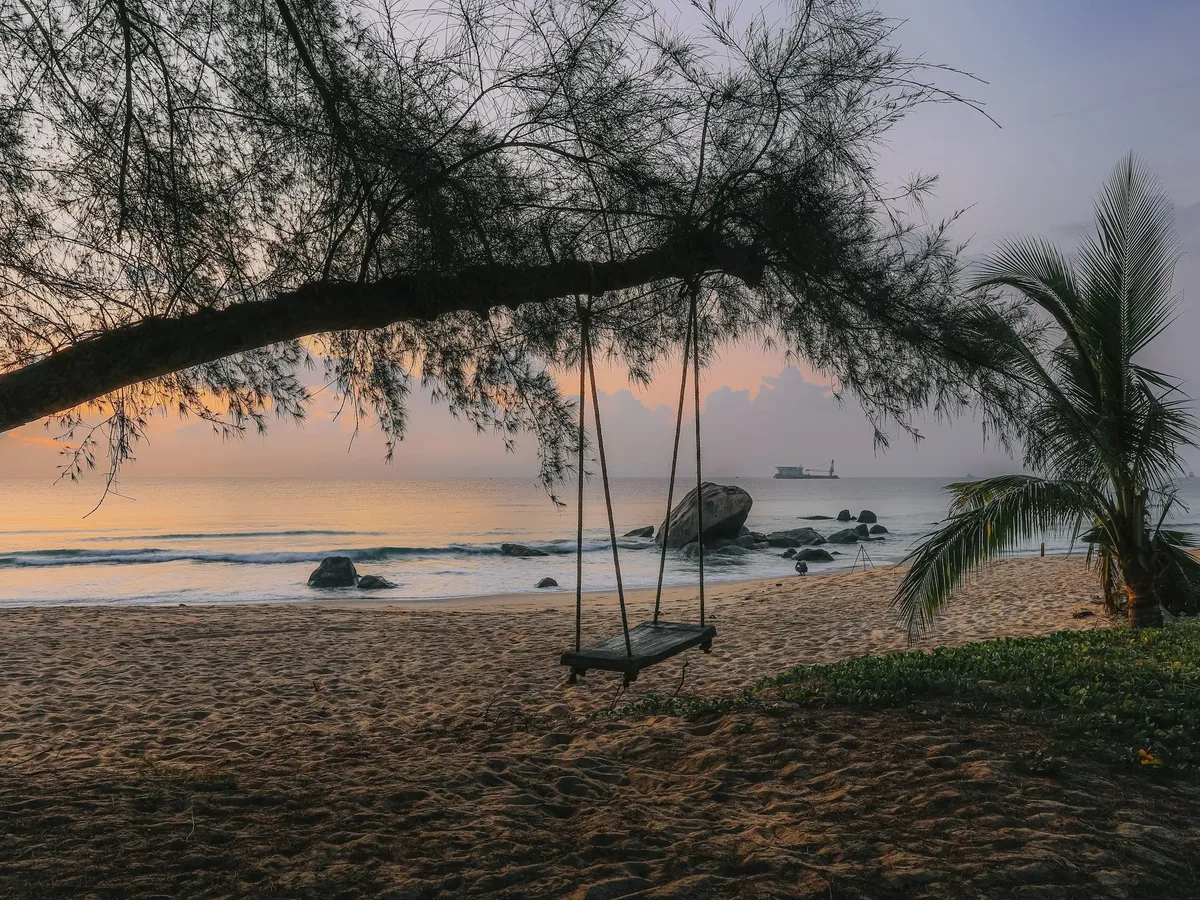
Langkawi is the part of the trip where nobody needs to be anywhere. After a week of cities, trains and hawker queues, this is the beach week compressed into a few days: sand, a long lunch and an early night.
The one thing to plan around is the SkyCab, the cable car up Gunung Mat Cincang to the Sky Bridge, a curved walkway that hangs over the jungle. It runs from about 9:30am to 6:30pm. Go first thing. Clouds tend to gather later in the day and the cable car can stop in poor weather, so a morning slot gives you the best chance of both riding it and seeing anything from the top. It also closes for annual maintenance (in 2026 that was 12 to 24 July), so we check the dates against your travel days before anything is booked.
The rest of your time splits between the water and the shore. A boat through the Kilim mangroves takes you along channels lined with dense roots, a morning of island hopping covers the small islands offshore, and the Seven Wells, a set of waterfall pools, makes an easy half-day. Two nights covers the cable car and one boat trip. Three, which is what we'd give it, adds the rest without hurrying, and leaves a spare morning in case the weather closes the SkyCab on the first day you try.
Langkawi to Kuala Lumpur is a short flight, so you can fly home from KL without retracing the whole route.
A good window and what's on
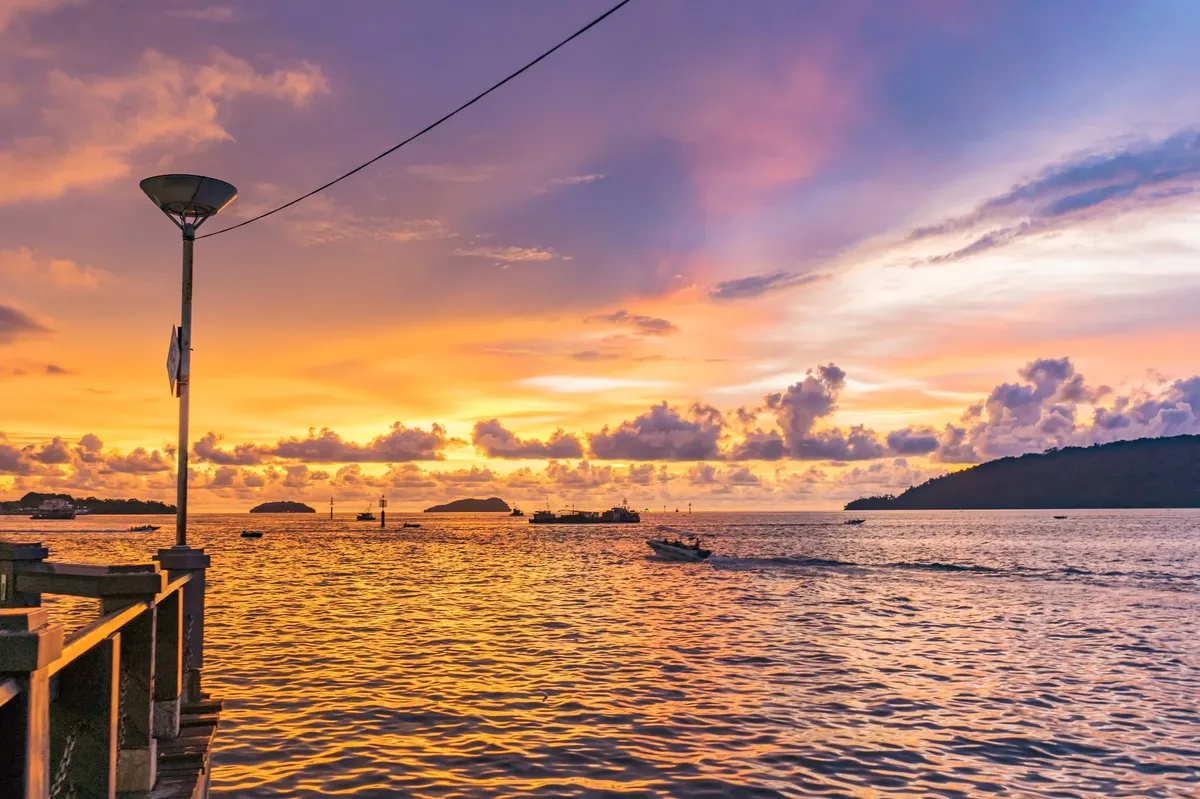
On this coast, December to March is a good window. Kuala Lumpur, Melaka, Penang and Langkawi are at their driest, the seas around Langkawi are calmer, and the hills are pleasant. April to October is the wetter stretch here. That doesn't rule out the trip, since the cities still work well in rain, but it changes the beach days in Langkawi and makes the SkyCab more of a gamble. If you can only travel then, we'd shorten Langkawi and give Penang the extra night.
The east coast islands follow the opposite calendar, with their good months from April to September and the monsoon from November to February. That is another reason a first trip sticks to one coast rather than trying to cover both.
Two festivals are worth planning around. Thaipusam at Batu Caves falls on the first full moon of the Tamil month of Thai, next on Friday 22 January 2027. Devotees climb the steps carrying kavadis and milk pots to drums, flutes and chants, free vegetarian food is served, and a chariot procession leaves the Sri Maha Mariamman Temple in Kuala Lumpur the evening before. It draws enormous crowds, around 2.5 million people were expected in 2026, so plan to go early and keep your bags light. Deepavali in Kuala Lumpur falls on 29 October 2027, with celebrations centred on Little India and Brickfields.
Entry, costs and getting around
Indian passport holders can currently enter Malaysia without a visa for up to 30 days, for tourism and business visits but not for work or study, with no fee, under an exemption that runs to 31 December 2026 (rules on the official immigration site, https://www.imi.gov.my/). Everyone also needs the Malaysia Digital Arrival Card, which is free and is filled in within the three days before you arrive, only on the official portal at https://imigresen-online.imi.gov.my/mdac/main. Airlines and immigration check it, and arriving without it can mean delays or being refused entry.
At the counter, expect to show a passport valid for at least six months, a return or onward ticket, proof of where you are staying and proof of funds. Keep printouts of your hotel bookings and return flight in your hand luggage.
Flying in is easy. Nonstop flights reach Kuala Lumpur from Chennai in about 4 hours 15 minutes, Kochi in about 4 hours 20 minutes, Bengaluru in about 4 hours 40 minutes, Mumbai in about 5 hours 40 minutes and Delhi in about 6 hours. The airlines on these routes include Air India, IndiGo, Malaysia Airlines, AirAsia, AirAsia X and Batik Air.
Between stops, the ETS train from Kuala Lumpur to Butterworth costs about ₹1,200 (RM59) in Gold class and about ₹1,600 (RM79) in Platinum. Intercity buses run about ₹400 to ₹1,400 (RM20–70), and domestic flights about ₹1,600 to ₹8,000 (RM80–400) depending on the route.
A sample ten-night route, which we adjust to your dates and pace:
- Days 1–3: Kuala Lumpur, with Batu Caves one morning and a day in Melaka
- Days 4–5: Cameron Highlands and the BOH tea estate (avoid arriving on a Monday)
- Days 6–8: Penang, George Town's streets, Chulia Street and Penang Hill
- Days 9–11: Langkawi, the SkyCab early, the mangroves and a beach day, then fly to Kuala Lumpur for home
Before you book: the visa-free entry for Indians currently runs to 31 December 2026. For a trip from January 2027 onwards, the rule must be confirmed before flights are booked.
Questions travellers ask
Do Indians need a visa for Malaysia right now?
No, Indian passport holders can visit for up to 30 days without a visa under an exemption that runs to 31 December 2026. The free Malaysia Digital Arrival Card, filled in within three days before arrival, is still needed.
How many days are enough for Malaysia on a first trip?
Nine to eleven nights covers Kuala Lumpur, Melaka, the Cameron Highlands, Penang and Langkawi at a relaxed pace. With five or six nights, keep to Kuala Lumpur and Penang by train.
Which is better for a first trip: Penang or Langkawi?
Penang if food and old streets matter most, Langkawi if you want beach time. With a week or more you can do both, and we'd keep Langkawi for the end.
How much does a Malaysia trip cost per day?
A budget traveller spends about ₹1,600–2,600 a day, and a mid-range trip runs about ₹4,000–7,000 a day. Hawker meals at around ₹100–300 keep food costs low anywhere on the route.
Know someone who should read this?
Send on WhatsAppKeep reading
All stories-
 Read
Malaysia · Destination guides
Malaysia in 7 Days: Itinerary, Visa and Budget for Indians
Three cultures. One country. Zero visa hassle. Malaysia is Southeast Asia's most Indian-friendly destination — Little India in every city, vegetarian food everywhere & rupee going further than anywhere in Asia!
Read the story
-
 Read
Bali, Maldives +2 · Planning tips
Best Countries to Visit in June from India (2027)
Where to travel abroad in June 2027 from India: Europe in early summer, Bali's dry season, the Maldives and Mauritius at good prices, Japan, Turkey and Singapore, with visa rules.
Read the story
-
 Read
Vietnam · Destination guides
How to plan a Vietnam trip: street food, noisy cities and quiet mornings
Plan a Vietnam trip around street food, noisy cities and quiet early mornings. It covers where to base yourself, when to go, getting around and the visa you need as an Indian passport holder.
Read the story
-
 Read
Destination guides
Winter Festivals in India: Rann Utsav, Hornbill and More
Discover the real India through these vibrant cultural festivals
Read the story
-
 Read
Finland · Destination guides
Where to See the Northern Lights in Finnish Lapland
Learn where to base yourself in Finnish Lapland, which months give the clearest skies, and how to plan your nights around the northern lights and clouds.
Read the story
-
 Read
Sri Lanka · Destination guides
What a Sri Lanka Trip Costs from India
A 5-night Sri Lanka beach trip costs about ₹35,000 to ₹55,000 per person on a budget and ₹60,000 to ₹90,000 mid-range, flights included.
Read the story
-
 Read
Destination guides
Kashmir in Winter, from Dal Lake to Gulmarg's Snow
Kashmir in winter suits travellers who want real snow, quiet houseboats and lower rates. A five-day plan around Srinagar and Gulmarg suits the season.
Read the story
-
 Read
Japan · Destination guides
A 7-Day Japan Itinerary Through Tokyo and Osaka
A seven-day Japan itinerary with three nights each in Tokyo and Osaka, plus Mt. Fuji, Kyoto and Nara as day trips. Two bases mean fewer hotel changes.
Read the story
-
 Read
Vietnam · Destination guides
How Much a Vietnam Trip Costs from India
A comfortable week in Vietnam costs about ₹85,000 to ₹1,10,000 per person from India, return flights included. Flights and the cruise set the budget.
Read the story


This starts with a conversation.
Tell us where you're headed — we'll take it from there.